

Knowledge
Professor Sadie Morgan OBE: ‘Let’s bring a bit of joy back in our lives’
LSA alumnus wins at Built Environment Awards 2026
Job opportunity: Caretaker
Dezeen School Show: LSA MArch
LSA Part 0 leads shortlisted at the NLA Awards
The LSA Award 2026 Winner: Caspar Barker
LSA Student Highly Commended at Architects for Health Student Design Awards
LSA student named a finalist for the Test of Time Awards
Architectural Education as a Situated Practice and the Little Free Library
From Crisis to Opportunity: Reframing the Future for Architecture Graduates
Architectural Education as a Situated Practice | London Festival of Architecture
LSA Student shortlisted for the AJ New Talent Award
If Only We Will: Degree Show 2026
Belonging by Design: A Collective Act | London Festival of Architecture
Design Think Tank: Call for Practice Briefs
LSA International Field Trip 2026: Belgium
LSA Representation in the AJ Small Projects 2026 shortlist
LSA Student Placement with Ryder Architecture
Alumni Case Study: Elliott Wang
Open Evening 1 April 2026
Design For Life returns this February
Call for Abstracts: Learnings/Unlearnings Conference
Part 0 Lead wins at Inspire Future Generations Awards
Applications open for MArch in Designing Architecture
The University of the Built Environment appoints new Professors
Get to know Lee Ivett
Open Evening 20 January 2026
LSA faculty nominated for Inspire Future Generations Awards
Yang Yang Chen shortlisted for Young Talent award
LSA Part 0 co-leads shortlisted for Inspire Future Generations Awards
LSA tutor is RIBA House of the Year finalist
Lee Ivett Open Evening Speech
Hugh Strange Architects: House of the Year 2025 shortlist
Lee Ivett starts as Head of School
LSA tutor wins Young Architect of the Year 2025
Open Evening 19 November 2025
AJ Student Prize | Postgraduate Winner: Amy Wilkinson
Hugh Strange Architects Shortlisted for RIBA Stirling Prize 2025
‘Design for Life’ returns this November – Part 4
Lee Ivett appointed as Head of School at London School of Architecture
George Moldovan shortlisted for 2025 Structural Timber Awards
‘A Seat at the Table’ Summer Show 2025
University of the Built Environment
OPEN DAY 11 June 2025
Future Skills Think Tank
LSA and UCEM merge
Future Skills Think Tank
Festival of the Future
Sixty years on from the London County Council: legacy, impact, learning
Dr Neal Shasore stepping down as Head of School and Chief Executive of the London School of Architecture (LSA) in February 2025
Load moreIvo Pery — Finding the Hidden Homeless
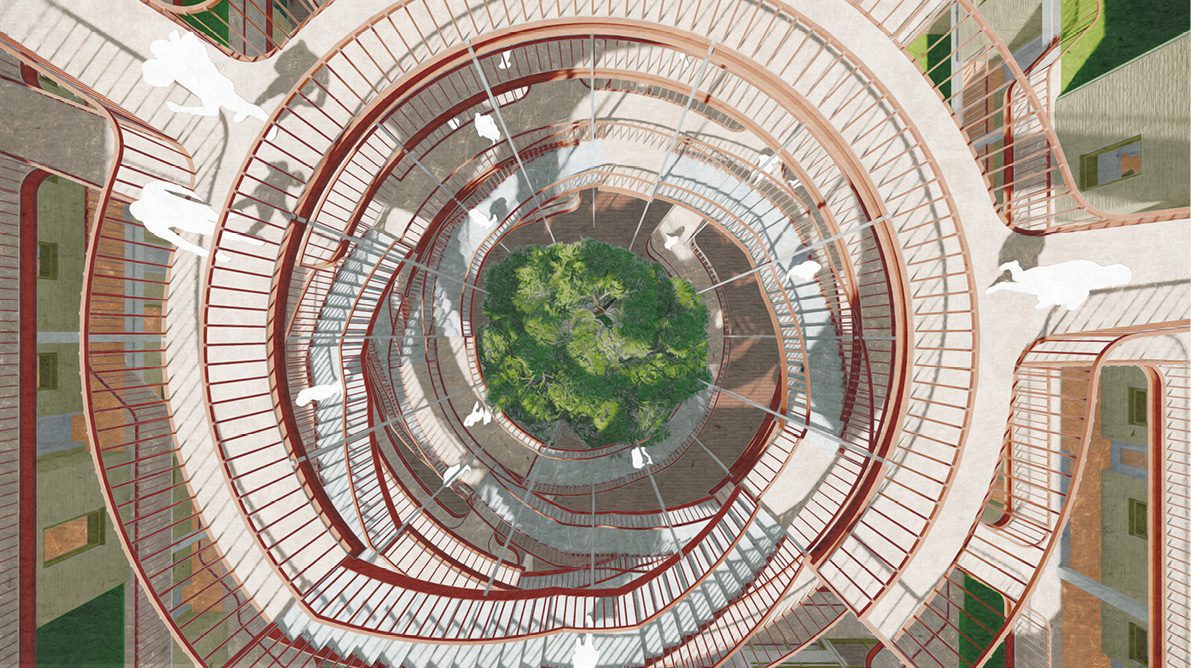
Each user-group (co-housing/ Private housing, Long-term shelter, Emergency Shelter) can move through the building via an independent stair, allowing visual connections where physical contact must be limited.
Finding the Hidden Homeless — a new approach to homeless prevention. By Ivo Pery.
Location
Former Rail Yard, Plaistow Station, London Borough of Newham
Objective
This project proposes a new typology of mixed-use development with the aim of supporting homelessness prevention in London..
Motivation
Current systems for the homeless focus on relief rather than prevention. This fails to address any underlying societal issues whilst simultaneously costing local authorities millions of pounds each year. This approach must change.
Strategy
With a shelter at its heart, the scheme also comprises housing and commercial space. By mixing different user groups together, the project encourages positive social interactions which in turn act as drivers for change. Victims of hidden homelessness aged 19-25 will receive shelter as a priority before embarking on learning, training, or work – all hosted within the scheme’s facilities – in order to move toward a more autonomous existence.
Impact
By making subtle but powerful changes to the design of conventional developments, this typology could be deployed in any borough, paving the way for comprehensive prevention of homelessness across London.
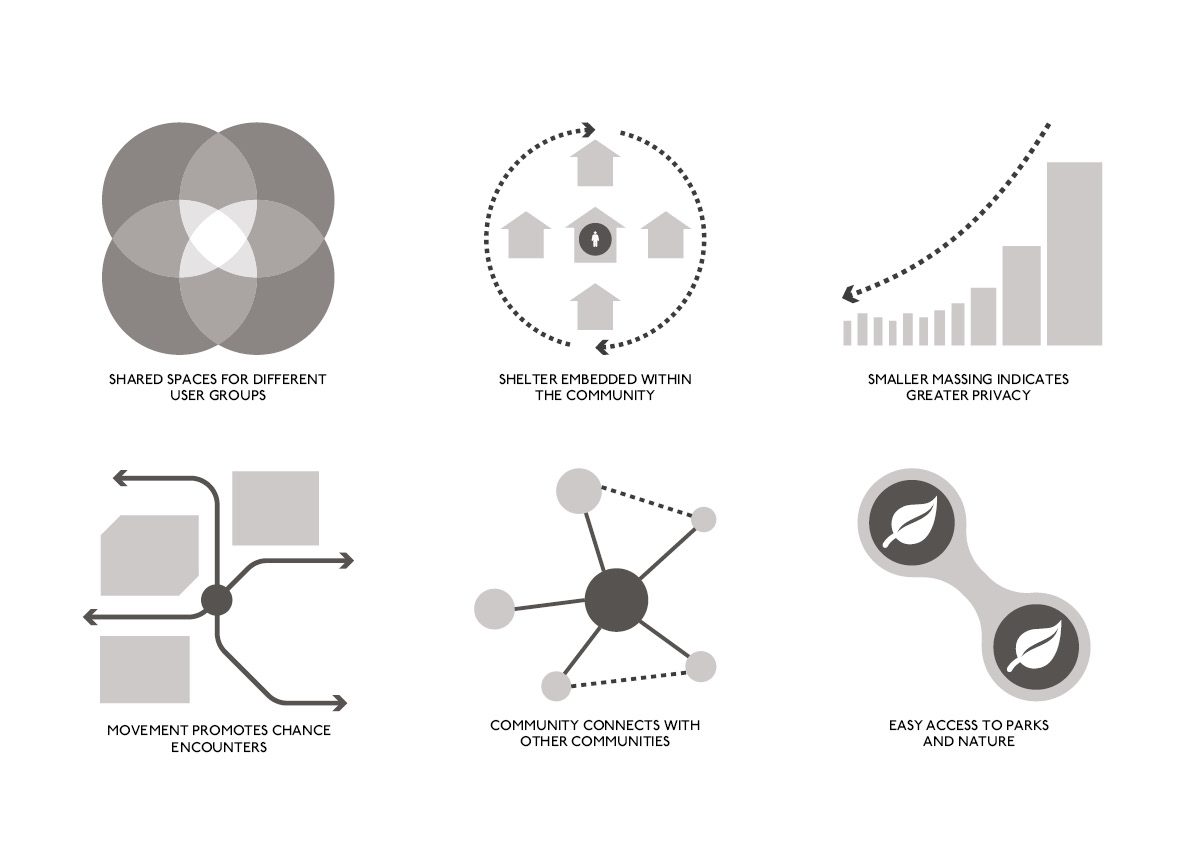
The masterplan was designed using these key principles. Reducing stigmatisation and ostracisation for homeless individuals was a priority, therefore a strategy involving the mixing of different user groups was essential.
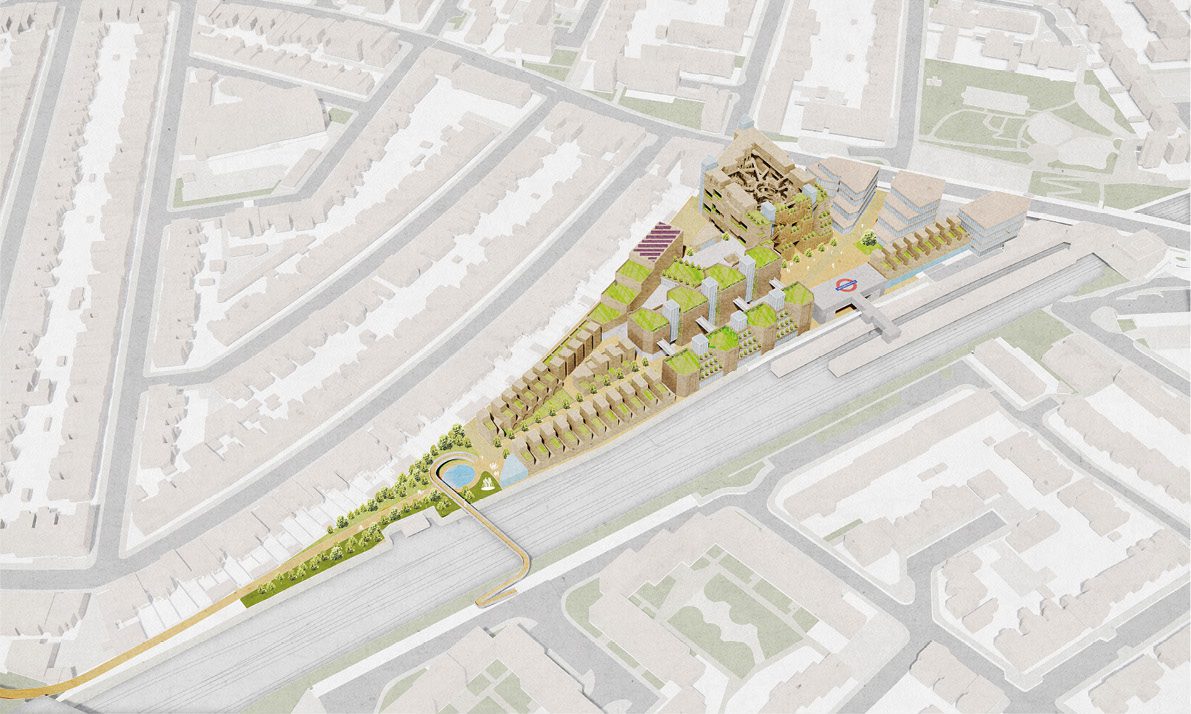
Public-facing uses including a new entrance to Plaistow Station and the shelter are located to the East, with more private residential to the West. Pedestrian and cycle routes connect the site to the Greenway and beyond.
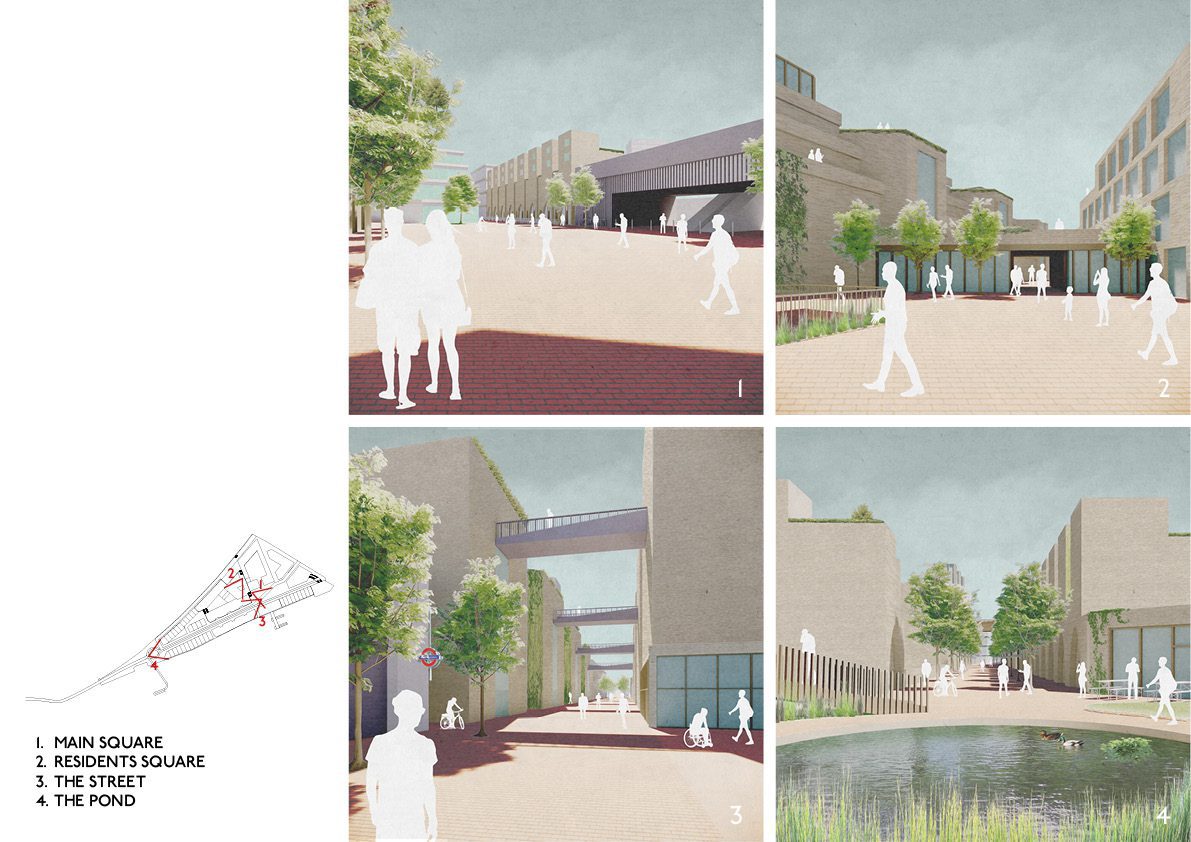
The masterplan has been split into a series of different public and semi-private spaces, allowing residents and visitors to mix freely in a variety of different environments.
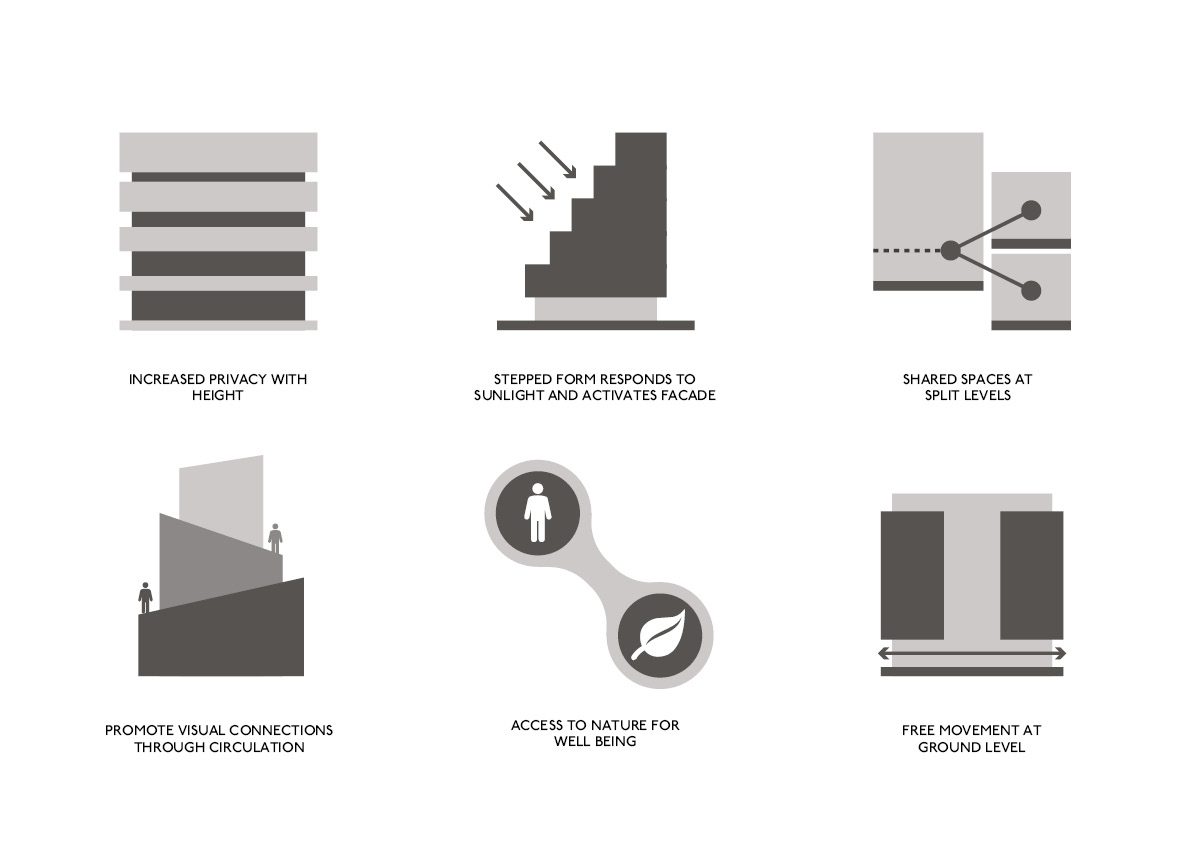
The key idea behind the shelter was to create an environment in which different groups can mix in a safe way. In some cases physical interactions must be limited, therefore enabling visual connections became a priority.
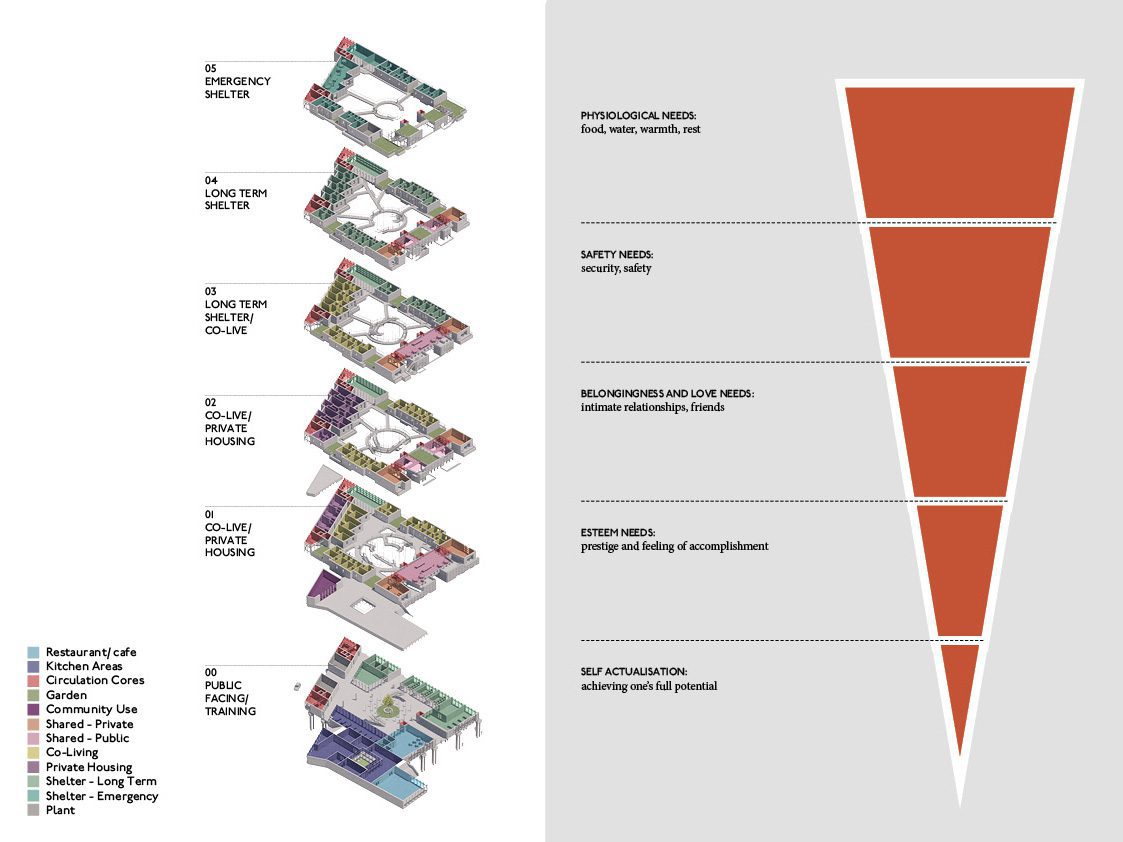
The building can be viewed as a reversal of Maslow’s Hierarchy of Needs. Those most in need begin at the top and work their way down towards a stable future.
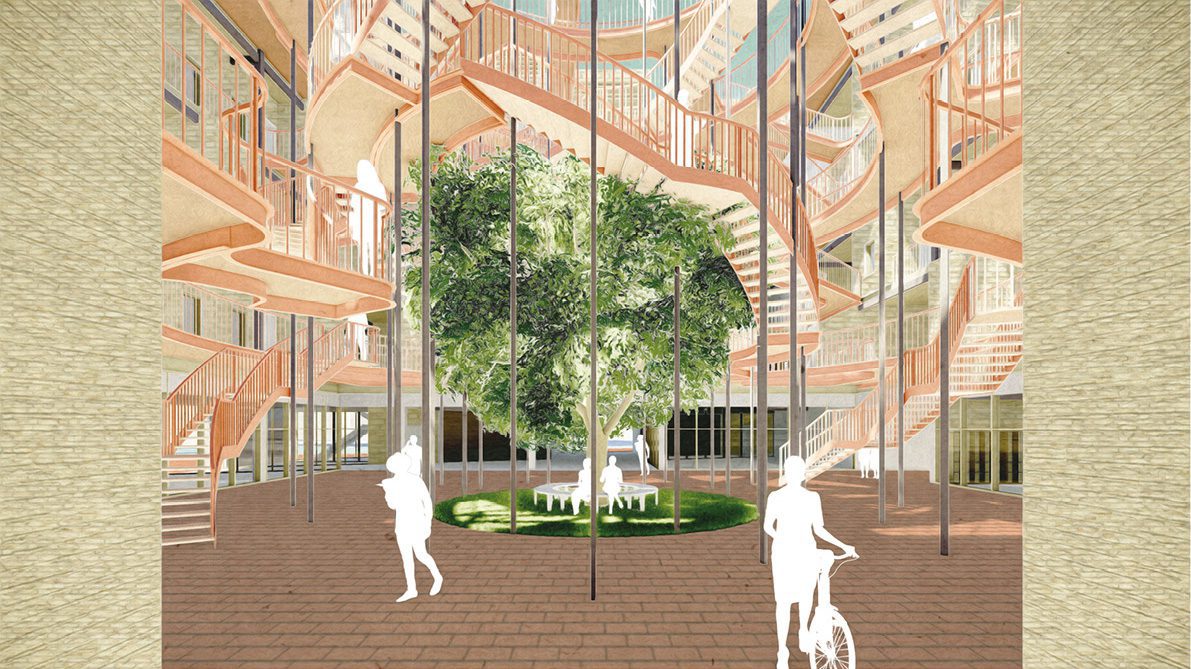
With physical connections limited in some cases, it became important to promote visual connections to create a sense of oneness and cohesion.
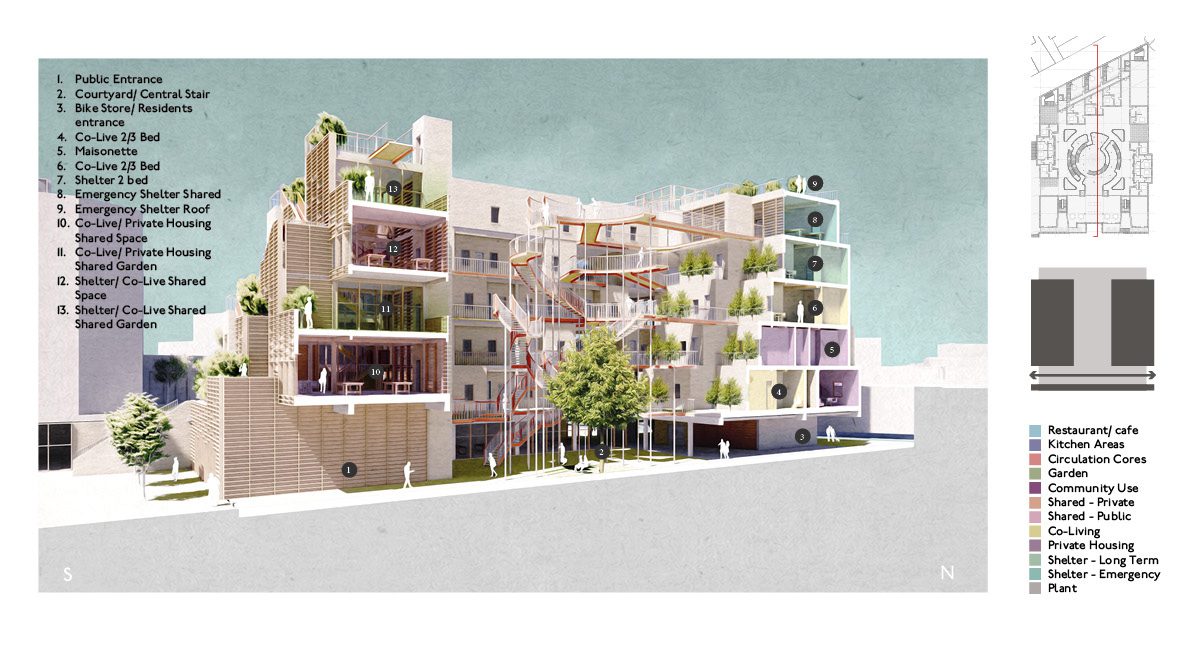
Shared spaces are located in the south facade, with cut-out gardens punching though. The rest of the building houses residents, with use groups becoming more private with greater height.
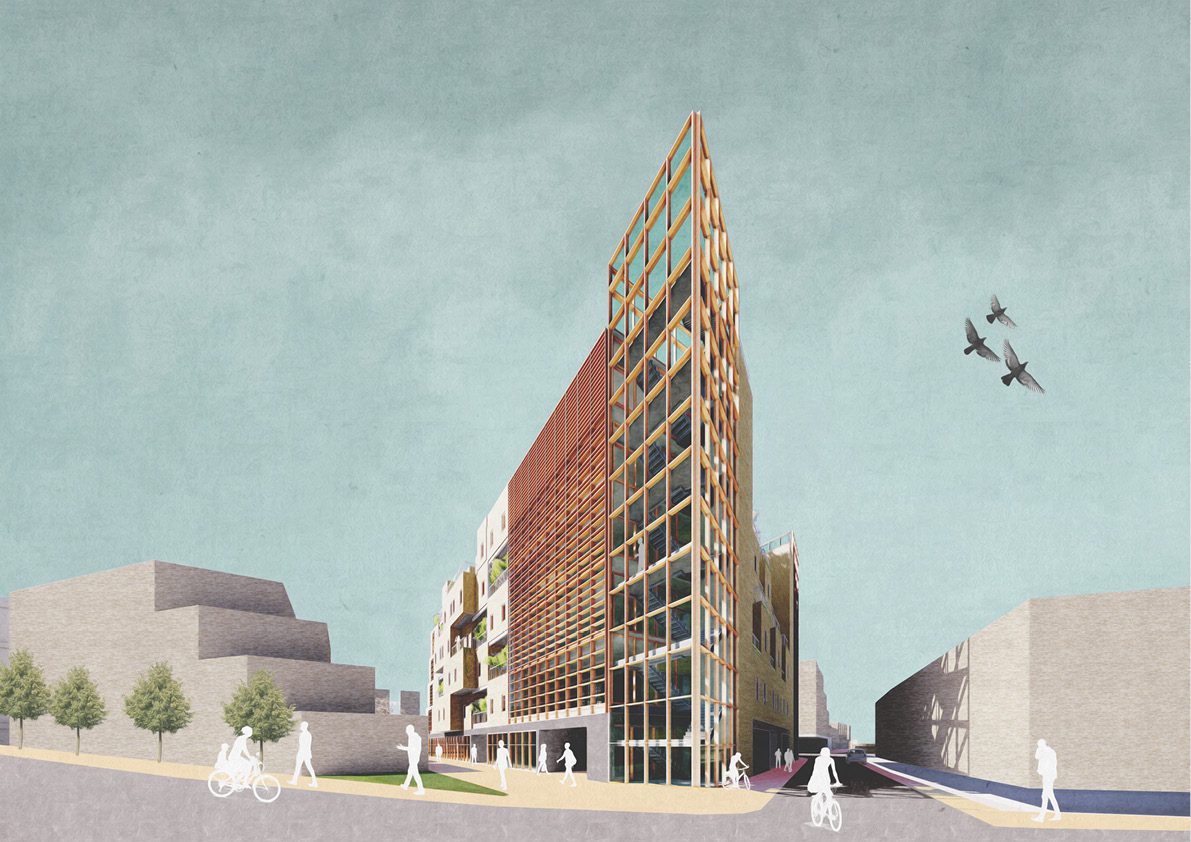
Circulation is celebrated on the facades too, with prominent stair cores on each corner. Residents gardens puncture the facade, allowing light and air into the courtyard.
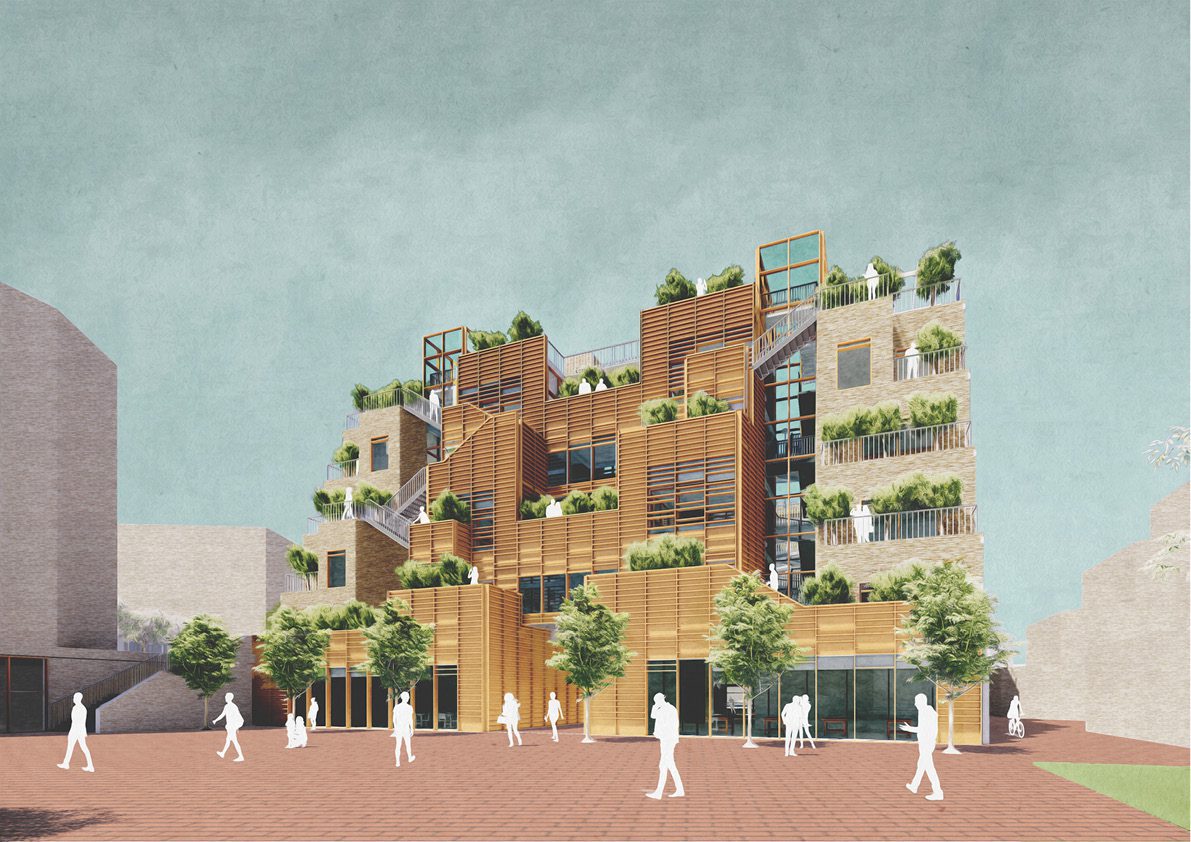
The south facade is activated by a series of external routes taking residents from shared spaces to the roof terraces. Shared spaces are clad in semi-transparent timber and glass, while more private spaces are shielded with opaque brickwork.
Further Work
- Design Think Tank – Adaptive Typologies: London’s Future Last Mile
- Critical Practice Manifesto – Determined to Fail
- Design History – The Hepworth, Wakefield
- Design Tectonic: Invitation to Tender – Finding the Hidden Homeless
- issuu.com/ivopery