

Knowledge
Professor Sadie Morgan OBE: ‘Let’s bring a bit of joy back in our lives’
LSA alumnus wins at Built Environment Awards 2026
Job opportunity: Caretaker
Dezeen School Show: LSA MArch
LSA Part 0 leads shortlisted at the NLA Awards
The LSA Award 2026 Winner: Caspar Barker
LSA Student Highly Commended at Architects for Health Student Design Awards
LSA student named a finalist for the Test of Time Awards
Architectural Education as a Situated Practice and the Little Free Library
From Crisis to Opportunity: Reframing the Future for Architecture Graduates
Architectural Education as a Situated Practice | London Festival of Architecture
LSA Student shortlisted for the AJ New Talent Award
If Only We Will: Degree Show 2026
Belonging by Design: A Collective Act | London Festival of Architecture
Design Think Tank: Call for Practice Briefs
LSA International Field Trip 2026: Belgium
LSA Representation in the AJ Small Projects 2026 shortlist
LSA Student Placement with Ryder Architecture
Alumni Case Study: Elliott Wang
Open Evening 1 April 2026
Design For Life returns this February
Call for Abstracts: Learnings/Unlearnings Conference
Part 0 Lead wins at Inspire Future Generations Awards
Applications open for MArch in Designing Architecture
The University of the Built Environment appoints new Professors
Get to know Lee Ivett
Open Evening 20 January 2026
LSA faculty nominated for Inspire Future Generations Awards
Yang Yang Chen shortlisted for Young Talent award
LSA Part 0 co-leads shortlisted for Inspire Future Generations Awards
LSA tutor is RIBA House of the Year finalist
Lee Ivett Open Evening Speech
Hugh Strange Architects: House of the Year 2025 shortlist
Lee Ivett starts as Head of School
LSA tutor wins Young Architect of the Year 2025
Open Evening 19 November 2025
AJ Student Prize | Postgraduate Winner: Amy Wilkinson
Hugh Strange Architects Shortlisted for RIBA Stirling Prize 2025
‘Design for Life’ returns this November – Part 4
Lee Ivett appointed as Head of School at London School of Architecture
George Moldovan shortlisted for 2025 Structural Timber Awards
‘A Seat at the Table’ Summer Show 2025
University of the Built Environment
OPEN DAY 11 June 2025
Future Skills Think Tank
LSA and UCEM merge
Future Skills Think Tank
Festival of the Future
Sixty years on from the London County Council: legacy, impact, learning
Dr Neal Shasore stepping down as Head of School and Chief Executive of the London School of Architecture (LSA) in February 2025
Load moreDaniel Barrett — Urban Ecology

Urban Ecology – A new hope is on the horizon. The river lea connects green belt land with central London housing developments and supplies them with local material. Housing becomes tied with the health of the river water, and a reciprocal relationship is set up between water health and people health.
Urban Ecology — A new typology of residential architecture that facilitates ecological living. By Daniel Barrett.
Location
Lower Lea Valley, London Borough of Newham
Objective
To create a design methodology that combats the cultural and philosophical catalysts of climate change. These are a Cartesian dualism, the enlightenment principle that segregates nature and culture, and neoliberalism, the pervasive political movement that stripped the individual from the group.
Motivation
The project seeks to minimise the carbon output of civilization, through the expansion of architecture’s role in sustainable discourse.
Strategy
The architecture choreographs rituals with the cycles of nature, in order to intertwine the human and non-human. A residential proposal seeks to create a web of interaction where individuals can come to understand the wider network of groups that each of us depend on.
Impact
With attention focused on the pathogenic worldviews that lead to climate collapse (that account for 100 per cent of CO2 release), rather than the symptoms of this worldview that are seen in the construction industry (account for 40% of CO2 release), the greater problem can begin to be tackled.
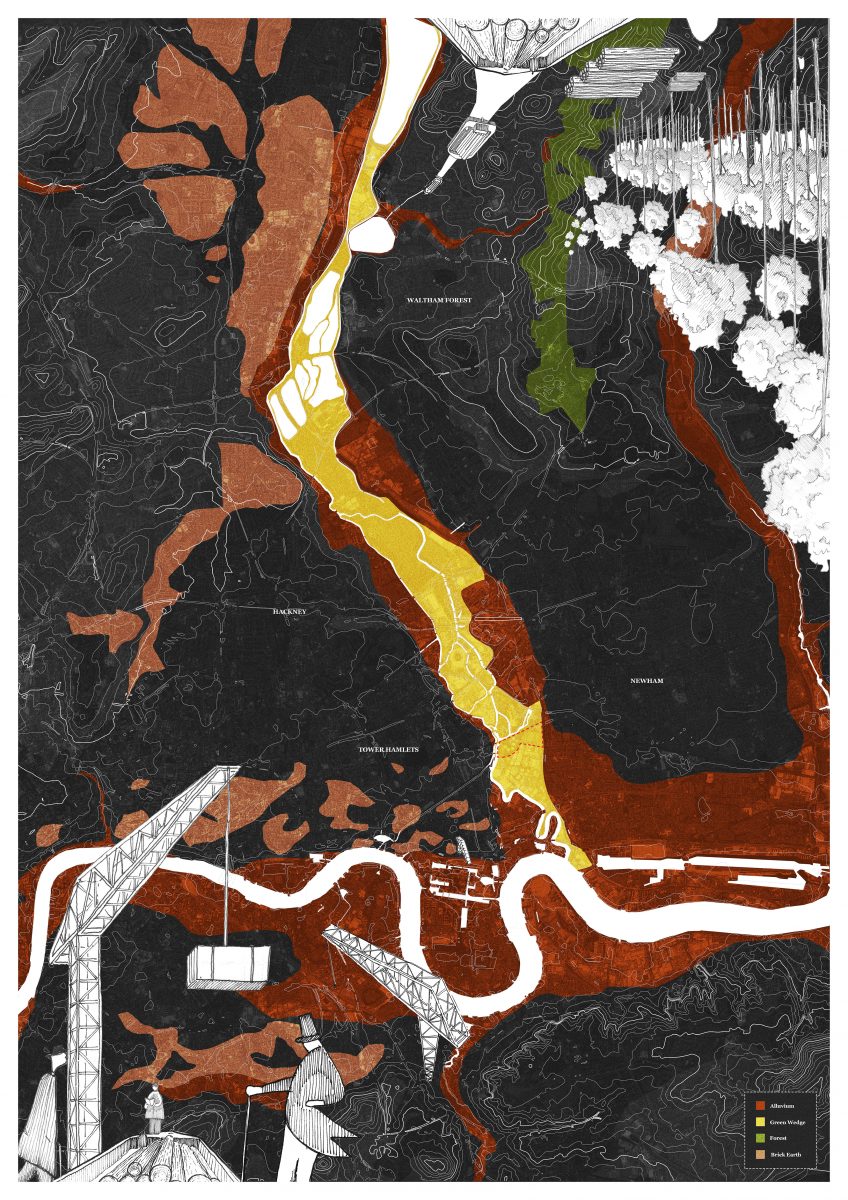
Site Map – The masterplan combines Green Wedge urbanism, with a redevelopment of London’s ageing industrial estates. Sustainable forestry schemes and clay deposits on the periphery of the city, become local material sources for a new typology of housing stock.

Rituals and Cycles – The design choreographs the rituals of the residents with natural cycles on the site. A water filtration system works in tandem with a community bathhouse.

Blue Ecology – The design begins with a poetic reconfiguration of the emblems of pollution, individualism, and the industrial, and into a regenerative, interdependent, and ecological typology.

Long Section – Processional paths are cut through the site defining the ritualistic route into the bathhouse.

Water Filter – The filter a lock that both provides a point for unloading material from boats that have travelled downstream, and a filter that removes large material waste from the river.

Bathhouse – Choreographing a bathing ritual throughout the site creates a conscious connection between the river and daily routine.
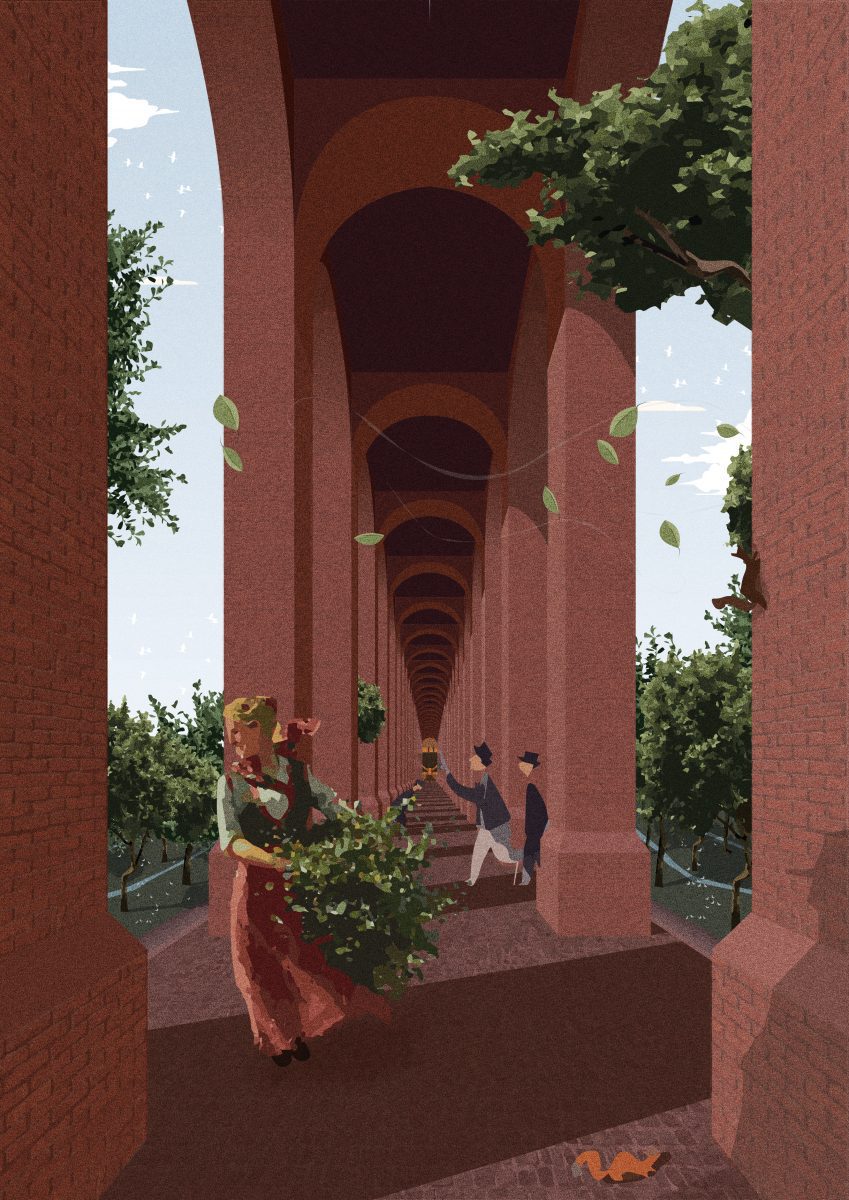
Aqueduct – Both facilitates the movement of water between community centre towers, and breaks up the visual monotony of the rectilinear wooden dwellings, with a triumphant, heavy, brick colonnade.
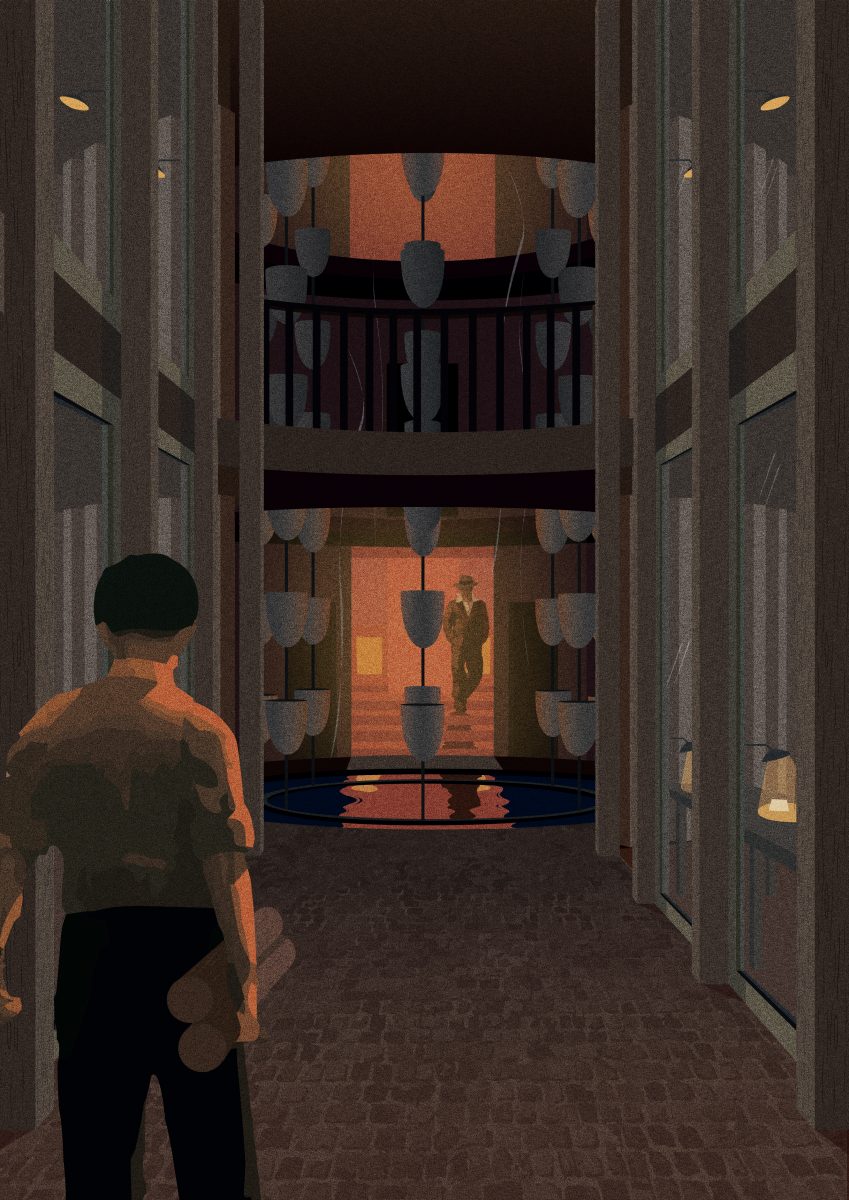
Sensual Cleanse – The filtration column occupies a large atrium at the centre of the bathhouse entrance. This visceral opening act to the theatrical ritual, is intended to instil a sense of peace and a separation from externalities.
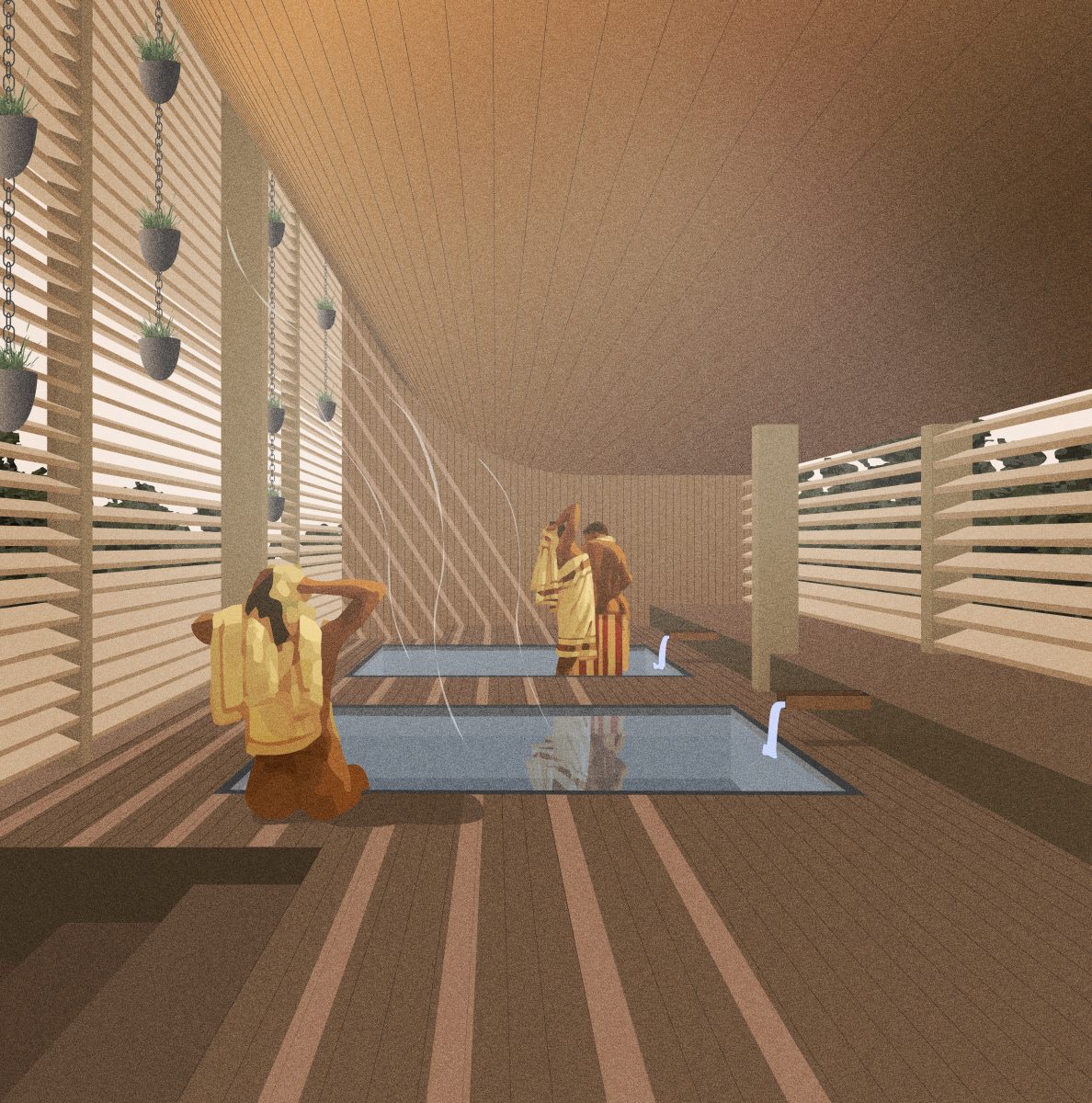
Baths – The hot baths are softly lit, with full height louvres providing privacy and a dim, dappled light to instil a sense of calm.
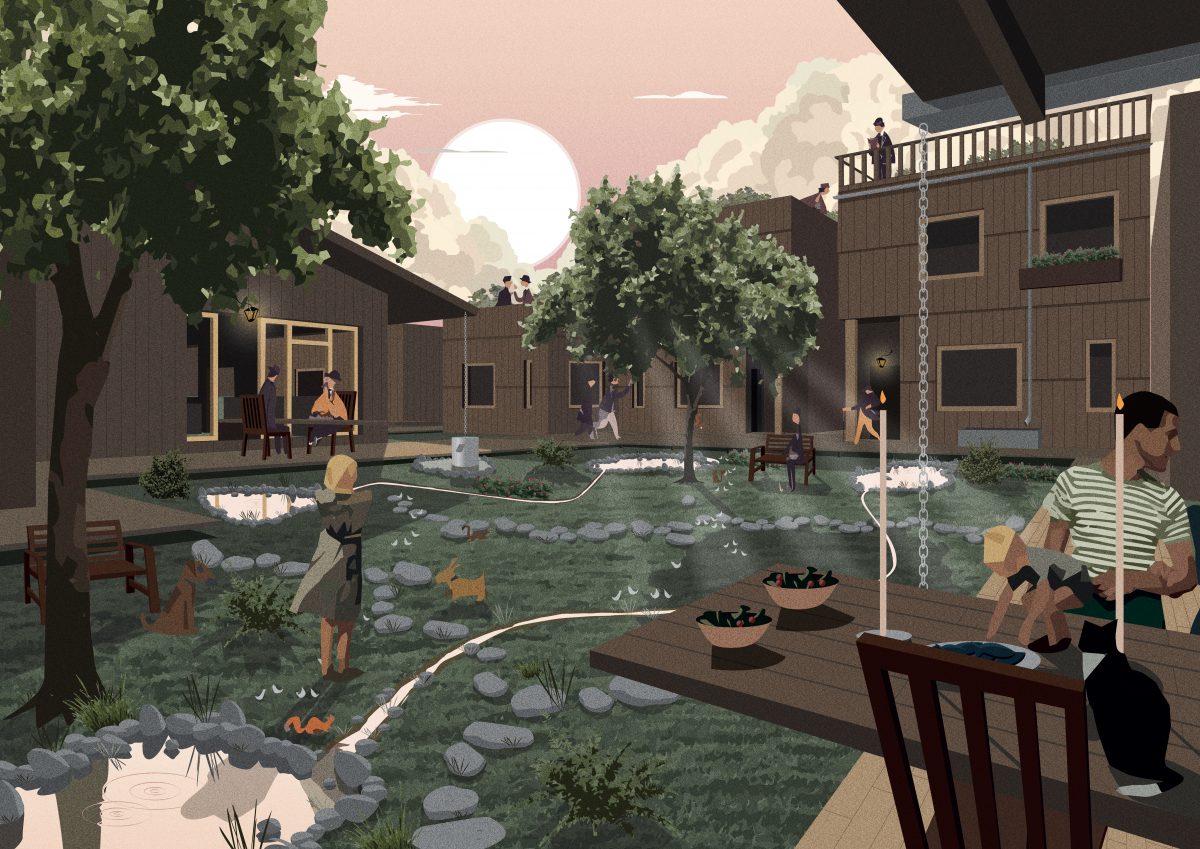
Courtyard – Large courtyards create enclosed planted spaces for the community to enjoy. These help define small clusters of community members within the larger terrace structure, and permit ample daylight to every dwelling.
Further work
- Critical Practice Manifesto — Fudo: Expanding the role of sustainable architecture
- Design History Essay — Ando: Colliding the Oriental Occidental
Contact details
- danieljbarrett@mac.com