

Knowledge
Professor Sadie Morgan OBE: ‘Let’s bring a bit of joy back in our lives’
LSA alumnus wins at Built Environment Awards 2026
Job opportunity: Caretaker
Dezeen School Show: LSA MArch
LSA Part 0 leads shortlisted at the NLA Awards
The LSA Award 2026 Winner: Caspar Barker
LSA Student Highly Commended at Architects for Health Student Design Awards
LSA student named a finalist for the Test of Time Awards
Architectural Education as a Situated Practice and the Little Free Library
From Crisis to Opportunity: Reframing the Future for Architecture Graduates
Architectural Education as a Situated Practice | London Festival of Architecture
LSA Student shortlisted for the AJ New Talent Award
If Only We Will: Degree Show 2026
Belonging by Design: A Collective Act | London Festival of Architecture
Design Think Tank: Call for Practice Briefs
LSA International Field Trip 2026: Belgium
LSA Representation in the AJ Small Projects 2026 shortlist
LSA Student Placement with Ryder Architecture
Alumni Case Study: Elliott Wang
Open Evening 1 April 2026
Design For Life returns this February
Call for Abstracts: Learnings/Unlearnings Conference
Part 0 Lead wins at Inspire Future Generations Awards
Applications open for MArch in Designing Architecture
The University of the Built Environment appoints new Professors
Get to know Lee Ivett
Open Evening 20 January 2026
LSA faculty nominated for Inspire Future Generations Awards
Yang Yang Chen shortlisted for Young Talent award
LSA Part 0 co-leads shortlisted for Inspire Future Generations Awards
LSA tutor is RIBA House of the Year finalist
Lee Ivett Open Evening Speech
Hugh Strange Architects: House of the Year 2025 shortlist
Lee Ivett starts as Head of School
LSA tutor wins Young Architect of the Year 2025
Open Evening 19 November 2025
AJ Student Prize | Postgraduate Winner: Amy Wilkinson
Hugh Strange Architects Shortlisted for RIBA Stirling Prize 2025
‘Design for Life’ returns this November – Part 4
Lee Ivett appointed as Head of School at London School of Architecture
George Moldovan shortlisted for 2025 Structural Timber Awards
‘A Seat at the Table’ Summer Show 2025
University of the Built Environment
OPEN DAY 11 June 2025
Future Skills Think Tank
LSA and UCEM merge
Future Skills Think Tank
Festival of the Future
Sixty years on from the London County Council: legacy, impact, learning
Dr Neal Shasore stepping down as Head of School and Chief Executive of the London School of Architecture (LSA) in February 2025
Load morePreview: Theatre of the Street by Tom Badger
Completed in the winter term 2018, here we take a first look at the design ideas emerging in the current Proto-Practice Year
In Second Year – our Proto-Practice Year – students develop individual thesis design projects. To commence the year, each student undertakes the module Architectural Design: Speculation, where they test their design approach through a specific proposal.
Here, current student Tom Badger’s objective is to imagine a future where car use is declining and residential streets are reclaimed for communities, allowing safer cycle routes, more access to green space, and inserted amenities – such as a theatre – that offer greater opportunities for social connection.
This project will be developed over the coming two terms and will be exhibited at the Summer Show in 2019. Click below to see more projects from current students.

Isometric view of street proposal.
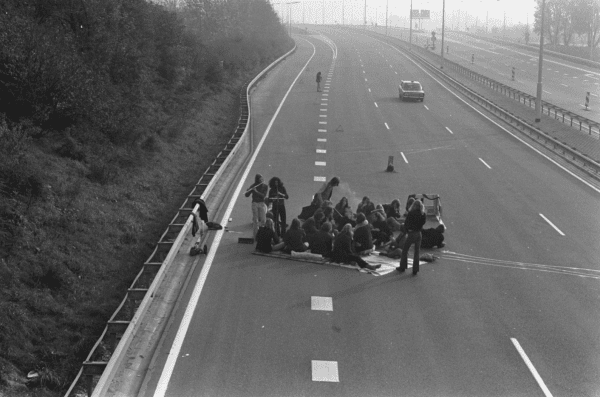
Dutch Oil Crisis 1973: Re-evaluating our relationship to the road.
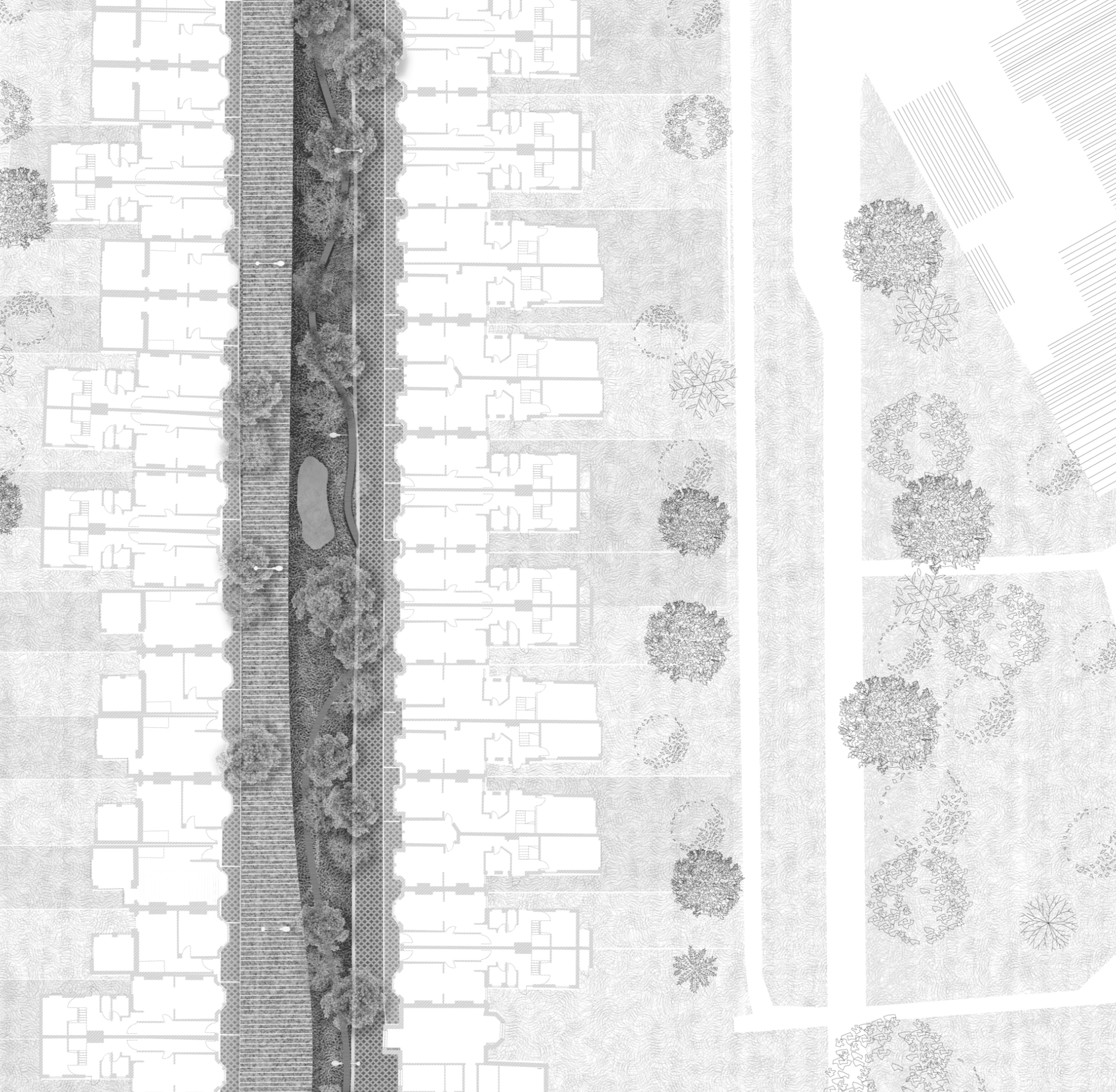
Stage 1: Plan and bin store isometric.
The section of road to the west end of Brook Drive becomes a forest. Cycle lanes, pavements and boardwalks weave through the woodland. Lamposts create a dramatic light within the trees and a series of intimate stages host playful events and performances. Front gardens blend into the landscape, giving the illusion of a continuous front garden for the residents of Brook Drive. The bins that once occupied these front gardens are placed within ornate bin stores (shown above) that reference the cabmen’s shelters that once proliferated the streets of London.
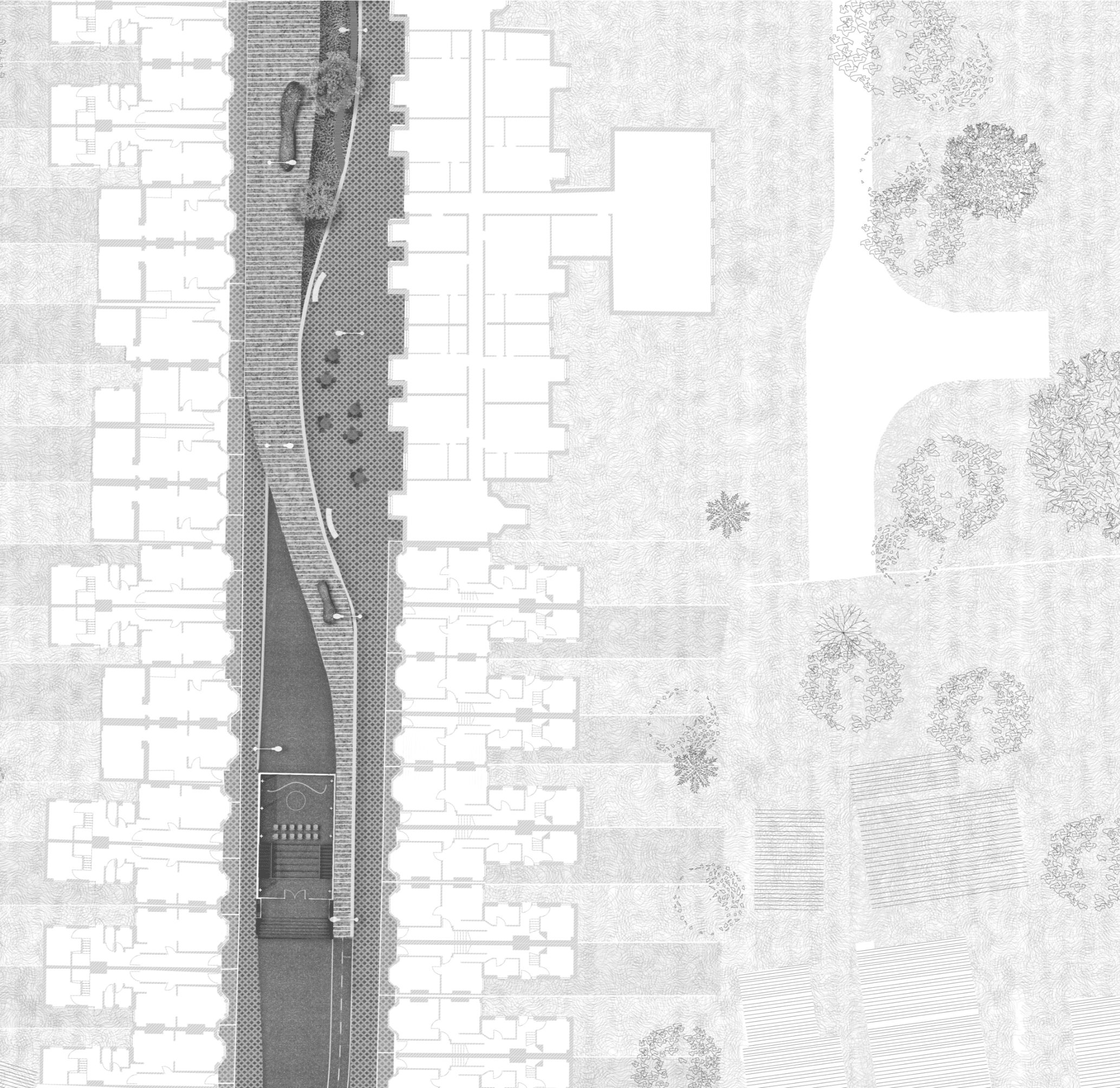
Stage 2: Theatre plan.
The second stage lifts a slab of road into the air to provide space for a small theatre. The theatre references the modernist dreams of invisible columns and floating planes, with the roof of the pavilion floating on slender columns. A small performance space is then dug into the ground. The roof of the theatre sits 1500mm above the road surface, in so as not to be overly intrusive on the outlook of the street. Grassy mounds act as speed bumps sitting on the granite-paved area open slowing the speed of cyclists and creating a space that can be used by pedestrians and cyclists.
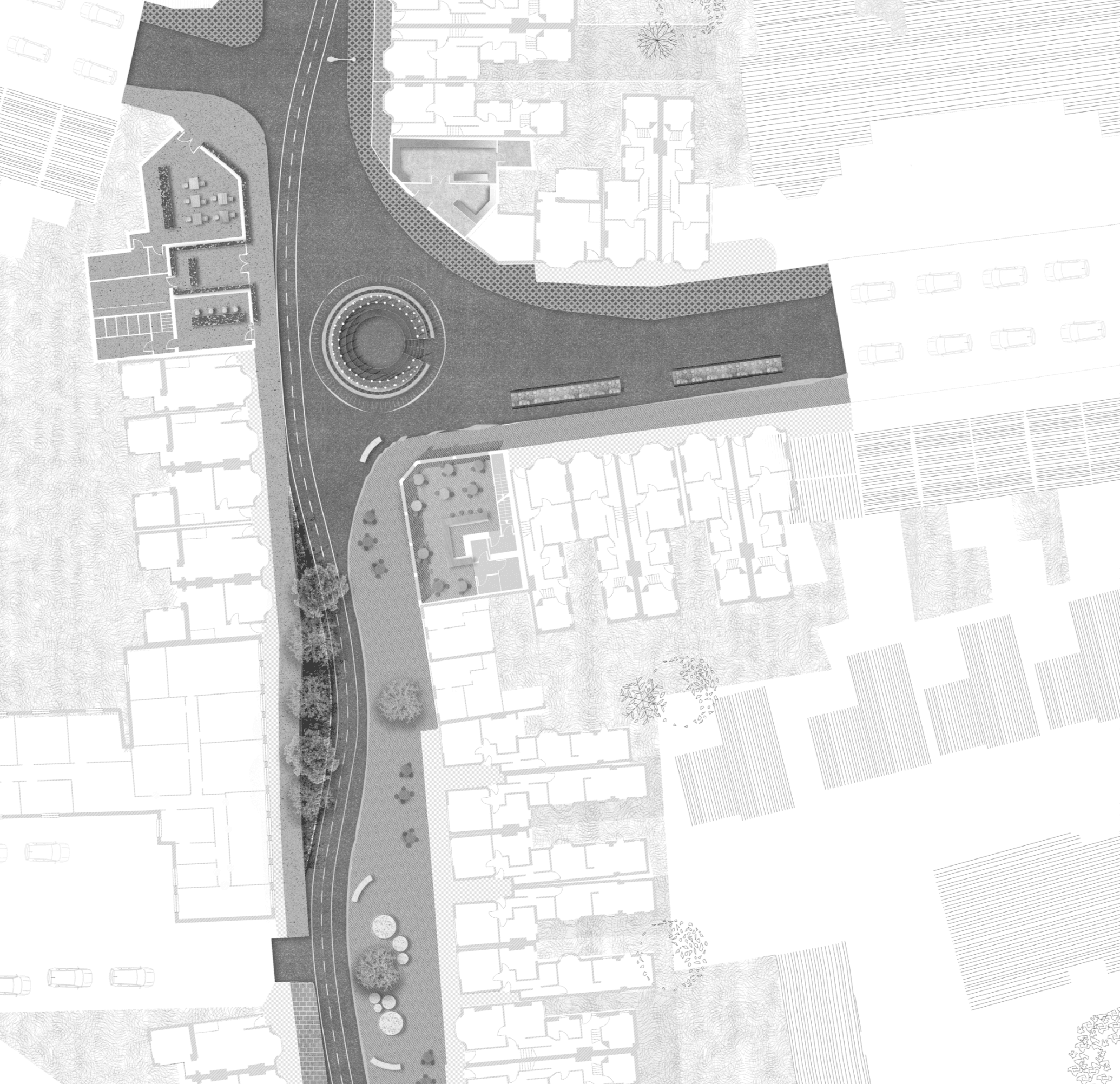
Stage 3: Plan & Foyer Performance Space Isometric.
The Foyer is placed at the natural centre of the street – at the point where three roads converge. The old shop fronts are re-designed and re-opened, housing a bar, restaurant, box office and shop, with rehearsal and storage space behind. A terrazzo bench wraps around the facade of the shops to the south of the road, weaving into the interior to create countertops and shelves. This intervention celebrates the shop front and creates a new relationship to the street. The Pub corner is celebrated in a similar manner. The pattern of the pub carpet is continued on to the exterior paving. Furniture is placed around the corner encouraging its use as a social space. A kitchen space provides food to the sunken banquet tables that sit in the street. Large community banquets take place before and after performances. Finally, a pavilion is placed as a celebratory monument at the centre of the space. This acts as the temporary performance space of the Barbican and Southbank, acting as performance space, or public space depending on demand.
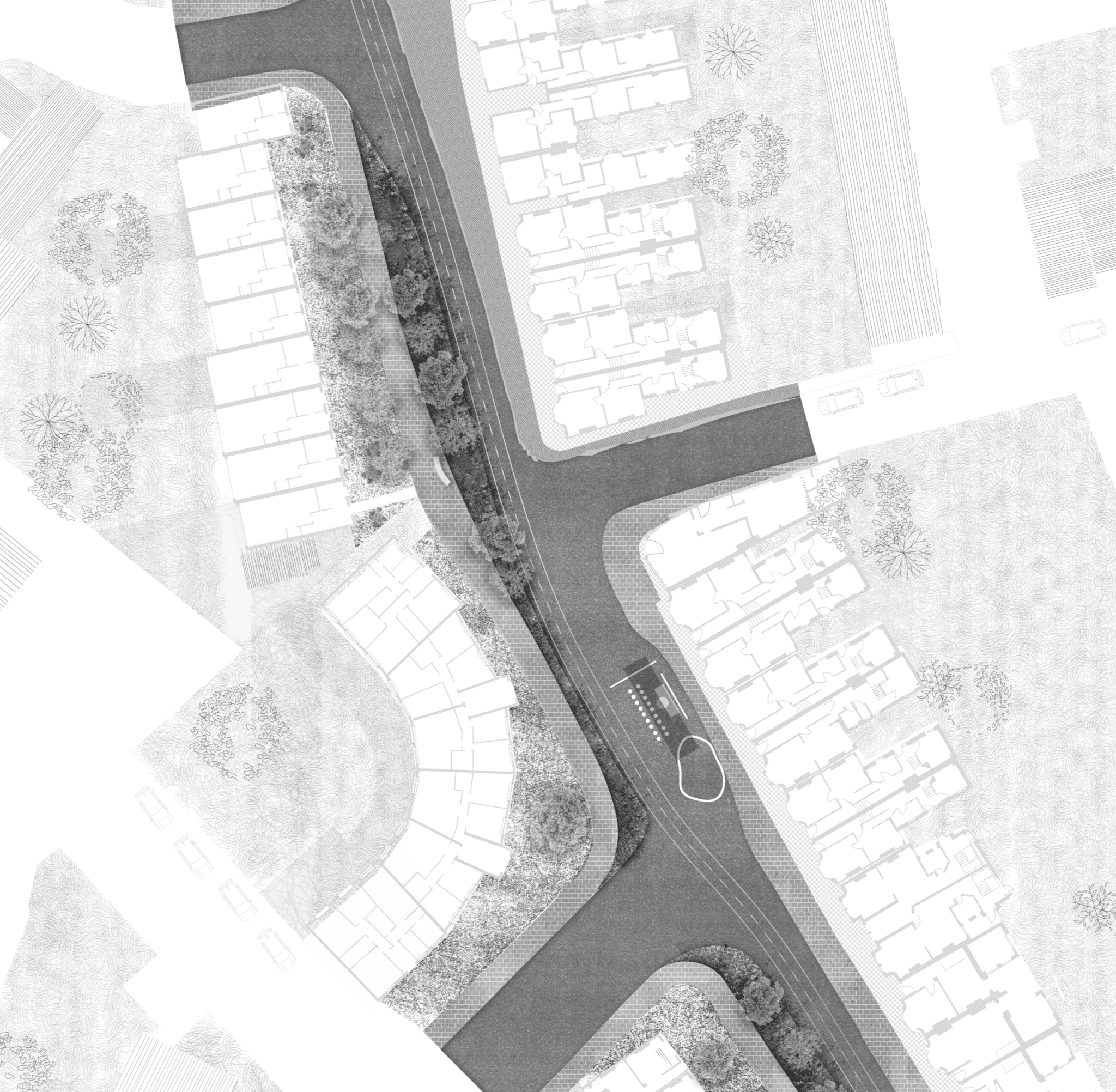
Stage 4: 1:250 Plan & Stage Isometric.
The final stage uses the dimensions of a typical parking bay to inform its design (2.4×4.8m). The length and width of road once occupied by bays is turned into a series of planes that create the walls and roof of a stage set. These pieces are cast directly into the ground to create one rough and one smooth side, as if torn from the road. The rough side creates a dramatic backdrop for performances. The roof of the structure is supported by a grass mound, that mirrors the elements at the other end of the street. The driveways of the houses on the south side of the road give way to planting and outdoor dining.
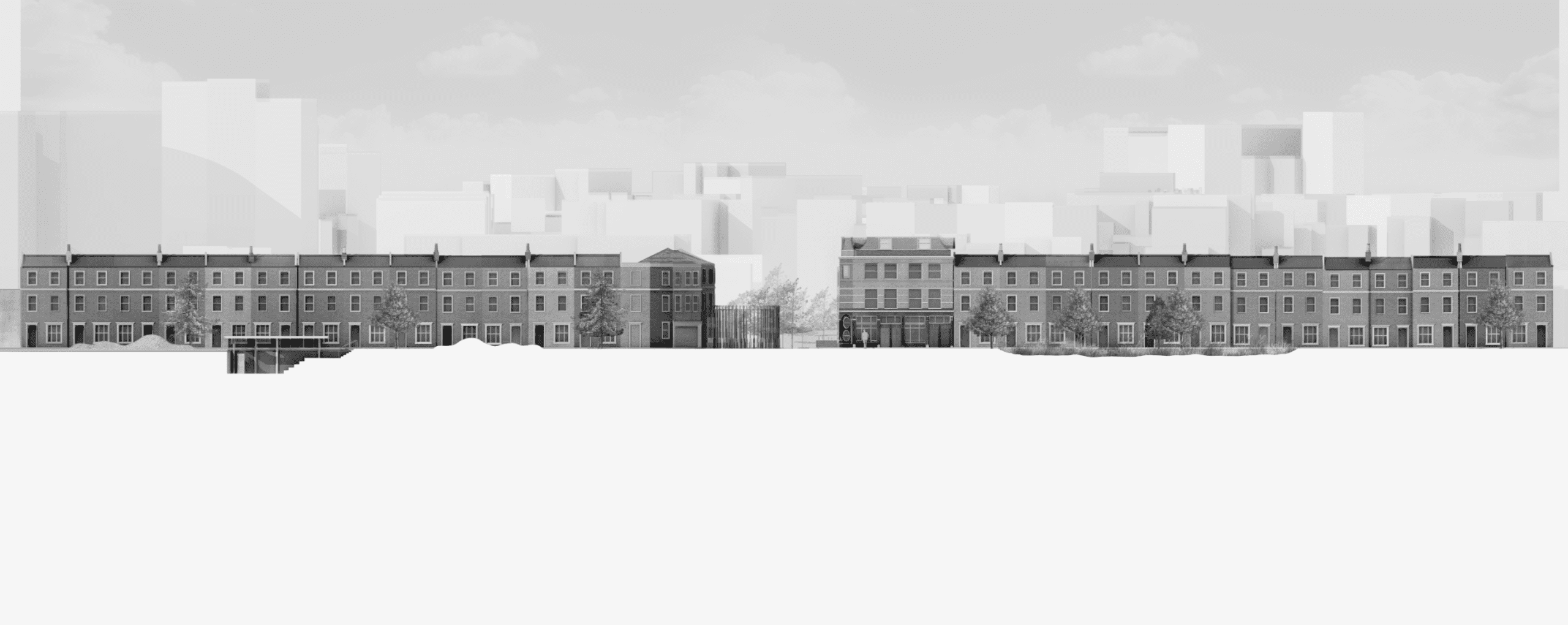
Street elevation.
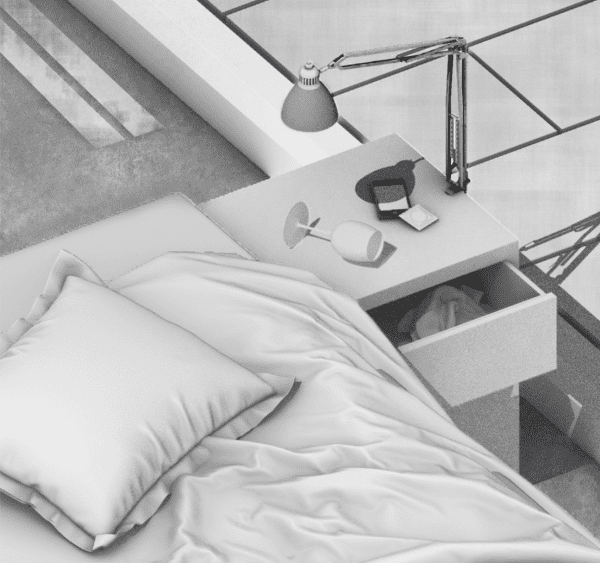
Experience 1: The car once a device only for transport becomes the scene of a casual encounter.

Experience 2: The street once dominated by the parked car becomes the scene of intoxication – a dinner party surrounded by pockets of nature.

Pavilion Detail Section: The image shows a cut through the sunken theatre space. The roughness of the concrete is accentuated and contrasted by stone and brass detailing.

Theatre of the Street: A portion of road is lifted 1500mm above the datum line of the street and rests on slender chromed columns.