

Knowledge
Dezeen School Show: LSA MArch
LSA Part 0 leads shortlisted at the NLA Awards
The LSA Award 2026 Winner: Caspar Barker
LSA Student Highly Commended at Architects for Health Student Design Awards
LSA student named a finalist for the Test of Time Awards
Architectural Education as a Situated Practice and the Little Free Library
From Crisis to Opportunity: Reframing the Future for Architecture Graduates
Architectural Education as a Situated Practice | London Festival of Architecture
LSA Student shortlisted for the AJ New Talent Award
If Only We Will: Degree Show 2026
Belonging by Design: A Collective Act | London Festival of Architecture
Design Think Tank: Call for Practice Briefs
LSA International Field Trip 2026: Belgium
LSA Representation in the AJ Small Projects 2026 shortlist
LSA Student Placement with Ryder Architecture
Alumni Case Study: Elliott Wang
Open Evening 1 April 2026
Design For Life returns this February
Call for Abstracts: Learnings/Unlearnings Conference
Part 0 Lead wins at Inspire Future Generations Awards
Applications open for MArch in Designing Architecture
The University of the Built Environment appoints new Professors
Get to know Lee Ivett
Open Evening 20 January 2026
LSA faculty nominated for Inspire Future Generations Awards
Yang Yang Chen shortlisted for Young Talent award
LSA Part 0 co-leads shortlisted for Inspire Future Generations Awards
LSA tutor is RIBA House of the Year finalist
Lee Ivett Open Evening Speech
Hugh Strange Architects: House of the Year 2025 shortlist
Lee Ivett starts as Head of School
LSA tutor wins Young Architect of the Year 2025
Open Evening 19 November 2025
AJ Student Prize | Postgraduate Winner: Amy Wilkinson
Hugh Strange Architects Shortlisted for RIBA Stirling Prize 2025
‘Design for Life’ returns this November – Part 4
Lee Ivett appointed as Head of School at London School of Architecture
George Moldovan shortlisted for 2025 Structural Timber Awards
‘A Seat at the Table’ Summer Show 2025
University of the Built Environment
OPEN DAY 11 June 2025
Future Skills Think Tank
LSA and UCEM merge
Future Skills Think Tank
Festival of the Future
Sixty years on from the London County Council: legacy, impact, learning
Dr Neal Shasore stepping down as Head of School and Chief Executive of the London School of Architecture (LSA) in February 2025
PART 0 WINS INSPIRE FUTURE GENERATIONS AWARD FOR FURTHER EDUCATION/HIGHER EDUCATION
LSA AND PURCELL ANNOUNCE NEW PARTNERSHIP
LUCY CARMICHAEL APPOINTED CHAIR OF THE BOARD OF TRUSTEES
Load moreAlexander Pringle — The Viable Foundry
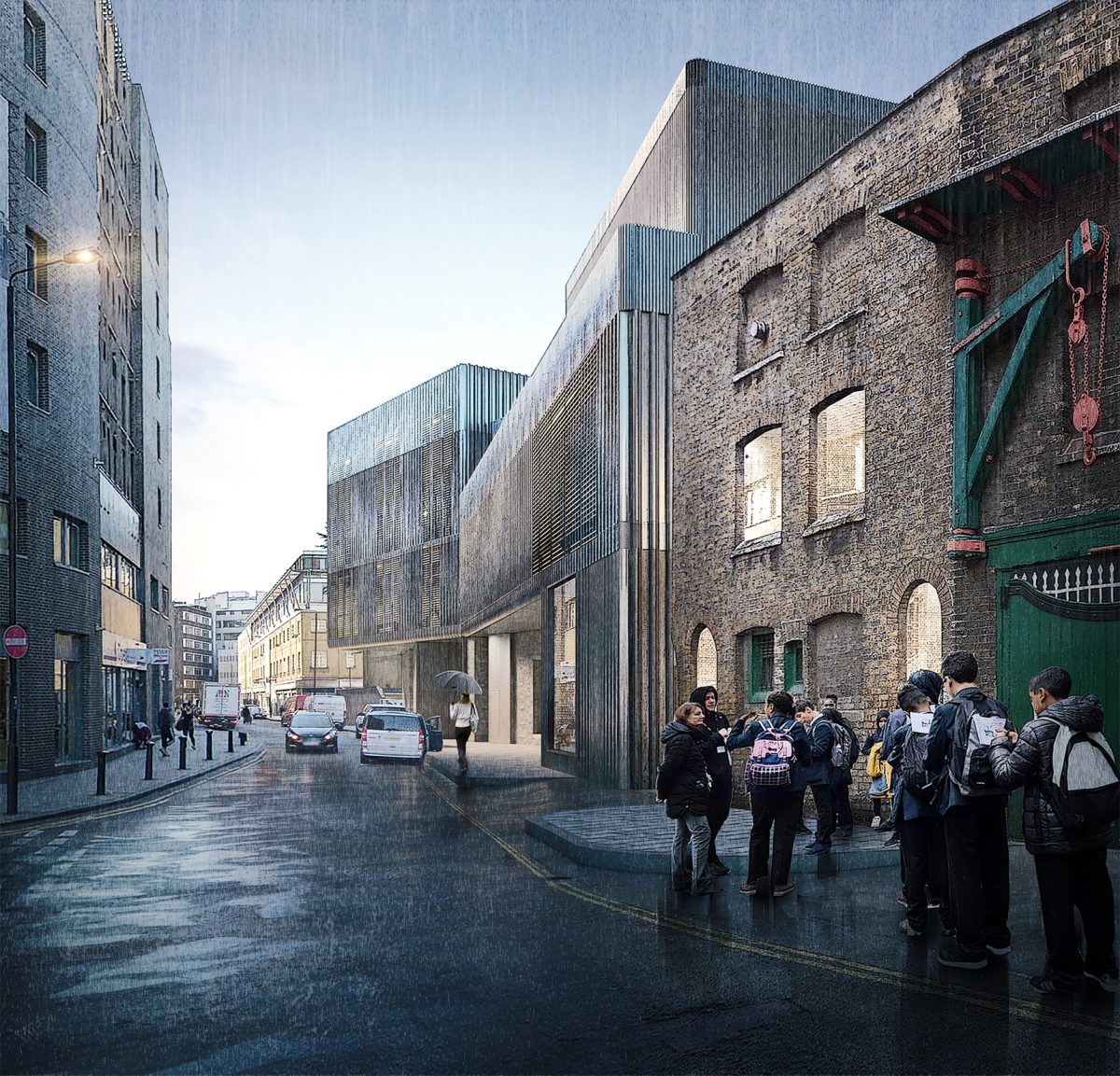
Elements of the cladding, core and structure are cast on site and form the external skin of the new foundry. The combination of digital technology with the historic crafting techniques becomes the signature language of the building.
The Viable Foundry — The re-imagination of Whitechapel Bell Foundry as a 21st Century working environment, intensifying the site’s cultural significance. By Alexander Pringle.
Location
Whitechapel Road, Tower Hamlets, London. E1
Objective
To preserve the craft of casting metals and form a centre for the study of casting as well as provide apprenticeships and educational schemes for innovative craft. To preserve the UK’s oldest continuous industrial building.
Motivation
The loss of cultural, industrial and historic pieces of city for the benefit of the few can be seen as a form of ‘cultural vandalism’. Current plans for the site include a boutique hotel and restaurant with severely limited retention of historically significant functions.
Strategy
The original foundry will be sensitively repurposed as a series of archival and educational spaces. An extension to the rear will house larger scale spaces for more industrial functions and larger groups. Exhibition spaces, apprentice accommodation and a lecture hall will also be built.
Impact
The Viable Foundry is an opportunity to preserve the use and form of London’s historic industrial past and connect the public with craft to celebrate the process of making.

The section through the series of spaces shows horizontal and vertical connections of each space and resultant activity. The ground floor is left largely open for visitors, with upper spaces used for scheduled exhibits and residents.
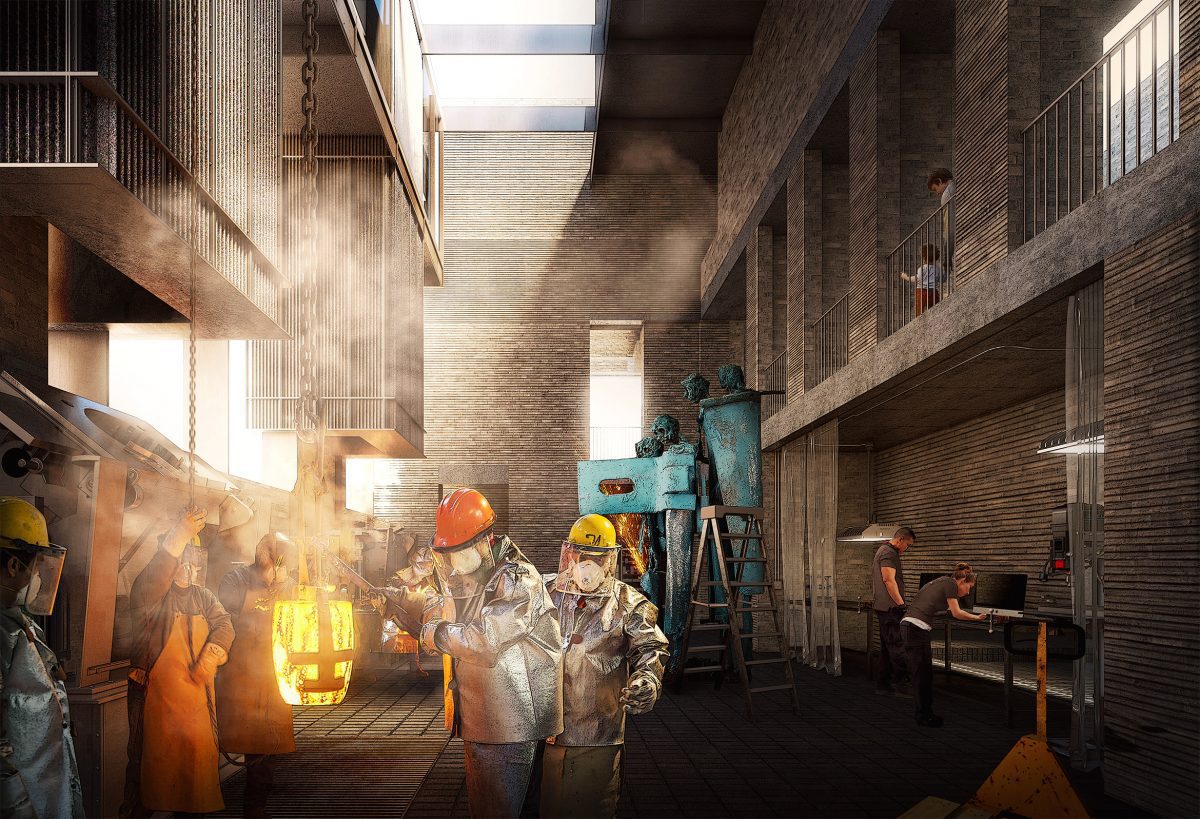
The proposed structural approach will contribute to the foundry’s design life. Both the industrial and gallery spaces are designed and finished in the same manner to allow for maximum flexibility and adaptability over time.
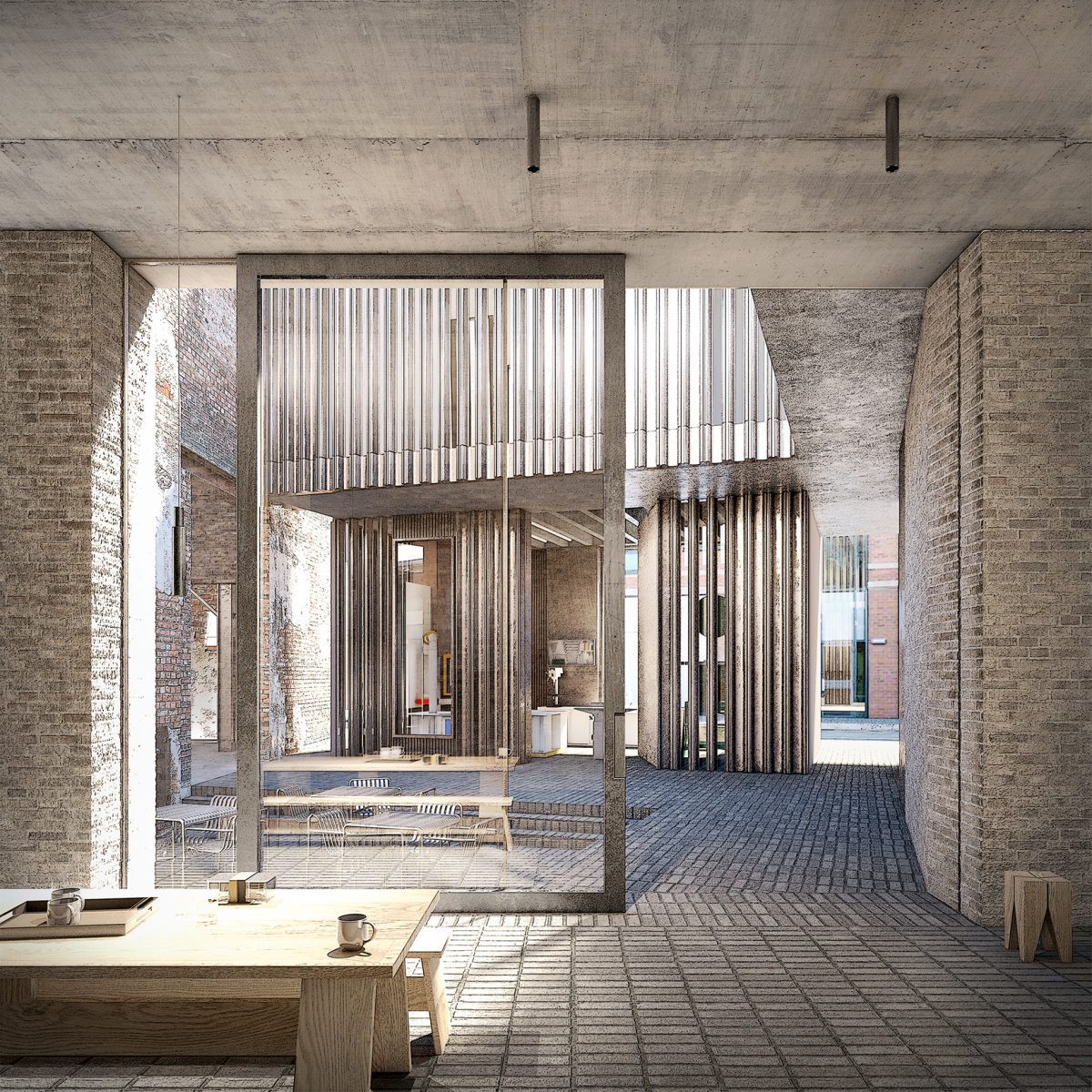
The bell yard separates the old and new foundries with a visual break to emphasise the change in age, process and scale

The rear extension houses a collection of spaces that both support the existing foundry and provide new spaces for innovative technology and viability. Street facing elements are fragmented to draw the public through into these more industrial areas, reflecting the existing configuration.

Dormitory style bedrooms sit above individual workspaces which are connected by a long gallery along the street for students to exhibit their creations.

There are moving elements to compartmentalise spaces for multiple uses and occupants, prolonging the lifespan of the new building to allow it to age alongside the already historically significant Old Foundry.
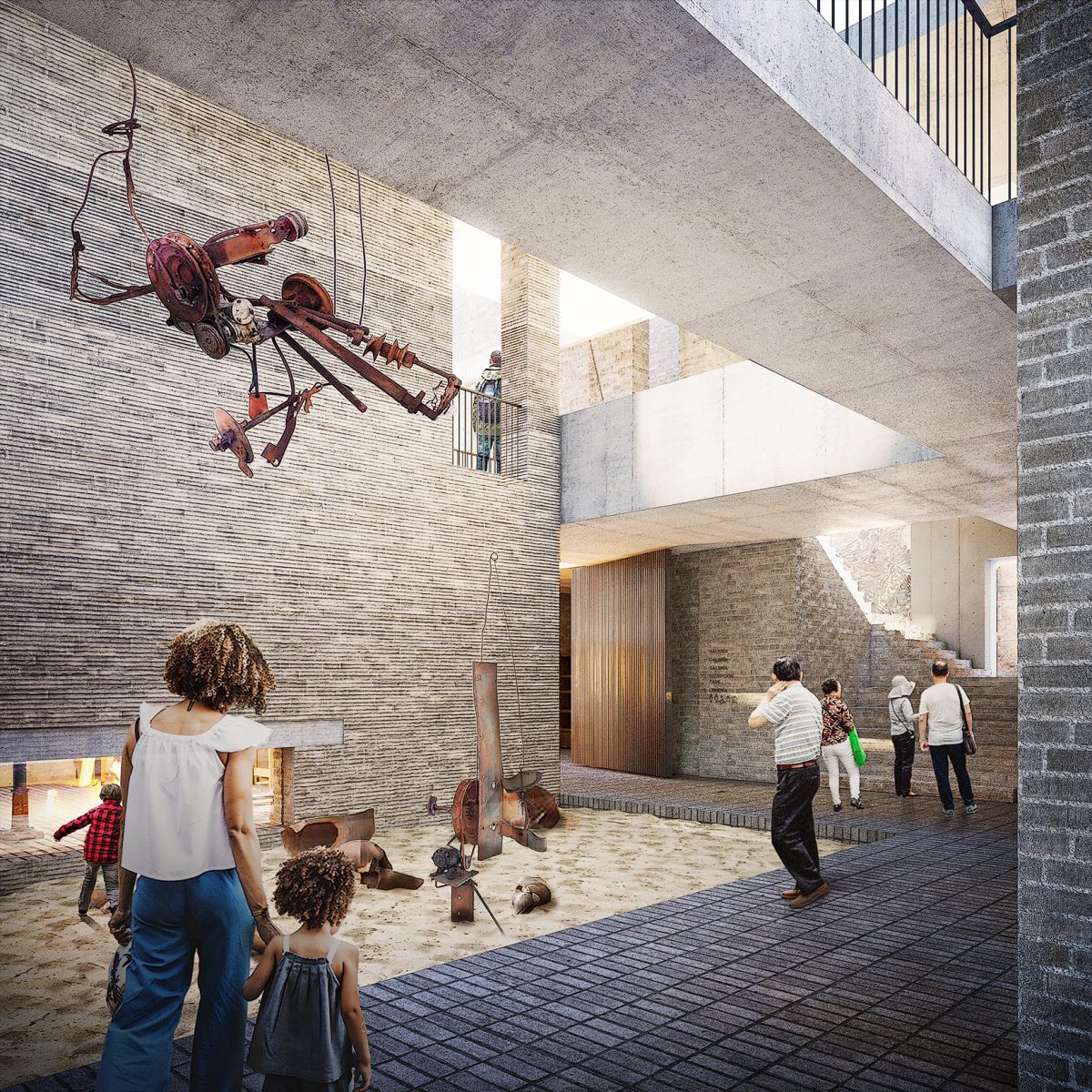
There is a large lightwell to the centre of the new extension to allow light into the building. As the site is confined by multiple party walls, the internal courtyard floods the area with light and presents itself as a flexible function space.

A cast metal container sits within the brick structure providing seating spaces for viewers to engage with visual performances.

Cast iron panels with bell shaped profiles subtly reference the buildings original use while creating a varied facade which on the oblique gives the impression of a monolithic block. Though in the evening, the perforated panels allow the internal use of the building to become the facade.
Further work
Contact details
- Alexander.pringle@hotmail.com