

Knowledge
Professor Sadie Morgan OBE: ‘Let’s bring a bit of joy back in our lives’
LSA alumnus wins at Built Environment Awards 2026
Job opportunity: Caretaker
Dezeen School Show: LSA MArch
LSA Part 0 leads shortlisted at the NLA Awards
The LSA Award 2026 Winner: Caspar Barker
LSA Student Highly Commended at Architects for Health Student Design Awards
LSA student named a finalist for the Test of Time Awards
Architectural Education as a Situated Practice and the Little Free Library
From Crisis to Opportunity: Reframing the Future for Architecture Graduates
Architectural Education as a Situated Practice | London Festival of Architecture
LSA Student shortlisted for the AJ New Talent Award
If Only We Will: Degree Show 2026
Belonging by Design: A Collective Act | London Festival of Architecture
Design Think Tank: Call for Practice Briefs
LSA International Field Trip 2026: Belgium
LSA Representation in the AJ Small Projects 2026 shortlist
LSA Student Placement with Ryder Architecture
Alumni Case Study: Elliott Wang
Open Evening 1 April 2026
Design For Life returns this February
Call for Abstracts: Learnings/Unlearnings Conference
Part 0 Lead wins at Inspire Future Generations Awards
Applications open for MArch in Designing Architecture
The University of the Built Environment appoints new Professors
Get to know Lee Ivett
Open Evening 20 January 2026
LSA faculty nominated for Inspire Future Generations Awards
Yang Yang Chen shortlisted for Young Talent award
LSA Part 0 co-leads shortlisted for Inspire Future Generations Awards
LSA tutor is RIBA House of the Year finalist
Lee Ivett Open Evening Speech
Hugh Strange Architects: House of the Year 2025 shortlist
Lee Ivett starts as Head of School
LSA tutor wins Young Architect of the Year 2025
Open Evening 19 November 2025
AJ Student Prize | Postgraduate Winner: Amy Wilkinson
Hugh Strange Architects Shortlisted for RIBA Stirling Prize 2025
‘Design for Life’ returns this November – Part 4
Lee Ivett appointed as Head of School at London School of Architecture
George Moldovan shortlisted for 2025 Structural Timber Awards
‘A Seat at the Table’ Summer Show 2025
University of the Built Environment
OPEN DAY 11 June 2025
Future Skills Think Tank
LSA and UCEM merge
Future Skills Think Tank
Festival of the Future
Sixty years on from the London County Council: legacy, impact, learning
Dr Neal Shasore stepping down as Head of School and Chief Executive of the London School of Architecture (LSA) in February 2025
Load moreXavier Smales — Thameside West Masterplan
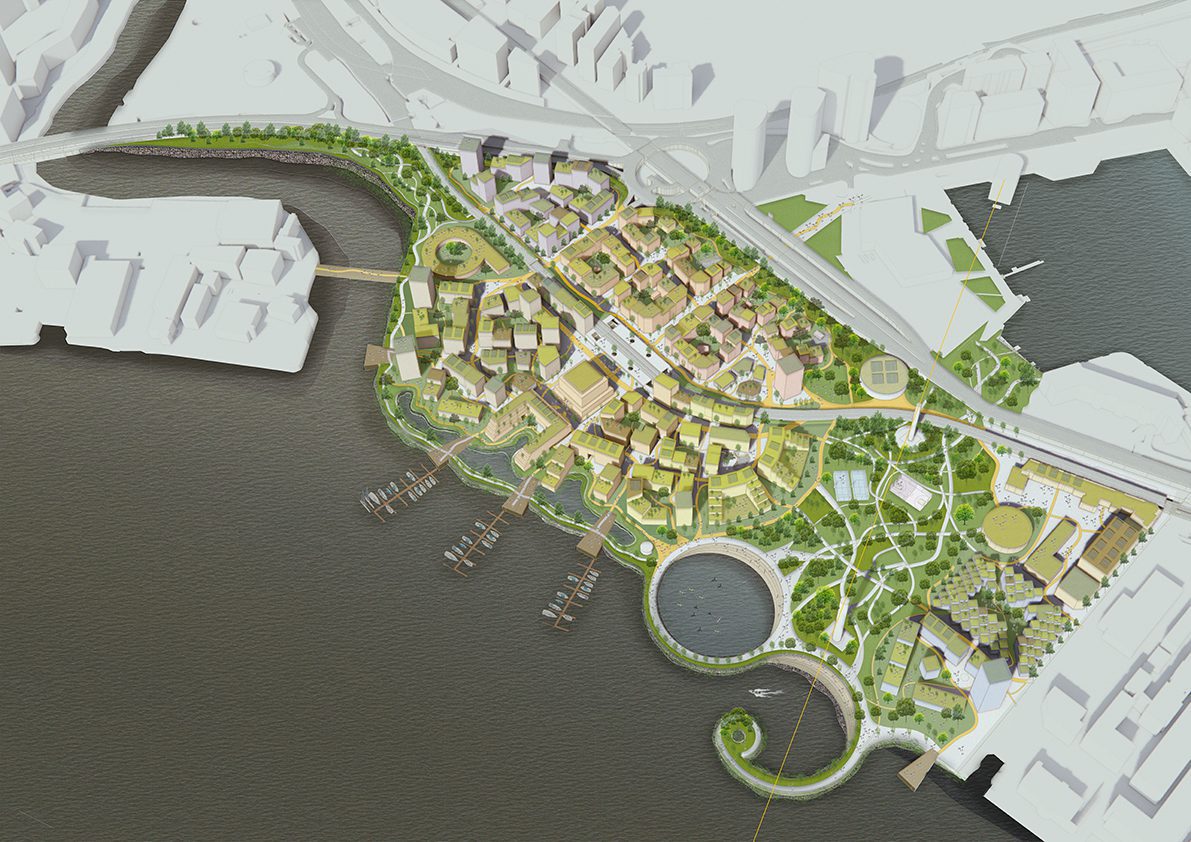
Regenerative Masterplan. Regenerating a 16 hectare former industrial site on the edge of the River Thames into a mixed use neighbourhood informed by integral sustainable design principles.
Thameside West Masterplan — A truly sustainable neighbourhood masterplan. By Xavier Smales.
Location
Silvertown, London Borough of Newham
Objective
To transform a 16Ha former industrial site on the edge of the River Thames into a thriving mixed-use neighbourhood that regenerates the natural world and evolves the social, cultural and psychological health of the city.
Motivation
While enablers of the built environment appear to champion sustainability, most major developments undermine any prospect of mitigating the environmental crisis. If we are truly to take sustainability seriously, we must use the neighbourhood as grounding, as all human life starts here.
Strategy
Specific criteria that define the deeper purpose of a place in a precise context explore a masterplan for ‘Thameside West’ in Newham. The project is an alternative design for the site to the existing proposal by Foster + Partners and is followed by a detailed study of neighbourhoods within the plan.
Impact
The project will be a model for dense, humane development that minimises environmental impact. The matrix developed will be a way of assessing the holistic sustainability of future masterplans.
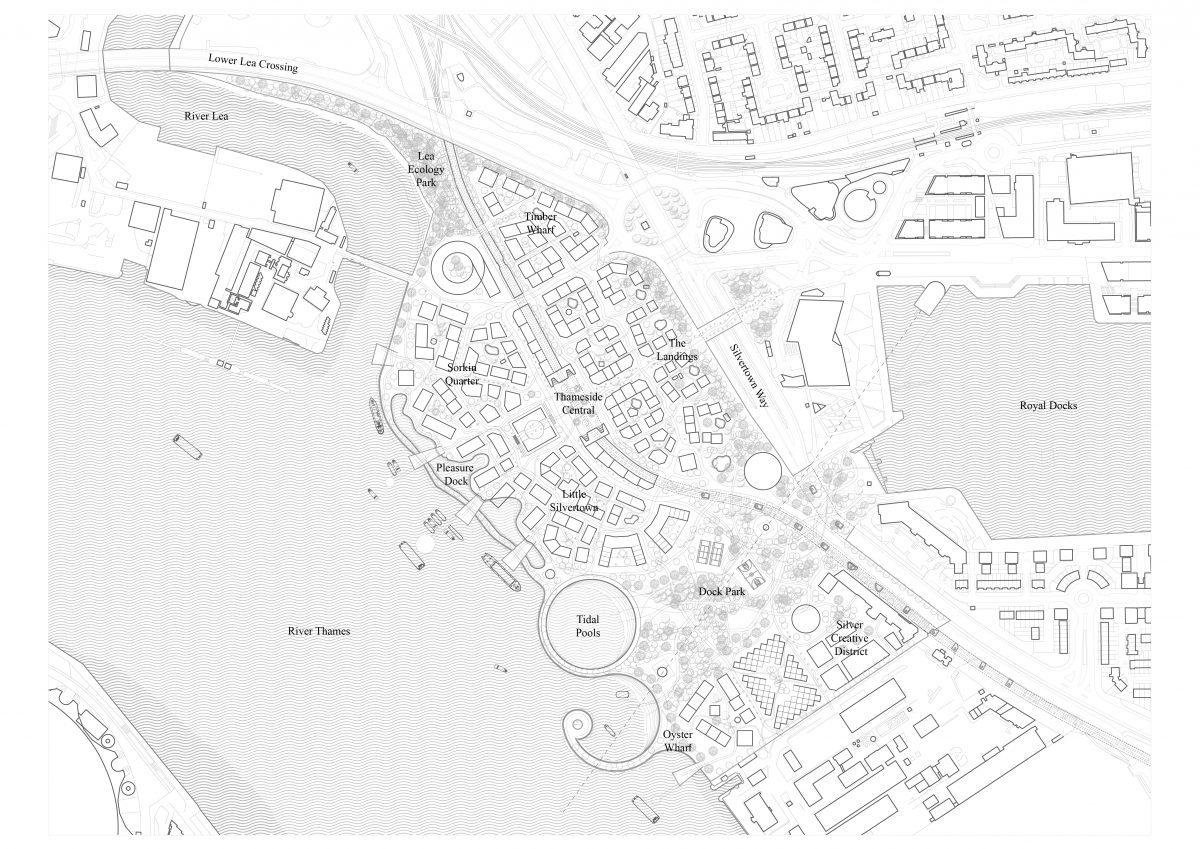
Neighbourhood. The site is made of cluster communities within which adults meet and slowly bond and where children play, grow up and are socialised, providing essential psychological and existential grounding.
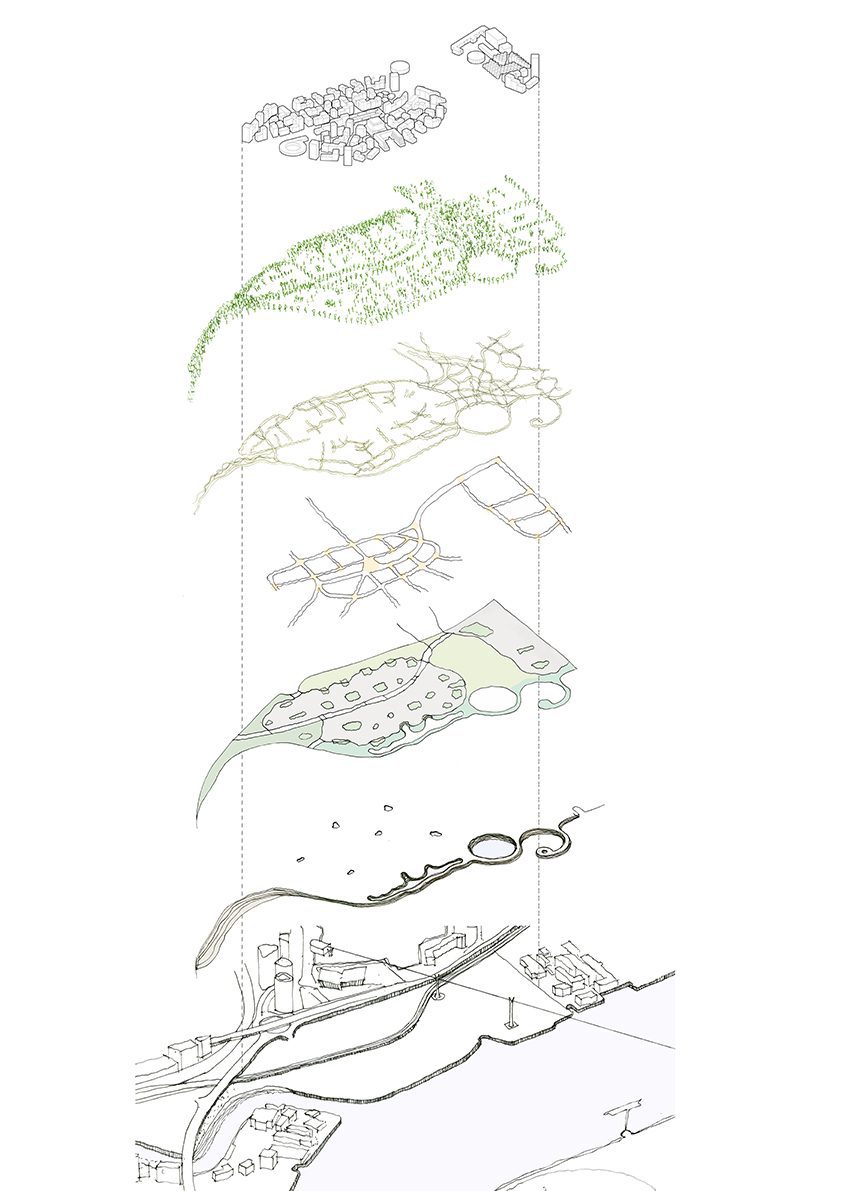
Life > Space > Buildings. Axo shows the layering of life in this masterplan, from ecology to movement to buildings.
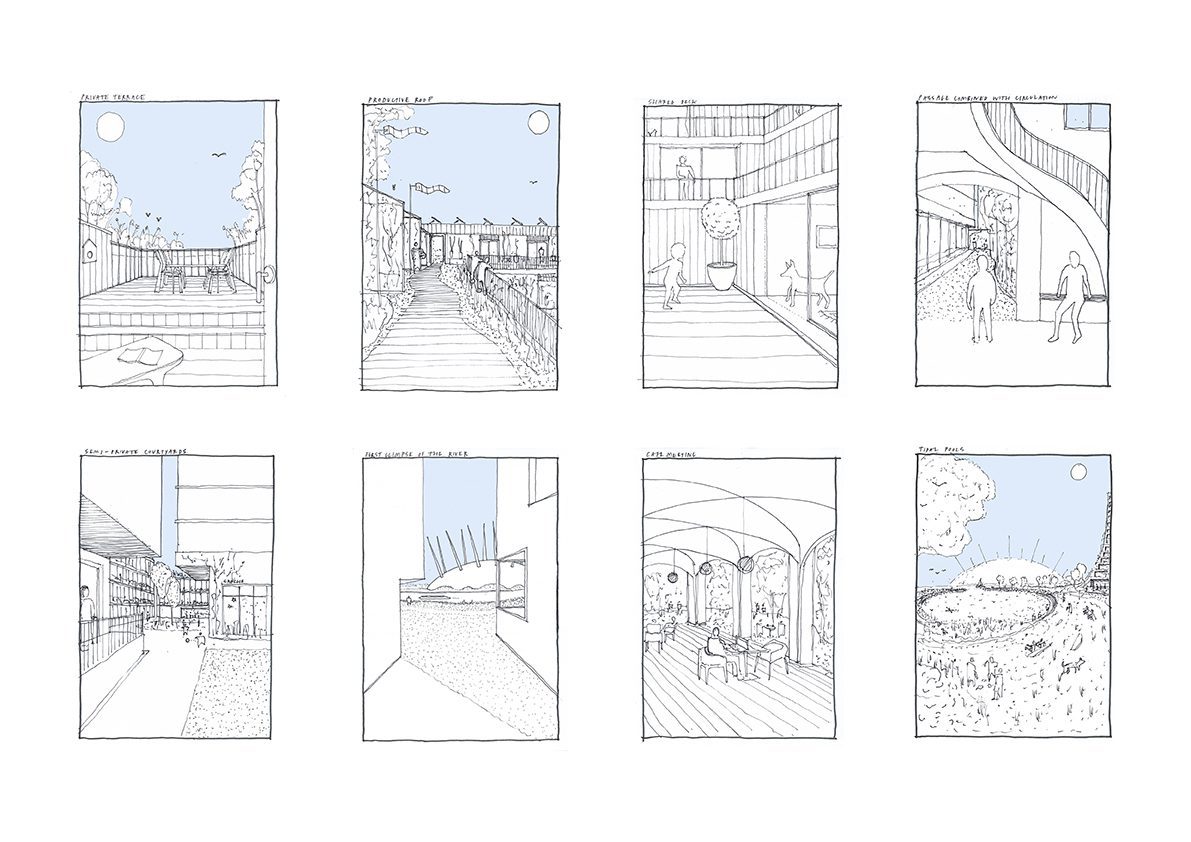
Moments. Key spatial experiences around the site.
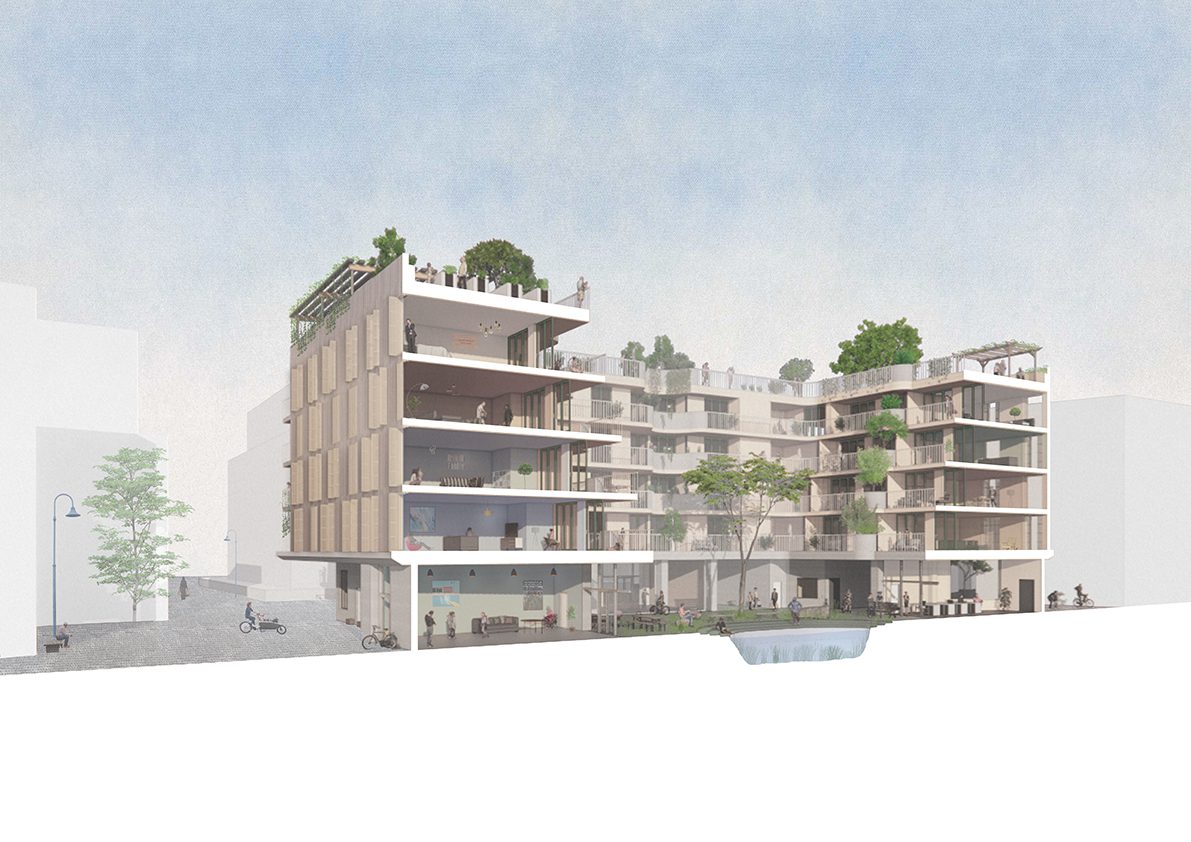
Urban / Natural. All homes are dual aspect and have 2 different frontages; the public facing facade is more closed and discreet whilst a garden facing facade is more open and soft.
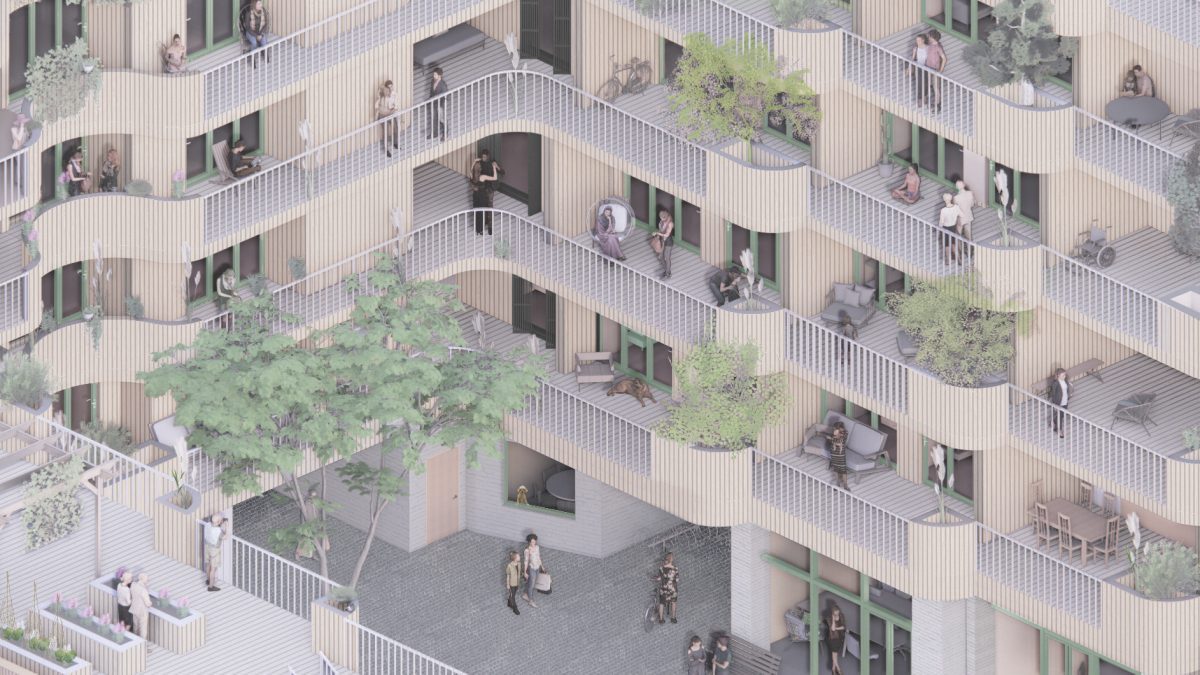
Courtyard. A natural courtyard that promotes a happy, sustainable + communal lifestyle. The language is open, natural and warm. Each unit has a generous semi-private terrace with an integrated planter, encouraging residents to tend to a small tree or shrub. Terraces are connected with a shared deck for children to run round and for neighbours to interact.
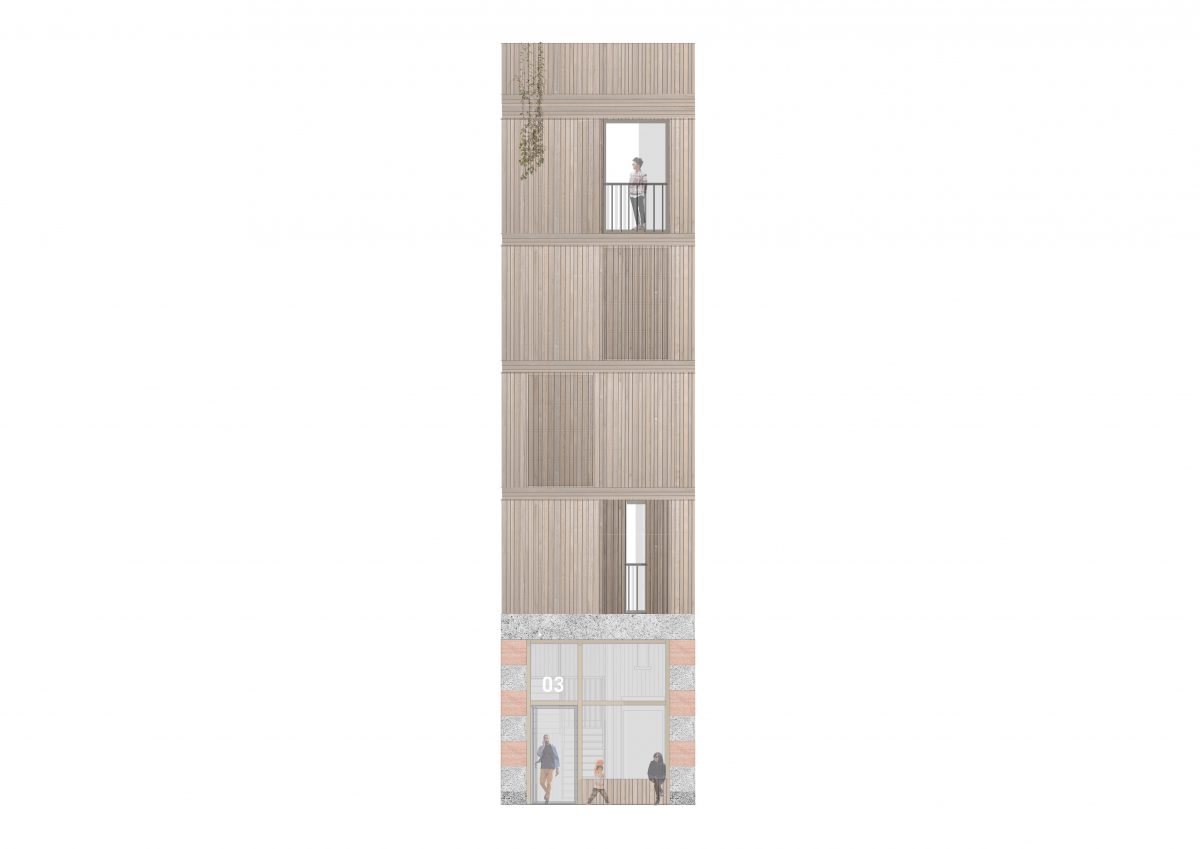
Resident’s Entrance. The first impressions upon arrival are important, so careful consideration has gone into designing the entrance to feel inviting, secure and social.
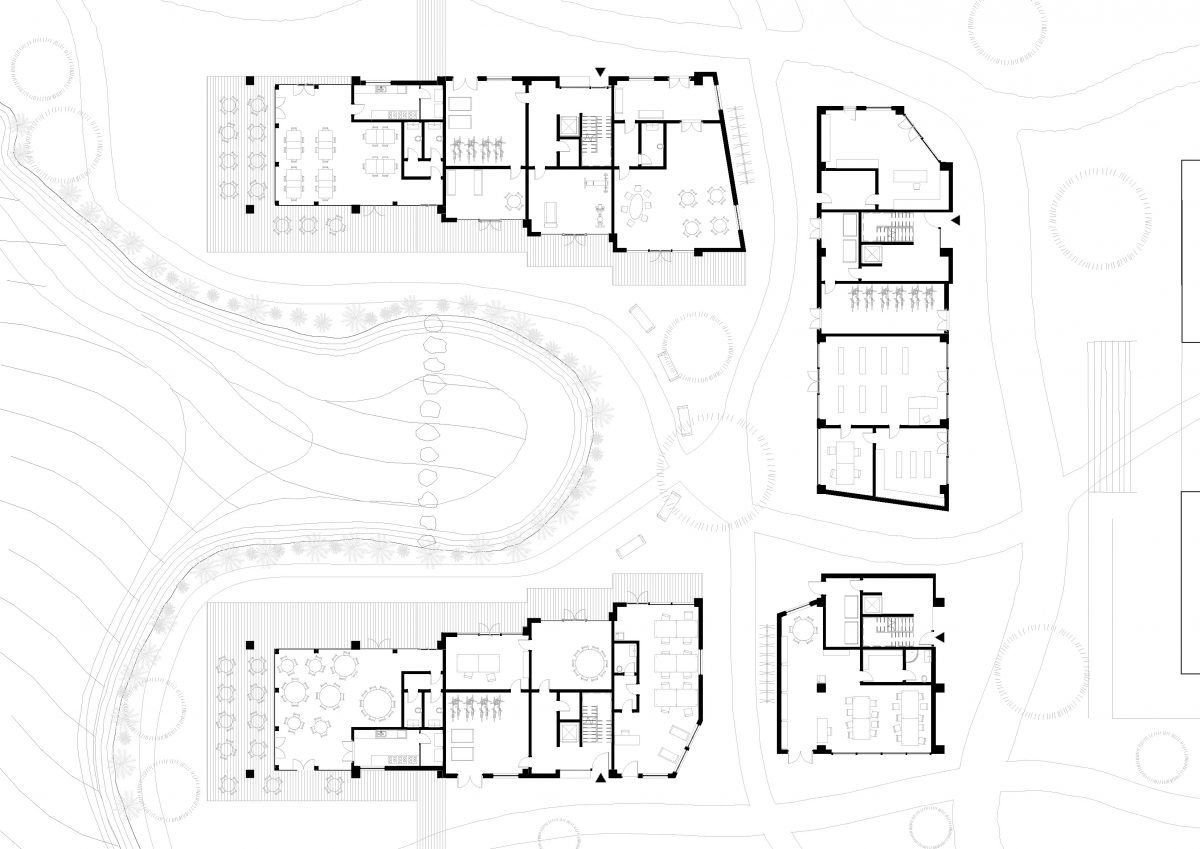
Active Ground Floor. All blocks have a mixed programme at ground floor as well as amenity facilities for residents on the upper levels. Cafes, creches, gyms, workshops and studios help the residents engage with the wider neighbourhood.

Shared Deck. Although not the main circulation, a shared deck connects the private terraces on each level to extend the space for children to run, and to promote interaction amongst neighbours.
Further Work
Contact details
- issuu.com/xav7
- xaviersmales@hotmail.co.uk