

Knowledge
Professor Sadie Morgan OBE: ‘Let’s bring a bit of joy back in our lives’
LSA alumnus wins at Built Environment Awards 2026
Job opportunity: Caretaker
Dezeen School Show: LSA MArch
LSA Part 0 leads shortlisted at the NLA Awards
The LSA Award 2026 Winner: Caspar Barker
LSA Student Highly Commended at Architects for Health Student Design Awards
LSA student named a finalist for the Test of Time Awards
Architectural Education as a Situated Practice and the Little Free Library
From Crisis to Opportunity: Reframing the Future for Architecture Graduates
Architectural Education as a Situated Practice | London Festival of Architecture
LSA Student shortlisted for the AJ New Talent Award
If Only We Will: Degree Show 2026
Belonging by Design: A Collective Act | London Festival of Architecture
Design Think Tank: Call for Practice Briefs
LSA International Field Trip 2026: Belgium
LSA Representation in the AJ Small Projects 2026 shortlist
LSA Student Placement with Ryder Architecture
Alumni Case Study: Elliott Wang
Open Evening 1 April 2026
Design For Life returns this February
Call for Abstracts: Learnings/Unlearnings Conference
Part 0 Lead wins at Inspire Future Generations Awards
Applications open for MArch in Designing Architecture
The University of the Built Environment appoints new Professors
Get to know Lee Ivett
Open Evening 20 January 2026
LSA faculty nominated for Inspire Future Generations Awards
Yang Yang Chen shortlisted for Young Talent award
LSA Part 0 co-leads shortlisted for Inspire Future Generations Awards
LSA tutor is RIBA House of the Year finalist
Lee Ivett Open Evening Speech
Hugh Strange Architects: House of the Year 2025 shortlist
Lee Ivett starts as Head of School
LSA tutor wins Young Architect of the Year 2025
Open Evening 19 November 2025
AJ Student Prize | Postgraduate Winner: Amy Wilkinson
Hugh Strange Architects Shortlisted for RIBA Stirling Prize 2025
‘Design for Life’ returns this November – Part 4
Lee Ivett appointed as Head of School at London School of Architecture
George Moldovan shortlisted for 2025 Structural Timber Awards
‘A Seat at the Table’ Summer Show 2025
University of the Built Environment
OPEN DAY 11 June 2025
Future Skills Think Tank
LSA and UCEM merge
Future Skills Think Tank
Festival of the Future
Sixty years on from the London County Council: legacy, impact, learning
Dr Neal Shasore stepping down as Head of School and Chief Executive of the London School of Architecture (LSA) in February 2025
Load moreTeaching design at the LSA — Matthew Whittaker
We spoke to the Design Tutors delivering our programme at the LSA and asked about their design methodology and ethos as professional designers and architects. Matthew Whittaker is a Second Year Design Tutor at the LSA and co-founder of architecture studio Whittaker Parsons. Here’s what he had to say.

Matthew (left) and fellow co-founder of Whittaker Parsons, Camilla Parsons (right).
Design a big question. Design is first and foremost a collaboration with the site, the city, a client, each other, the climate emergency and architectural history — the list is long, varied and always changing. The choice of relevant collaborators and one’s ability to understand their constraints has a direct impact on the outcome of a project. Design is a constant negotiation between collaborators and their constraints but often the most important constraints are the ones that we imposed ourselves.
By understanding the constraints surrounding a project we can begin to see where the possibilities lie and suddenly the project begins to take shape, driven by its own internal logic. The designer’s role is to guide the project to a form of completion. This approach creates a consistent methodology that can be used across a range of different projects types. It does not rely on ego or preconceived ideas and as a result it creates projects that are bespoke, unique and often have unexpected outcomes.
Project 1 — The Library of Exile
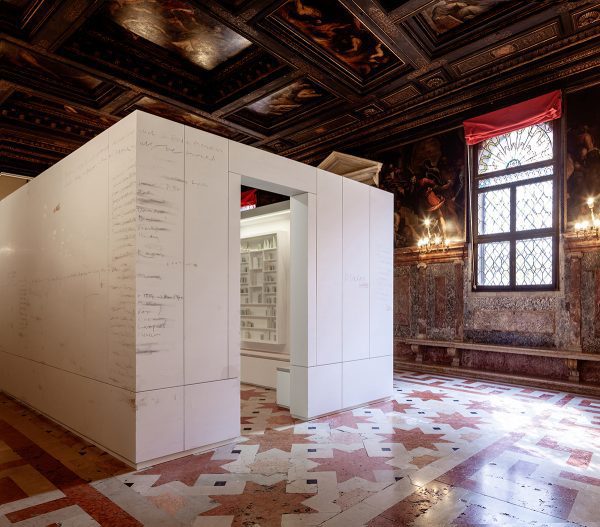
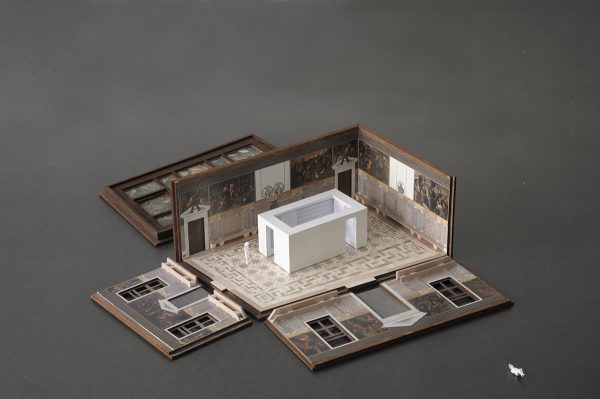

Whittaker Parsons worked with the artist Edmund de Waal, to design a temporary pavilion for his major new exhibition Psalm, opened to coincide with the Venice Biennale 2019. The library of exile is a temporary pavilion housed at Ateneo Veneto, a magnificent sixteenth-century building which has been a meeting place for cultural events and a forum for critical debate in Venice for over two centuries. Located in the San Marco district of Venice, near the Venice Opera House, the pavilion holds almost 2000 books by exiled writers along with four of de Waal’s vitrines. Books housed inside the pavilion are in many languages or are a translation, reflecting the culture of translation within Venice.
The proportion and detailed design of the pavilion is a response to the Aula Magna room, creating an intimate space to sit, read and contemplate, within the great hall, while references to marble panelling lining the walls have been made, leaving the ceiling open to enable the ornate lacunar ceiling to be admired. The Library of Exile was constructed using external panelling composed of plywood cladding painted with a porcelain slip, gold leaf and inscribed with names of lost libraries in graphite.
Project 2 — Gentle Monster

Ground Floor Axo
Lower Ground Axo
Staircase model
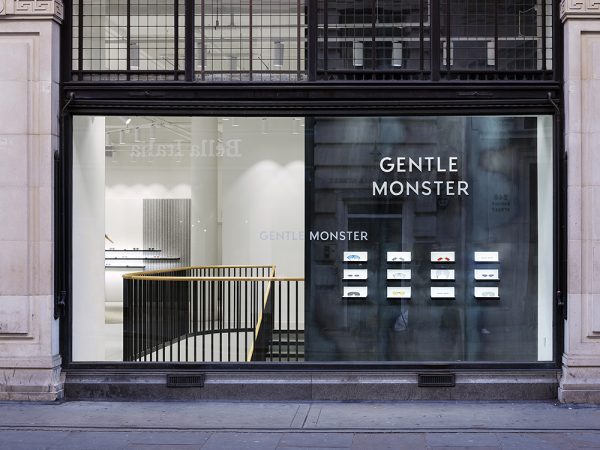

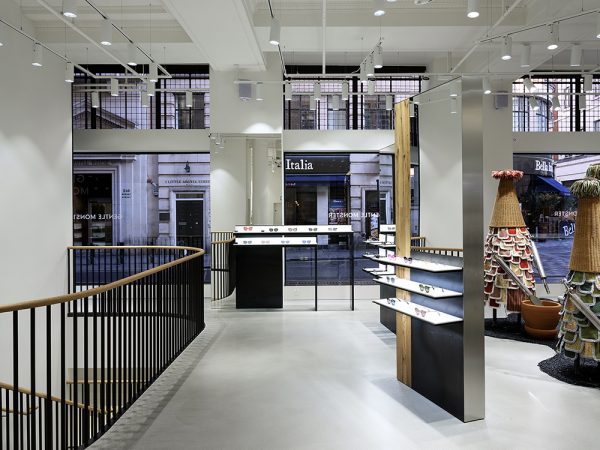
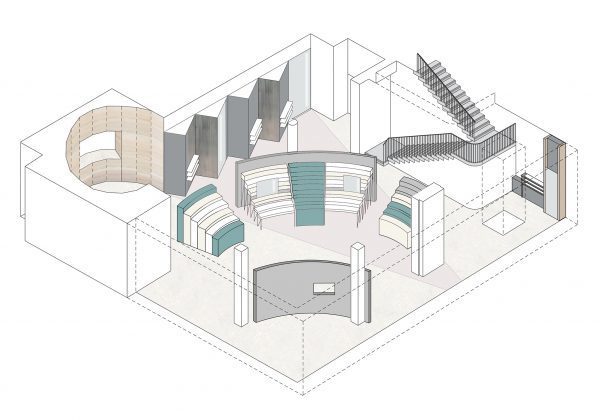
Whittaker Parsons was appointed by Korean sunglasses brand Gentle Monster to realise their first European Flagship Store and offices, located in central London, a minutes’ walk from Oxford Circus. The store sits on the corner of Argyll and Little Argyll Street, in the former Dickins and Jones department store, a Grade II Listed building.
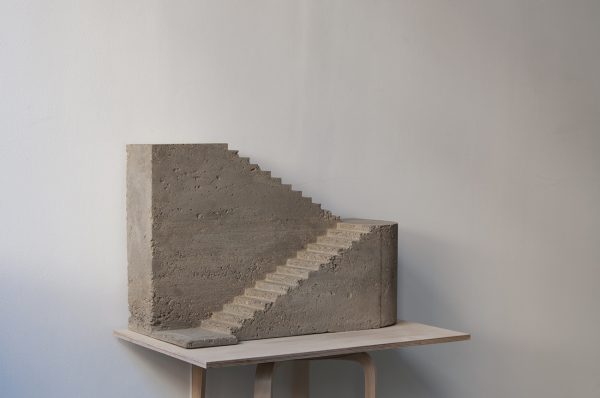
The project combines two retail units spanning three floors, creating a gallery to showcase Gentle Monster’s sculptures and sunglasses. Inside, grand interior volumes and historical cornices were reinstated by developing a new perimeter service strategy which enable the existing suspended ceilings to be removed. The new interventions, such as the precast concrete, oak and bronze staircase to the rear of the plan, references the existing materiality of the building but also seeks to unify the bold materials selected across two retail floors in the sculptures and display stands.