

Knowledge
Professor Sadie Morgan OBE: ‘Let’s bring a bit of joy back in our lives’
LSA alumnus wins at Built Environment Awards 2026
Job opportunity: Caretaker
Dezeen School Show: LSA MArch
LSA Part 0 leads shortlisted at the NLA Awards
The LSA Award 2026 Winner: Caspar Barker
LSA Student Highly Commended at Architects for Health Student Design Awards
LSA student named a finalist for the Test of Time Awards
Architectural Education as a Situated Practice and the Little Free Library
From Crisis to Opportunity: Reframing the Future for Architecture Graduates
Architectural Education as a Situated Practice | London Festival of Architecture
LSA Student shortlisted for the AJ New Talent Award
If Only We Will: Degree Show 2026
Belonging by Design: A Collective Act | London Festival of Architecture
Design Think Tank: Call for Practice Briefs
LSA International Field Trip 2026: Belgium
LSA Representation in the AJ Small Projects 2026 shortlist
LSA Student Placement with Ryder Architecture
Alumni Case Study: Elliott Wang
Open Evening 1 April 2026
Design For Life returns this February
Call for Abstracts: Learnings/Unlearnings Conference
Part 0 Lead wins at Inspire Future Generations Awards
Applications open for MArch in Designing Architecture
The University of the Built Environment appoints new Professors
Get to know Lee Ivett
Open Evening 20 January 2026
LSA faculty nominated for Inspire Future Generations Awards
Yang Yang Chen shortlisted for Young Talent award
LSA Part 0 co-leads shortlisted for Inspire Future Generations Awards
LSA tutor is RIBA House of the Year finalist
Lee Ivett Open Evening Speech
Hugh Strange Architects: House of the Year 2025 shortlist
Lee Ivett starts as Head of School
LSA tutor wins Young Architect of the Year 2025
Open Evening 19 November 2025
AJ Student Prize | Postgraduate Winner: Amy Wilkinson
Hugh Strange Architects Shortlisted for RIBA Stirling Prize 2025
‘Design for Life’ returns this November – Part 4
Lee Ivett appointed as Head of School at London School of Architecture
George Moldovan shortlisted for 2025 Structural Timber Awards
‘A Seat at the Table’ Summer Show 2025
University of the Built Environment
OPEN DAY 11 June 2025
Future Skills Think Tank
LSA and UCEM merge
Future Skills Think Tank
Festival of the Future
Sixty years on from the London County Council: legacy, impact, learning
Dr Neal Shasore stepping down as Head of School and Chief Executive of the London School of Architecture (LSA) in February 2025
Load moreTeaching design at the LSA — Esther Escribano
We spoke to the Design Tutors delivering our programme at the LSA and asked about their design methodology and ethos as professional designers and architects. Esther Escribano is a First Year Design Tutor at the LSA and architect at Studio Weave as well as a PhD candidate at Valladolid University. Here’s what he had to say.

I understand designing architecture as a collaborative exercise in which we are constantly looking for answers and these answers, in turn, bring more questions. I am interested in architecture that fits the purpose and yet adapts to the unforeseen, introducing time as a project-shaping factor. Design becomes architecture when it is activated by the people who inhabit it.
Designing from the context is the natural way for me to approach architecture. A context that means place, memory, space… with its visible and invisible conditions. Architecture should work as a device that transforms spaces and reveals latent aspects of places. I believe in the design process as an integrative activity in which elements such as structure, constructive solutions and materials are present from the beginning. In order to achieve this integration, I try to articulate a strategy for all these elements to work together as an organism.
Project 1 — Greenwich Pavilion
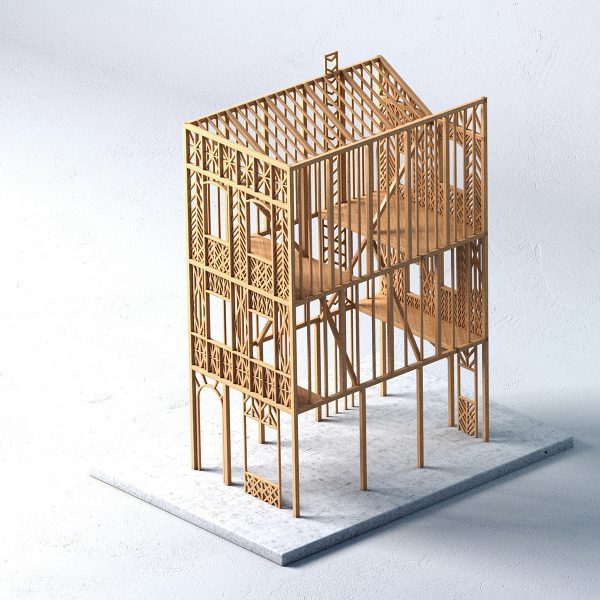
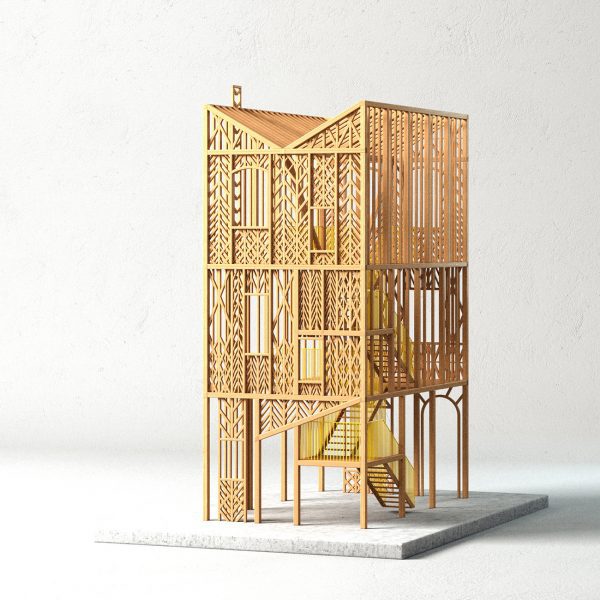


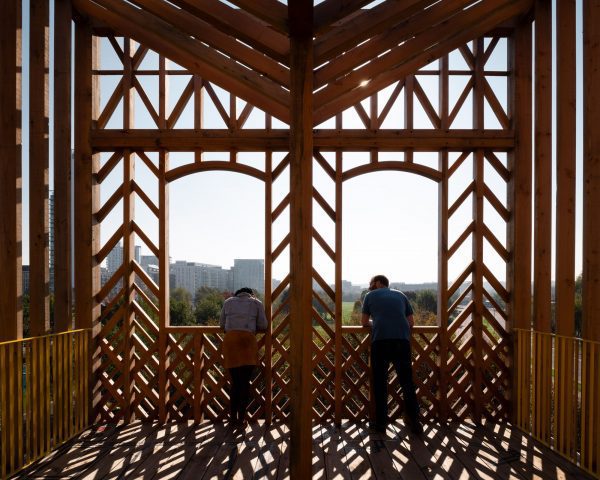
I see this intervention as an artefact that makes the individual question themselves about the city which they inhabit. This building operates, by contrast, as a landmark: In an urban context which is sometimes hostile, this pavilion tries to bring human scale to the visitor. The proposal is a very direct architectural response to its environment — this is building in which bones and skin are the same; a construction in which structure and façade are all composed from the same elements and materials. The coloured elements meanwhile entice people to explore the pavilion, a red door for example invites visitors to enter and the yellow stairs to be climbed while the structure’s other apertures amplify its visual permeability and and instil a sense of openness.
Project 2 — St. Peter in the Forest
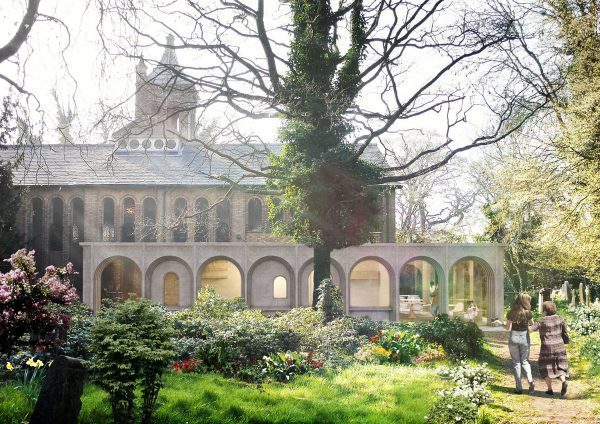
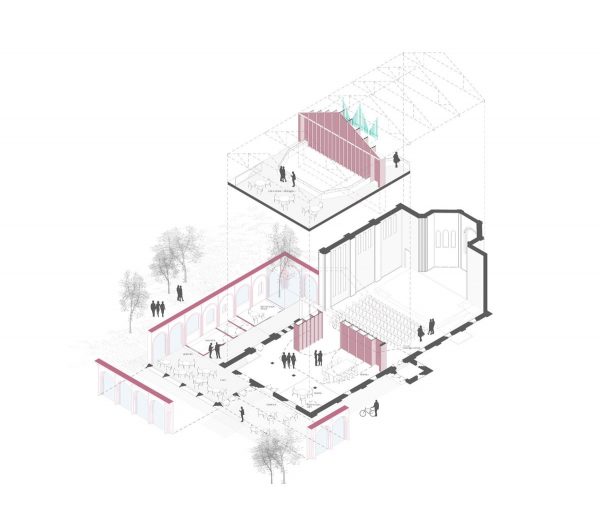
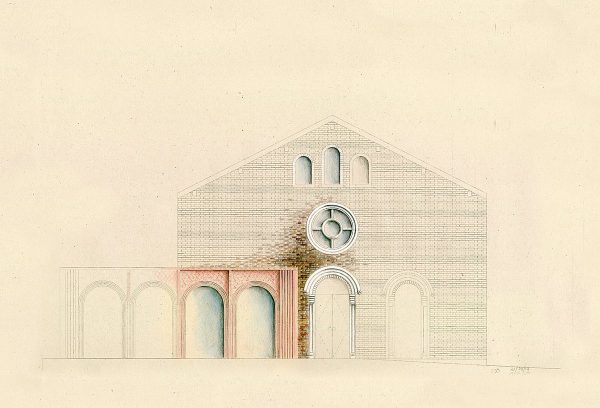
The setting of St Peter in the Forest church is very special and multi-layered. Over the years, the church has been adapted in response to its changing circumstances, and in the process some of its colours have faded. The proposal celebrates its rich layers of history and heightens the experiential qualities of this extraordinary place while the intervention adds a new layer to this palimpsest, wrapping the existing construction through a respectful gesture.