

Knowledge
Professor Sadie Morgan OBE: ‘Let’s bring a bit of joy back in our lives’
LSA alumnus wins at Built Environment Awards 2026
Job opportunity: Caretaker
Dezeen School Show: LSA MArch
LSA Part 0 leads shortlisted at the NLA Awards
The LSA Award 2026 Winner: Caspar Barker
LSA Student Highly Commended at Architects for Health Student Design Awards
LSA student named a finalist for the Test of Time Awards
Architectural Education as a Situated Practice and the Little Free Library
From Crisis to Opportunity: Reframing the Future for Architecture Graduates
Architectural Education as a Situated Practice | London Festival of Architecture
LSA Student shortlisted for the AJ New Talent Award
If Only We Will: Degree Show 2026
Belonging by Design: A Collective Act | London Festival of Architecture
Design Think Tank: Call for Practice Briefs
LSA International Field Trip 2026: Belgium
LSA Representation in the AJ Small Projects 2026 shortlist
LSA Student Placement with Ryder Architecture
Alumni Case Study: Elliott Wang
Open Evening 1 April 2026
Design For Life returns this February
Call for Abstracts: Learnings/Unlearnings Conference
Part 0 Lead wins at Inspire Future Generations Awards
Applications open for MArch in Designing Architecture
The University of the Built Environment appoints new Professors
Get to know Lee Ivett
Open Evening 20 January 2026
LSA faculty nominated for Inspire Future Generations Awards
Yang Yang Chen shortlisted for Young Talent award
LSA Part 0 co-leads shortlisted for Inspire Future Generations Awards
LSA tutor is RIBA House of the Year finalist
Lee Ivett Open Evening Speech
Hugh Strange Architects: House of the Year 2025 shortlist
Lee Ivett starts as Head of School
LSA tutor wins Young Architect of the Year 2025
Open Evening 19 November 2025
AJ Student Prize | Postgraduate Winner: Amy Wilkinson
Hugh Strange Architects Shortlisted for RIBA Stirling Prize 2025
‘Design for Life’ returns this November – Part 4
Lee Ivett appointed as Head of School at London School of Architecture
George Moldovan shortlisted for 2025 Structural Timber Awards
‘A Seat at the Table’ Summer Show 2025
University of the Built Environment
OPEN DAY 11 June 2025
Future Skills Think Tank
LSA and UCEM merge
Future Skills Think Tank
Festival of the Future
Sixty years on from the London County Council: legacy, impact, learning
Dr Neal Shasore stepping down as Head of School and Chief Executive of the London School of Architecture (LSA) in February 2025
Load moreTeaching design at the LSA — Maria-Chiara Piccinelli and Maurizio Mucciola
We spoke to the Design Tutors delivering our programme at the LSA and asked about their design methodology and ethos as professional designers and architects. Maria-Chiara Piccinelli and Maurizio Mucciola are co-founders of PiM.Studio. Maria-Chiara is a First Year Design Tutor and the LSA and Maurizio Mucciola leads the Design Think Tank ‘Nature and Rewilding’. Here’s what they had to say.
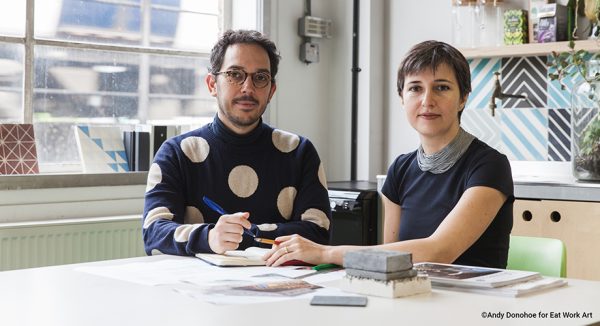
Maurizio (left) and Maria (right) in the PiM.Studio office.
Design is about finding the right solution for each project, no two projects are same; therefore, no two answers can be the same. We never work with predetermined solutions for a project: each time we start fresh, investigating the problem and designing as many iterations as we can think of, until we find the solution, we feel is the right answer. This may seem an inefficient design process, and it is. But design is not about being efficient, it is about finding the best answer to each project. We approach big and small projects with the same passion; every project is alive with possibility. We work closely with our clients at every stage, from that initial conversation, through construction and beyond. In every case, we find the best answer to the very specific question that the client and the site present us with. And then we go one step further to include something fresh and unexpected.
Project 1 — Patio house
Geneva (currently on site)
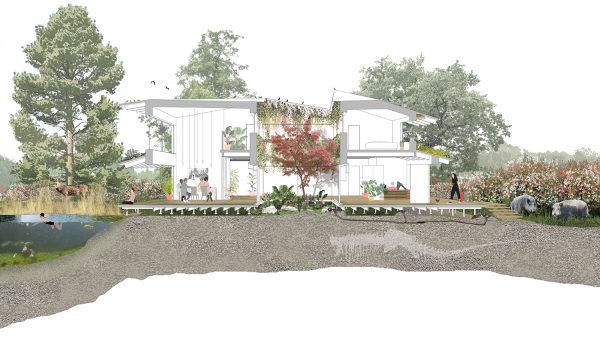

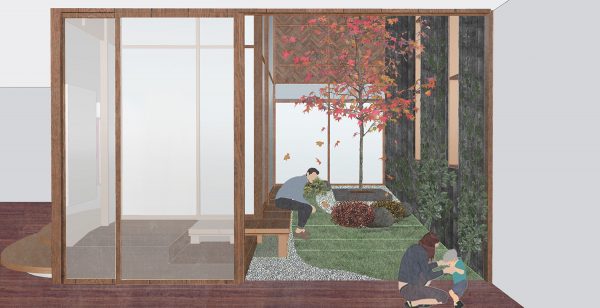
The house is designed around a central open patio as a natural element generating the entire design. From each room, there is a view to the patio on one side and to the garden on the other side, so that each interior space faces on two sides natural spaces of different scaler and characters. The building is slightly raised off the ground, to create a space under the house that will allow continuity for the nature to grow around and under the house and so the building doesn’t act as a barrier.
We want to connect with nature not just in the morphology of the architecture, but also with the use of local and natural materials: we’re using bricks that are made of soil from the site, and we will paint the walls with clay that will naturally control the humidity inside the house. The green roof will increase the architecture biodiversity and donate a soft view from the bedroom’s windows on the first floor. Again, the green roof is an essential moment of exchange between nature and architecture, allowing green as bees and butterflies to find the right environment for them. By creating in-between spaces that expand the inside/outside boundary concept, we are able to meet the needs of the family as well as the other living beings. The house seats happily in its site also with the introduction of a natural pond and a wild garden.
Project 2 — A Second Life
An exhibition designed by PIM.studio for matter of stuff at sketch during London Design Festival 2019.
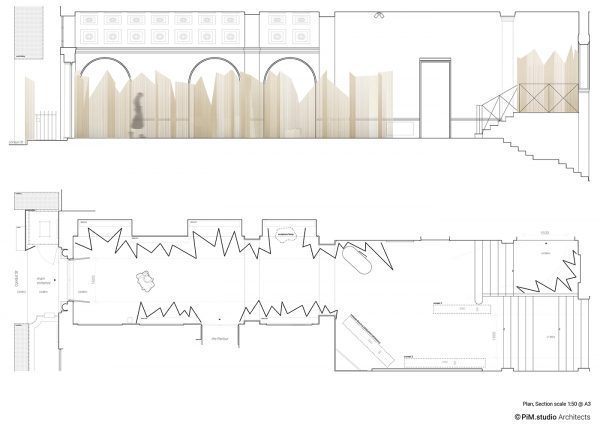

Sketch, London Design Festival, 2019

Second Life at the London Design Festival, 2019.
We, and other designers transformed hundreds of wooden dowels used for the scenography of Matter of Stuff’s 2018 LDF exhibition into an array of experimental new works. Instead of recycling the dowels through mulching, the gallery asked the designers to reinterpret, explore and experiment with the material to create new designs while maintaining some of the structural integrity of the original installation. The result is a resolute and ongoing statement about the infinite possibilities of sustainable design, upcycling and waste avoidance. Imagining a dynamic, new spatial experience within the sketch entrance, we have used the pine dowels to create new elegant temporary walls.
Project 3 — Sevenoaks Visitor Centre
Kent, 2017 competition submission
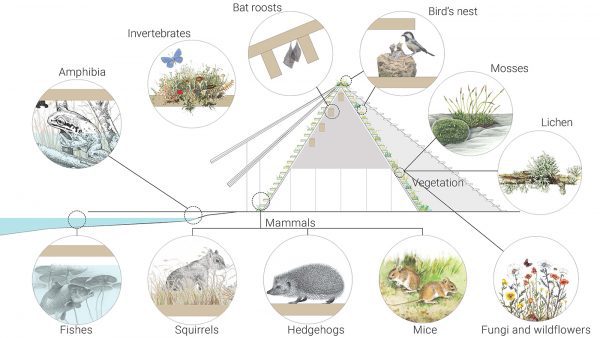
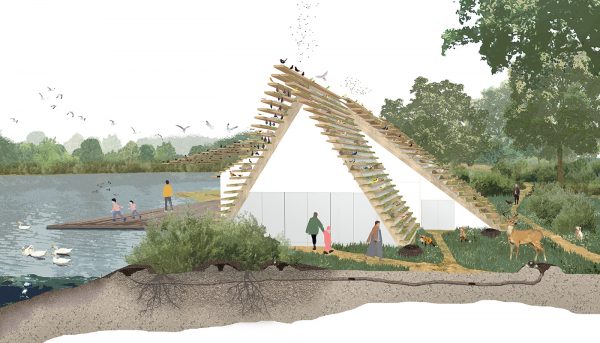
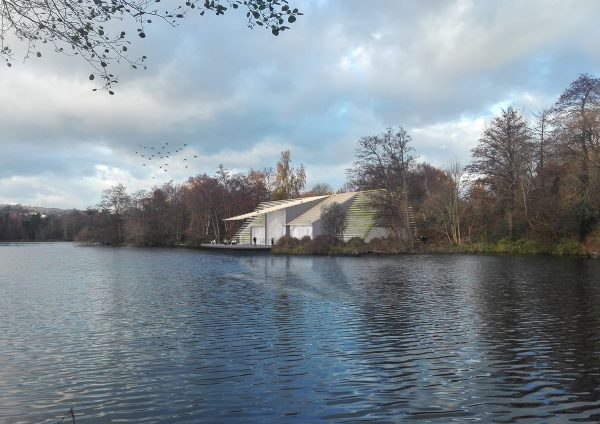
Multi Species architecture: Our proposal for the new Visitor Centre building aims at creating harmony with the surrounding nature in a two ways integration. On one hand, the building engages with the surrounding space by opening itself toward the outside, the lake and the nature, through a large outdoor Lake Terrace and an outdoor studio to the north.
On the other, we seek to integrate the Nature into the building by maximising opportunities for the Reserve’s flora and fauna to ‘use’ the building as part of the natural environment. By designing different typologies of interstitial spaces all around the building skin, including on the roof, the external facades and under the building, we encourage small animals such as birds, bats and other to make the building as their home. Similarly, the roof design naturally encourages the growth of moss on its surface and this will contribute to create a building which also acts as an ecosystem.