

Knowledge
Professor Sadie Morgan OBE: ‘Let’s bring a bit of joy back in our lives’
LSA alumnus wins at Built Environment Awards 2026
Job opportunity: Caretaker
Dezeen School Show: LSA MArch
LSA Part 0 leads shortlisted at the NLA Awards
The LSA Award 2026 Winner: Caspar Barker
LSA Student Highly Commended at Architects for Health Student Design Awards
LSA student named a finalist for the Test of Time Awards
Architectural Education as a Situated Practice and the Little Free Library
From Crisis to Opportunity: Reframing the Future for Architecture Graduates
Architectural Education as a Situated Practice | London Festival of Architecture
LSA Student shortlisted for the AJ New Talent Award
If Only We Will: Degree Show 2026
Belonging by Design: A Collective Act | London Festival of Architecture
Design Think Tank: Call for Practice Briefs
LSA International Field Trip 2026: Belgium
LSA Representation in the AJ Small Projects 2026 shortlist
LSA Student Placement with Ryder Architecture
Alumni Case Study: Elliott Wang
Open Evening 1 April 2026
Design For Life returns this February
Call for Abstracts: Learnings/Unlearnings Conference
Part 0 Lead wins at Inspire Future Generations Awards
Applications open for MArch in Designing Architecture
The University of the Built Environment appoints new Professors
Get to know Lee Ivett
Open Evening 20 January 2026
LSA faculty nominated for Inspire Future Generations Awards
Yang Yang Chen shortlisted for Young Talent award
LSA Part 0 co-leads shortlisted for Inspire Future Generations Awards
LSA tutor is RIBA House of the Year finalist
Lee Ivett Open Evening Speech
Hugh Strange Architects: House of the Year 2025 shortlist
Lee Ivett starts as Head of School
LSA tutor wins Young Architect of the Year 2025
Open Evening 19 November 2025
AJ Student Prize | Postgraduate Winner: Amy Wilkinson
Hugh Strange Architects Shortlisted for RIBA Stirling Prize 2025
‘Design for Life’ returns this November – Part 4
Lee Ivett appointed as Head of School at London School of Architecture
George Moldovan shortlisted for 2025 Structural Timber Awards
‘A Seat at the Table’ Summer Show 2025
University of the Built Environment
OPEN DAY 11 June 2025
Future Skills Think Tank
LSA and UCEM merge
Future Skills Think Tank
Festival of the Future
Sixty years on from the London County Council: legacy, impact, learning
Dr Neal Shasore stepping down as Head of School and Chief Executive of the London School of Architecture (LSA) in February 2025
Load moreThe LSA represented at this year’s Venice Biennale
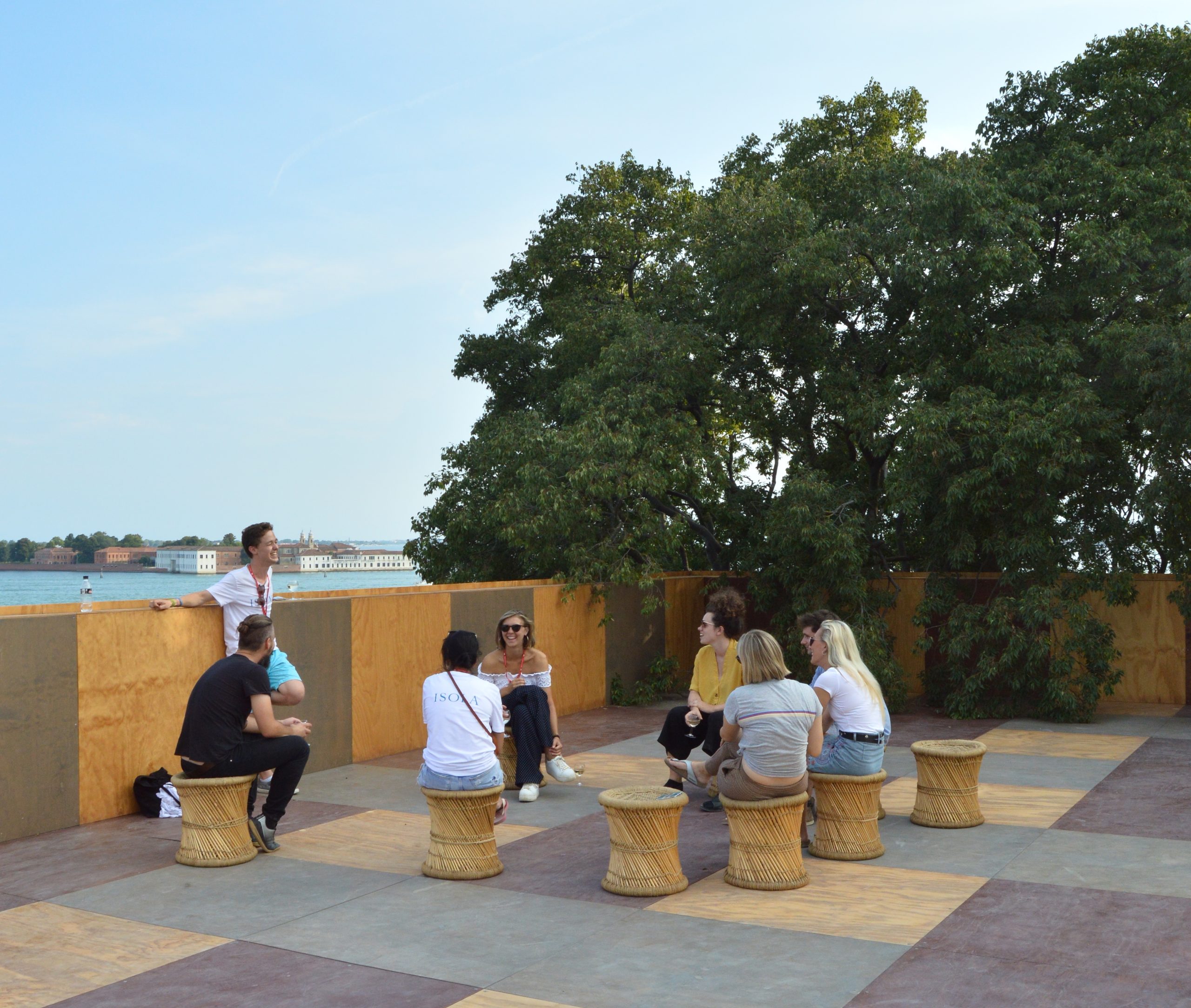
Cameron Lintott on the roof of ISLAND, the British pavilion at the 2018 Venice Biennale. (credit: Hugo Lopes)
Cameron Lintott is a Second Year student at the LSA. In January 2018, he entered a competition to be the LSA’s representative for the British Council-run fellowship in Venice, a month-long programme with around 70 other students, graduates and researchers running in tandem with the Architecture Biennale. Responding to a brief based on John Ruskin’s sketches of the city, Cameron proposed a study of architectural details in contemporary renovations focusing on three sites around Venice: David Chipperfield’s San Michele Cemetery extension, Carlo Scarpa’s Querini Stampalia and OMA’s renovation to the Fondaco dei Tedeschi. The LSA’s participation in the scheme is thanks to the generous support from the Drake Trust, which supports education and training in building conservation. Below is Cameron’s account of the fellowship programme.
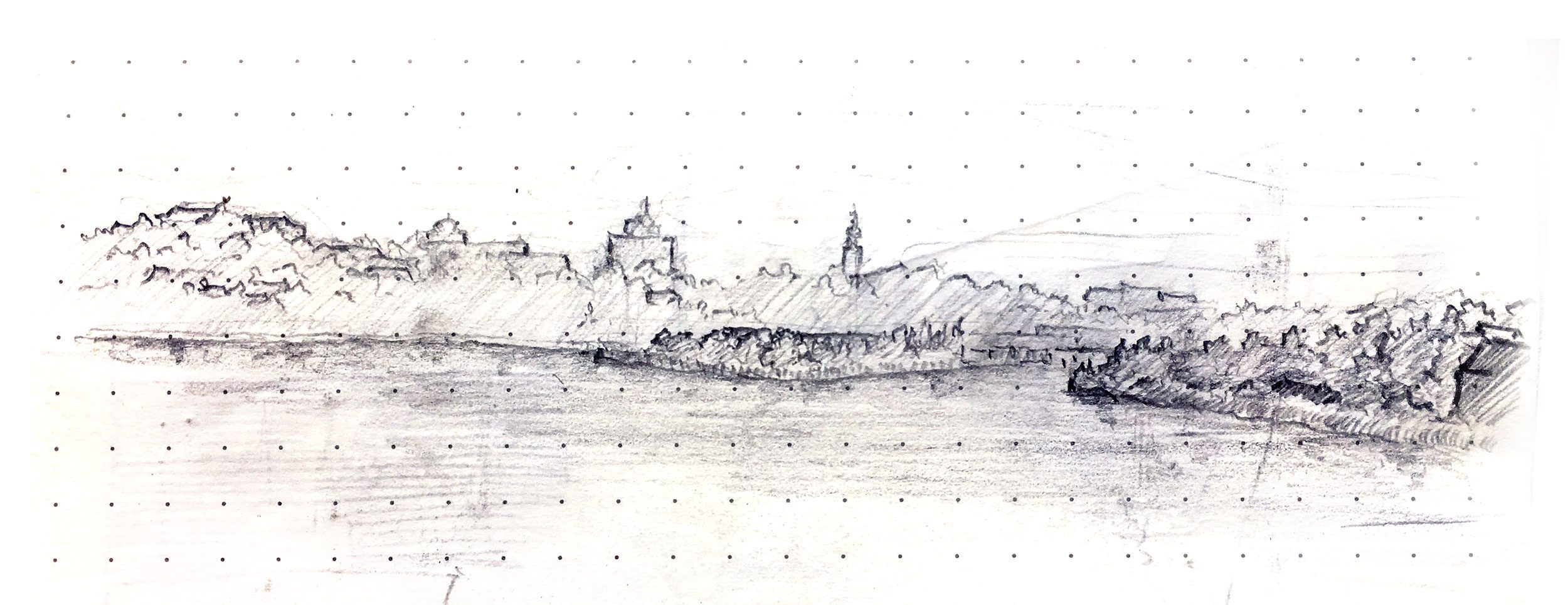
Sketch of a Venetian vista. (credit: Cameron Lintott)
Our time in Venice was split into two parts, with half of our days being spent at the British Pavilion, representing the British Council by talking to visitors and looking after the exhibition. With the pavilion largely empty this year, our role expanded, placing us near the centre of the performance. The empty halls of the pavilion, echoing and slightly crisp with air-conditioning, were inhabited not by British work, but by events and performances from other countries and institutions, making a point – for me at least – about the reality of British design.
The empty rooms reaffirmed Britain as a vessel, filled with the best and brightest from around the world to create a design hub that is truly multicultural, multi-lingual and multi-perspective. The ARB reported that around 25 per cent of registered Architects in the UK are from abroad with Dezeen adding that this number rises to nearly 50 per cent in London. In the wake of isolationist political movements, this statement came as a needed reminder and the make-up of the fellowship team reinforced this message. Comprising representatives from educational institutions up and down the country, we reflected London’s multi-cultural creative industry. In being the face of the pavilion, we were also on show, lending credence to that message and perhaps suggesting a brighter future with us at the helm.
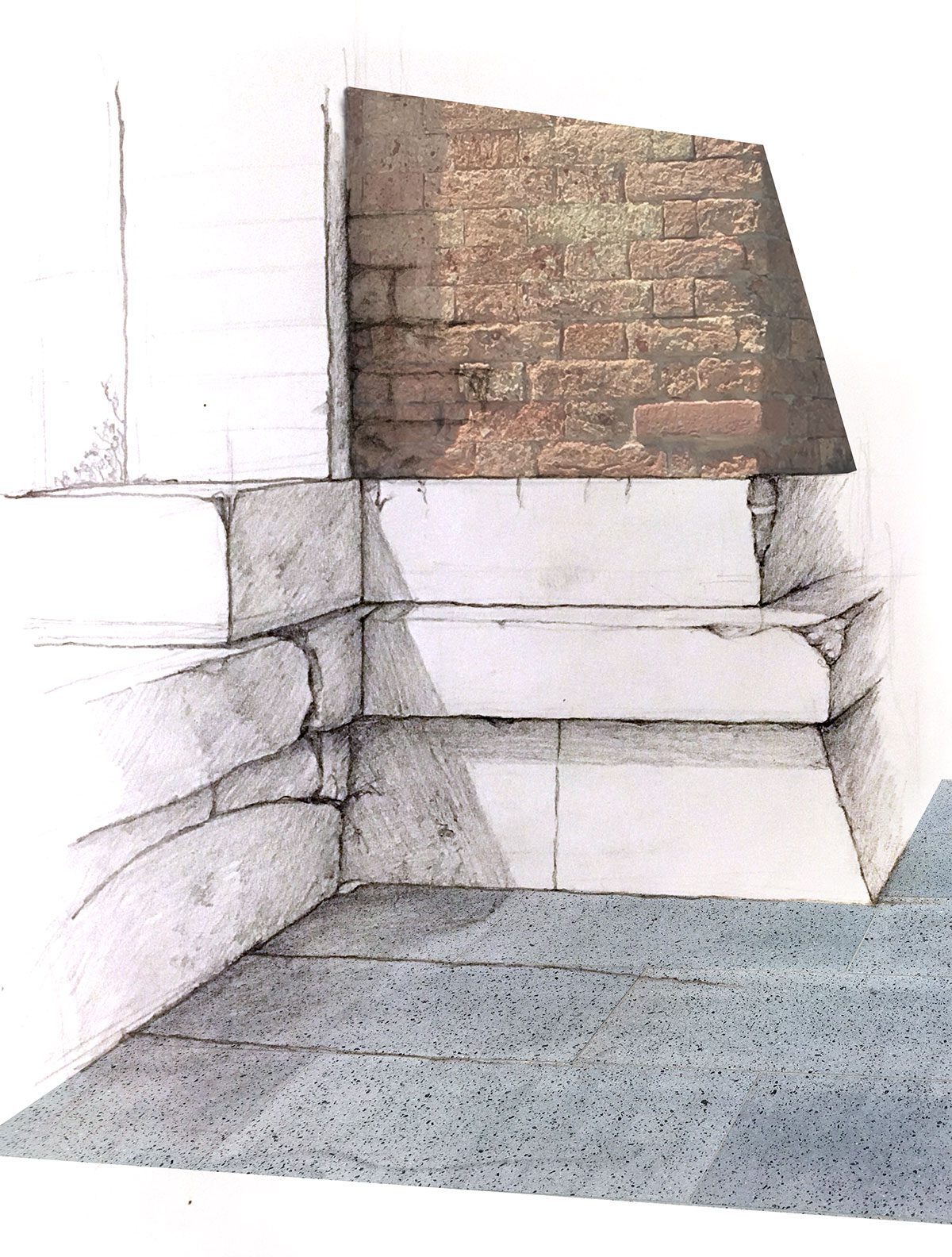
The other half of our time was focused on research, in my case expanding on the proposal I created for the competition. This started with visiting my proposed sites, taking notes, sketches and photographs. Naturally, any proposal develops quickly as you put it into practice, and my research during this fellowship was nudged in new directions by those I met in Venice. A chance encounter at the pavilion with an Architectural Conservation PhD from Edinburgh introduced me to the Athens and Venice Charters that set down rules about how interventions into conservation areas should be approached.

A call with Fabio, a local Architect, organised by the British Council, led to some more Venice-centric examples of the enforced legibility of new architecture against old, including the VAC Foundation where London studio Assemble’s tiles on show in the Giardini will be installed at the end of the Biennale. He also mentioned work at IUAV, an Arts and Architecture school based in Venice, using photogrammetry software to reconstruct parts of the city. As a result, this became another medium I used for my analysis.
However, the most interesting insights I garnered came from local residents. Their perspectives on my three projects of study changed how I consider them in context. One student who lives here alerted me to the value of the glitzy Fondaco in its support for the only free rooftop terrace, a genuine gift to the city by Koolhaas.
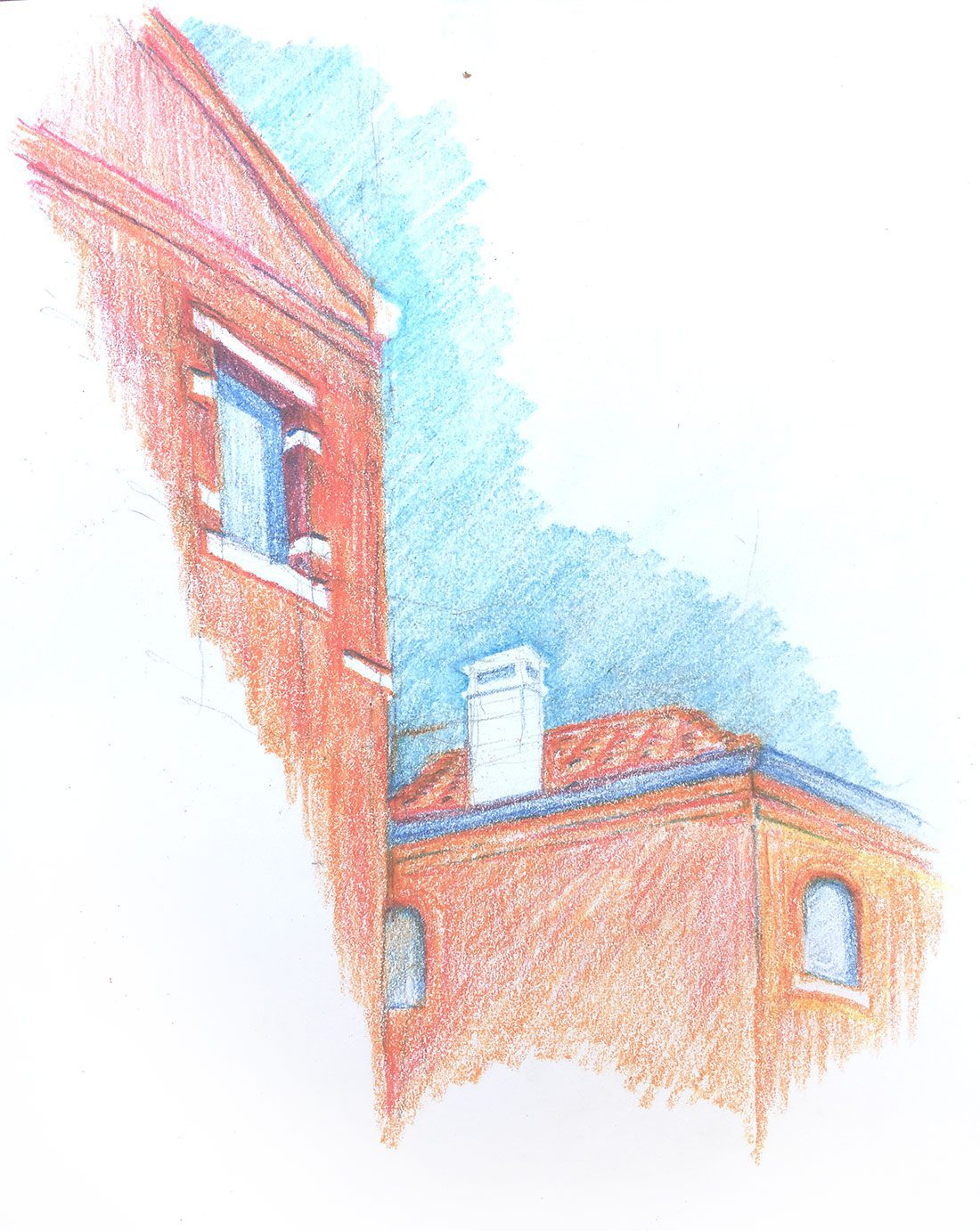
As with any city, time spent in Venice revealed the nuances and the complexities surrounding its issues. The urban toll of tourism is balanced by the vibrancy some residents say it has brought to the place. The ambition of this year’s Biennale, titled Freespace, is set against high walls and paid entrance. On the issues of conservation, historicism must be measured against a city that needs to develop. The back-and-forth of these issues led to a subtle change in the focus of my research, from conservation case studies, to conversation case studies, where architects are in dialogue with the city, balancing between contextuality, legibility and utility.
With this new goal, the rest of my time was spent drawing up conclusions, gathering information, materials and imagery used to explore my three sites. These came together in a document called, ‘Venice Chatter: A Study of Architectural Conversation in Venice’, which describes the voice of each architect in their individual spatial conversations as they struggle to be heard. Yet, as Fabio mentioned in our discussion, ‘in Venice, the voice of history is loud’.