

Knowledge
Professor Sadie Morgan OBE: ‘Let’s bring a bit of joy back in our lives’
LSA alumnus wins at Built Environment Awards 2026
Job opportunity: Caretaker
Dezeen School Show: LSA MArch
LSA Part 0 leads shortlisted at the NLA Awards
The LSA Award 2026 Winner: Caspar Barker
LSA Student Highly Commended at Architects for Health Student Design Awards
LSA student named a finalist for the Test of Time Awards
Architectural Education as a Situated Practice and the Little Free Library
From Crisis to Opportunity: Reframing the Future for Architecture Graduates
Architectural Education as a Situated Practice | London Festival of Architecture
LSA Student shortlisted for the AJ New Talent Award
If Only We Will: Degree Show 2026
Belonging by Design: A Collective Act | London Festival of Architecture
Design Think Tank: Call for Practice Briefs
LSA International Field Trip 2026: Belgium
LSA Representation in the AJ Small Projects 2026 shortlist
LSA Student Placement with Ryder Architecture
Alumni Case Study: Elliott Wang
Open Evening 1 April 2026
Design For Life returns this February
Call for Abstracts: Learnings/Unlearnings Conference
Part 0 Lead wins at Inspire Future Generations Awards
Applications open for MArch in Designing Architecture
The University of the Built Environment appoints new Professors
Get to know Lee Ivett
Open Evening 20 January 2026
LSA faculty nominated for Inspire Future Generations Awards
Yang Yang Chen shortlisted for Young Talent award
LSA Part 0 co-leads shortlisted for Inspire Future Generations Awards
LSA tutor is RIBA House of the Year finalist
Lee Ivett Open Evening Speech
Hugh Strange Architects: House of the Year 2025 shortlist
Lee Ivett starts as Head of School
LSA tutor wins Young Architect of the Year 2025
Open Evening 19 November 2025
AJ Student Prize | Postgraduate Winner: Amy Wilkinson
Hugh Strange Architects Shortlisted for RIBA Stirling Prize 2025
‘Design for Life’ returns this November – Part 4
Lee Ivett appointed as Head of School at London School of Architecture
George Moldovan shortlisted for 2025 Structural Timber Awards
‘A Seat at the Table’ Summer Show 2025
University of the Built Environment
OPEN DAY 11 June 2025
Future Skills Think Tank
LSA and UCEM merge
Future Skills Think Tank
Festival of the Future
Sixty years on from the London County Council: legacy, impact, learning
Dr Neal Shasore stepping down as Head of School and Chief Executive of the London School of Architecture (LSA) in February 2025
Load moreKatja Hasenauer — London City Park
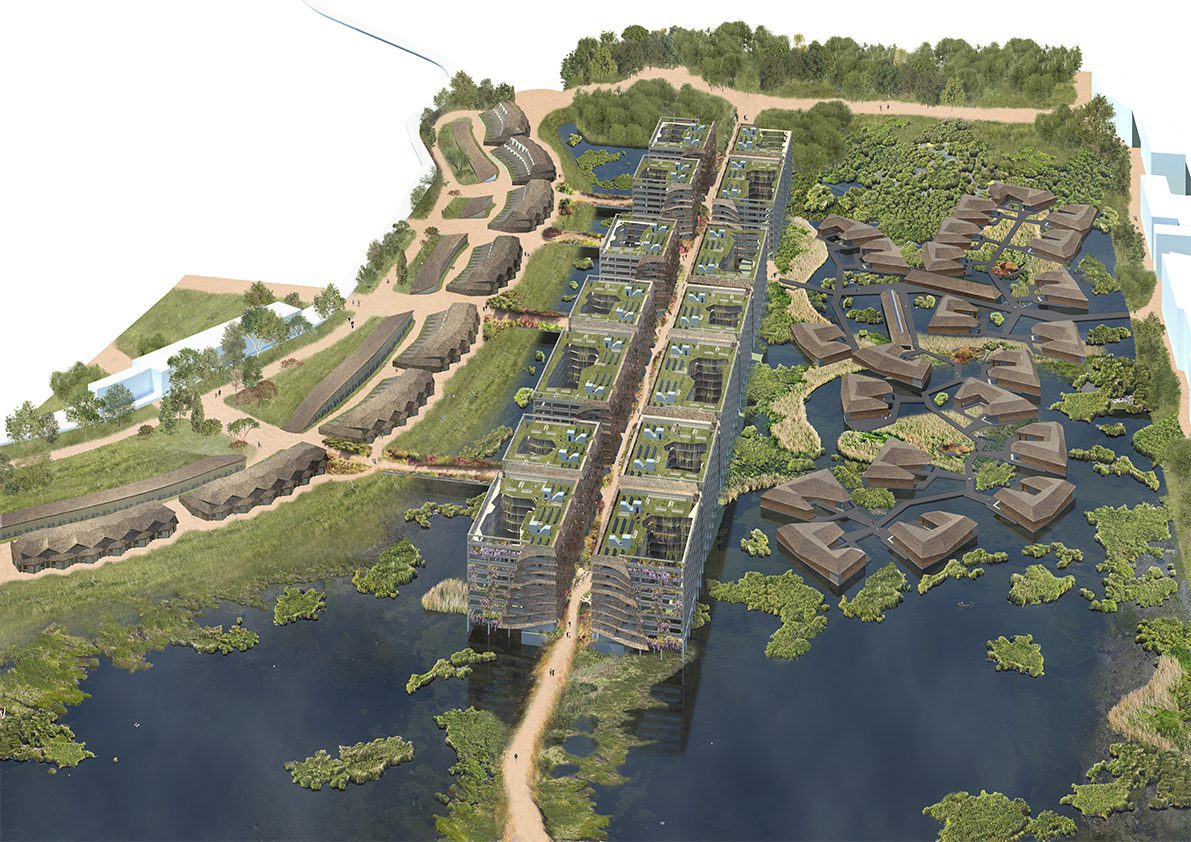
Closing London City Airport creates the capacity for over 2000 new homes as it is possible to build taller and on previously unusable land.
London city park — Estuary in an airport. By Katja Hasenauer.
Location
The Royal Docks in Newham, London
Objective
The project proposes closing London City Airport to create a large-scale tidal wetland in the Royal Docks in Newham.
Motivation
The project proposes closing London City Airport as it:
- Adds to air pollution
- Impacts wildlife and contributes to the biodiversity crisis
- Restricts building heights and contributes to the housing crisis
- Employs relatively few
Strategy
London City Park will instead:
- Reduce pollution by closing the airport and create a green filter for contaminants in stormwater runoff
- Increase biodiversity and access to nature by creating large-scale wetlands
- Create a flooding zone, reducing London’s reliance on the Thames Barrier
- Increase housing supply, while restoring humankind’s relationship with nature by building in the park
- Use thatch to create a closed-loop, regenerative relationship between the landscape and architecture
Impact
London City Park is a step towards a more sustainable future for both people and the planet, by integrating 21st Century urban living with an enhanced connection to nature.
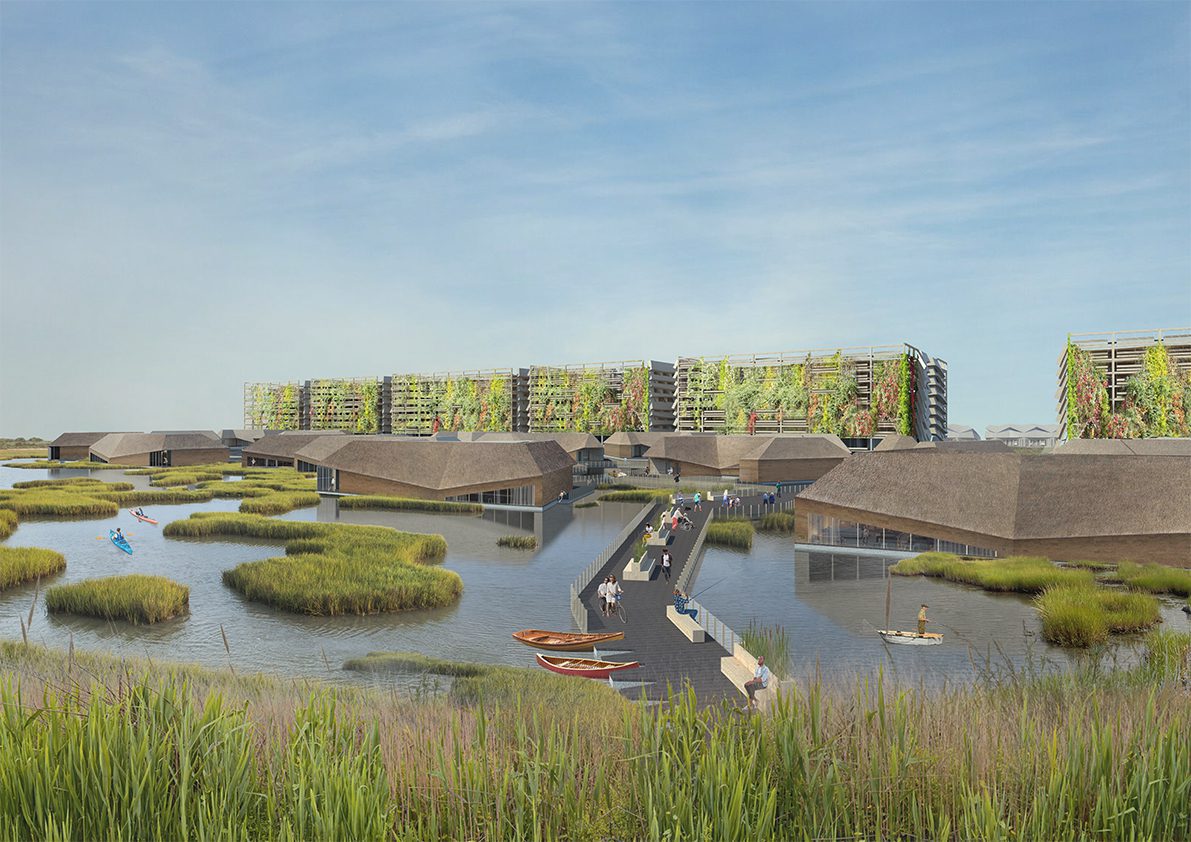
By using natural materials for the architecture, the buildings will change seasonally and react to the landscape, charting changes over time.
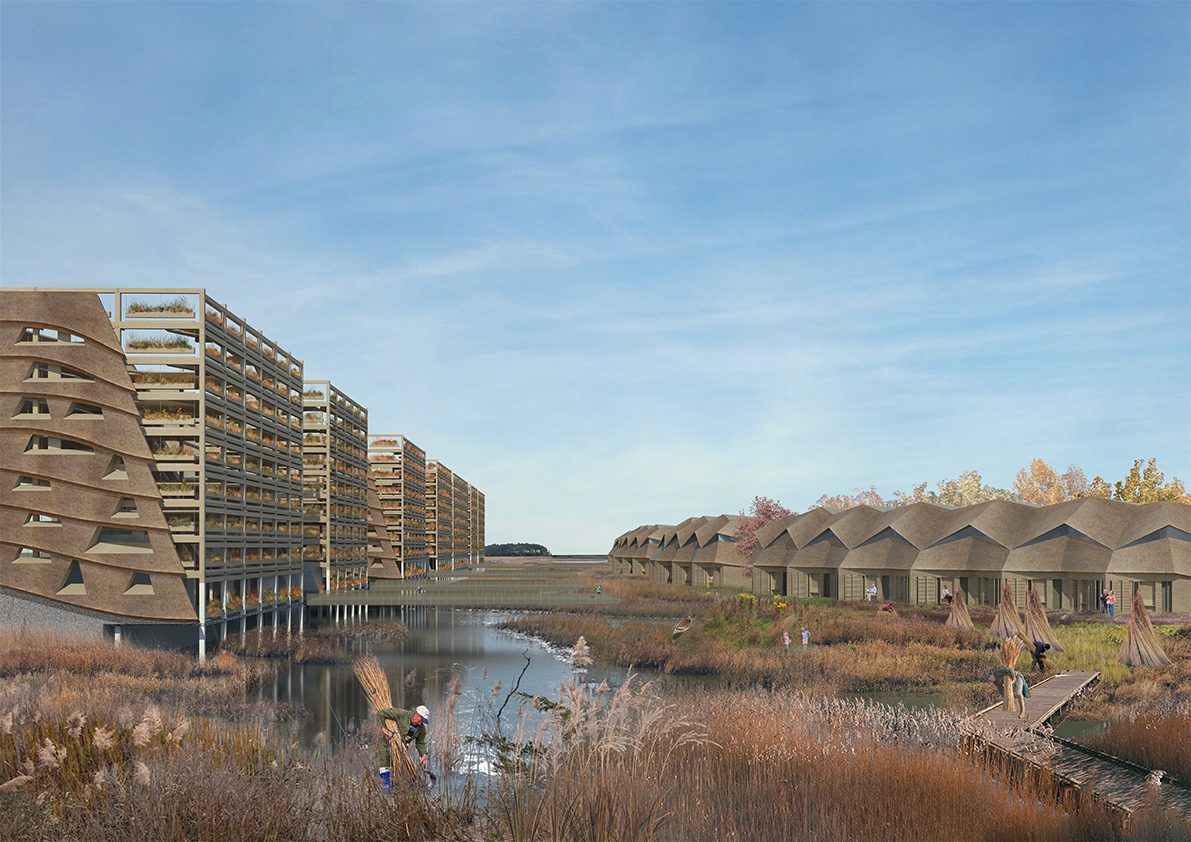
By using natural building materials that are grown, processed and harvested on site, the natural world is brought to the forefront of the design, promoting a closer relationship between the park inhabitants and the natural world.
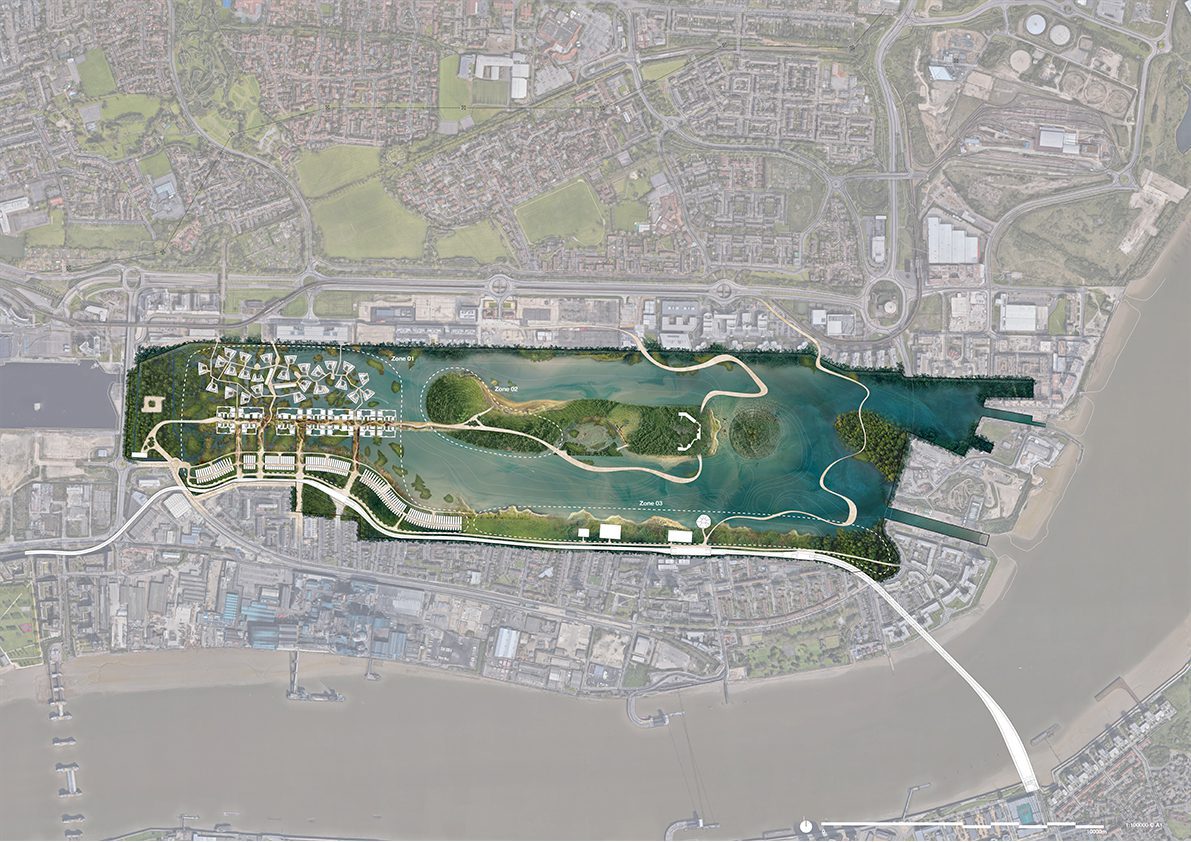
Interwoven within the various habitat areas of the park is a hierarchy of routes and crossings that provide access to the park and link with existing streets. Connected directly to the greenway, the project will have a borough level impact on health and wellbeing.

To the north and hovering above the water is a quiet residential neighbourhood featuring floating streets and soft-edge waterways open and accessible for all. Towards the south and running along the central spine, residential areas become more urban in density, with hard edges to the street and green and blue courtyards. Terraces run along the southern edge of the site, with narrow frontages sharing the waterfront.

Narrow-fronted terraces wind along the organic edge of the landscape, sharing the front of the water. This is where the masterplan reaches the city. Homes are carved out of the landscape, with a shared mews street for children to play while parents watch from kitchen windows.
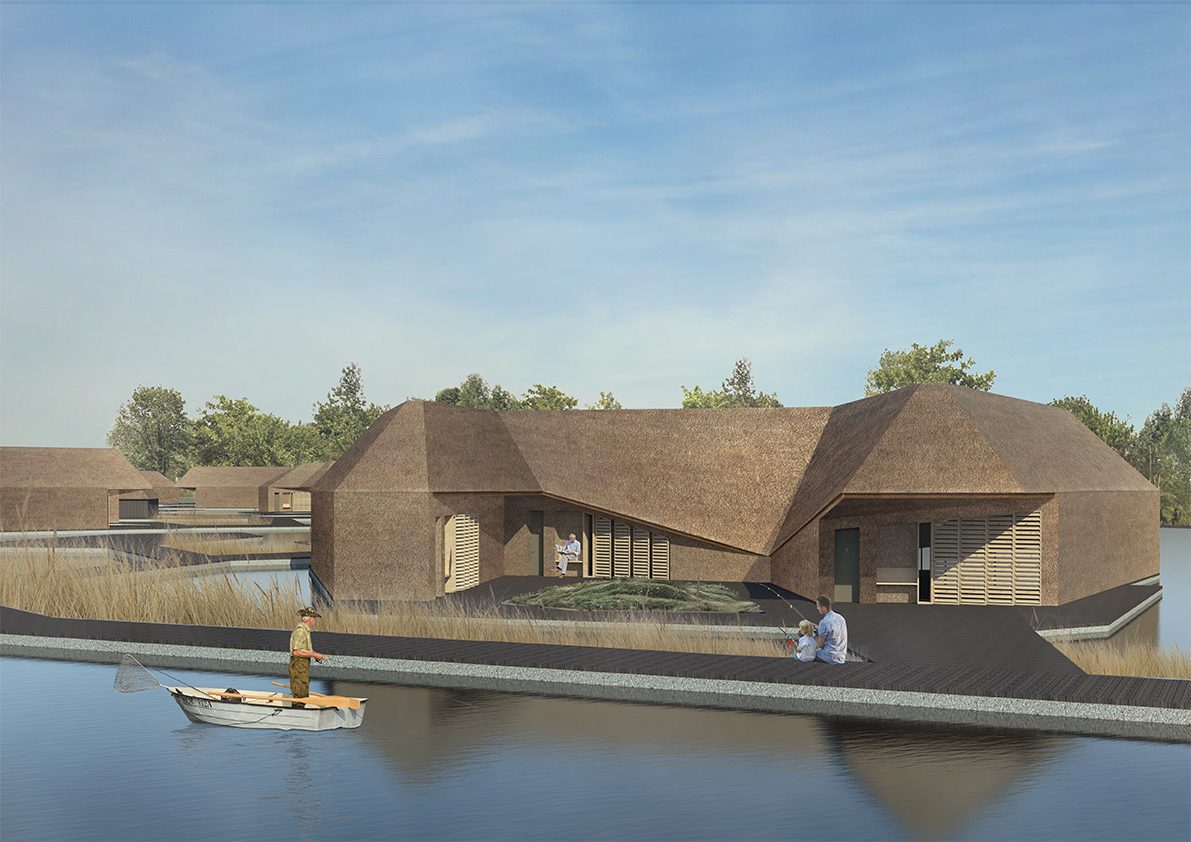
The floating housing is surrounded by water, a cluster of small islands hidden among the reedbeds. Pockets of shared space are formed in the centre.
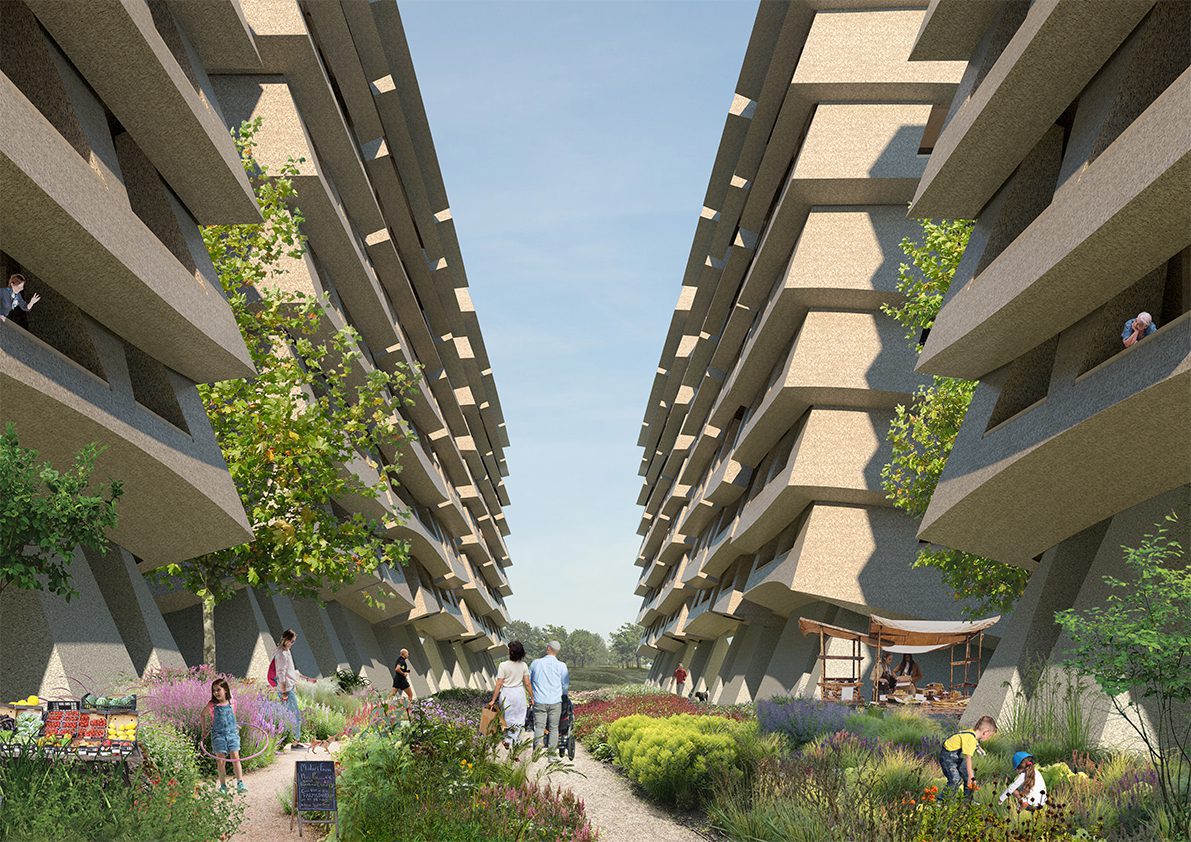
The housing is arranged around the retained airport runway which acts as an ordering device. It forms a central spine for the runway blocks in the centre of the development, and then transitions into different forms such as a bridge and a causeway.

A concrete plinth accounts for future flood levels, lifting the thick thatch coat above the high-water mark. A living reed crown tops the facade, forming part of the greywater reed system on the roof.
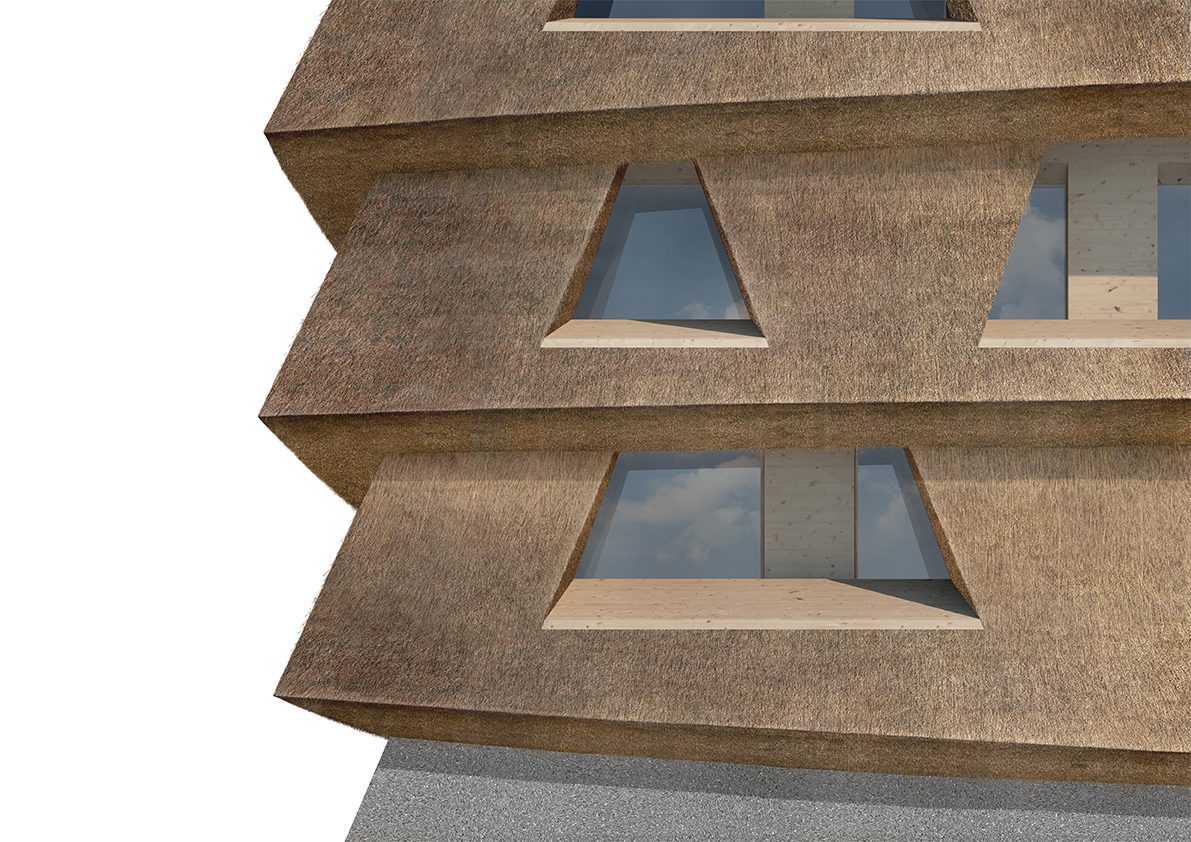
Prefabricated thatch cassettes form the sculpted façades that extend along the runway. The thatch will need to be replaced every 50 to 60 years, so the surrounding landscape will be used to grow and process the thatch for the future of the scheme.
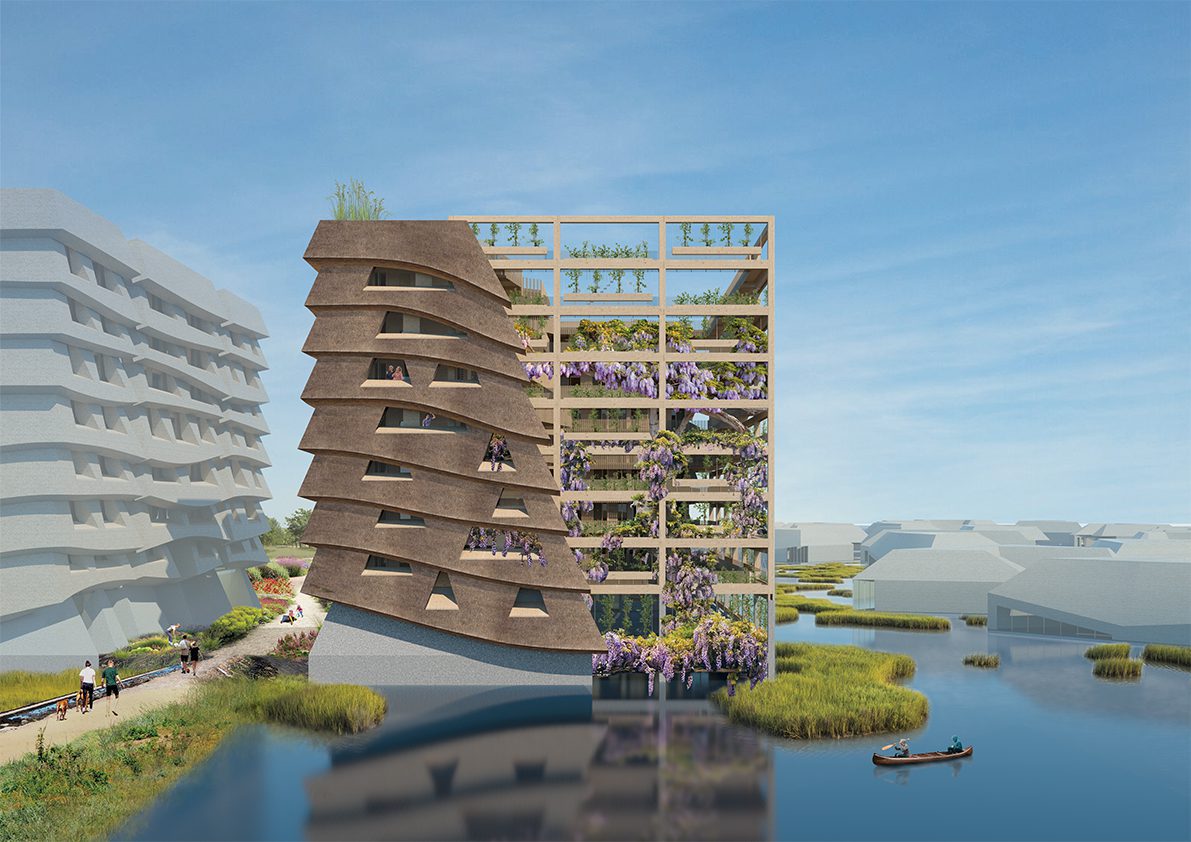
In contrast to the solid, sculpted thatch facade facing the runway, the facade facing the park is open to allow for panoramic views and provides a framework for nature to inhabit.
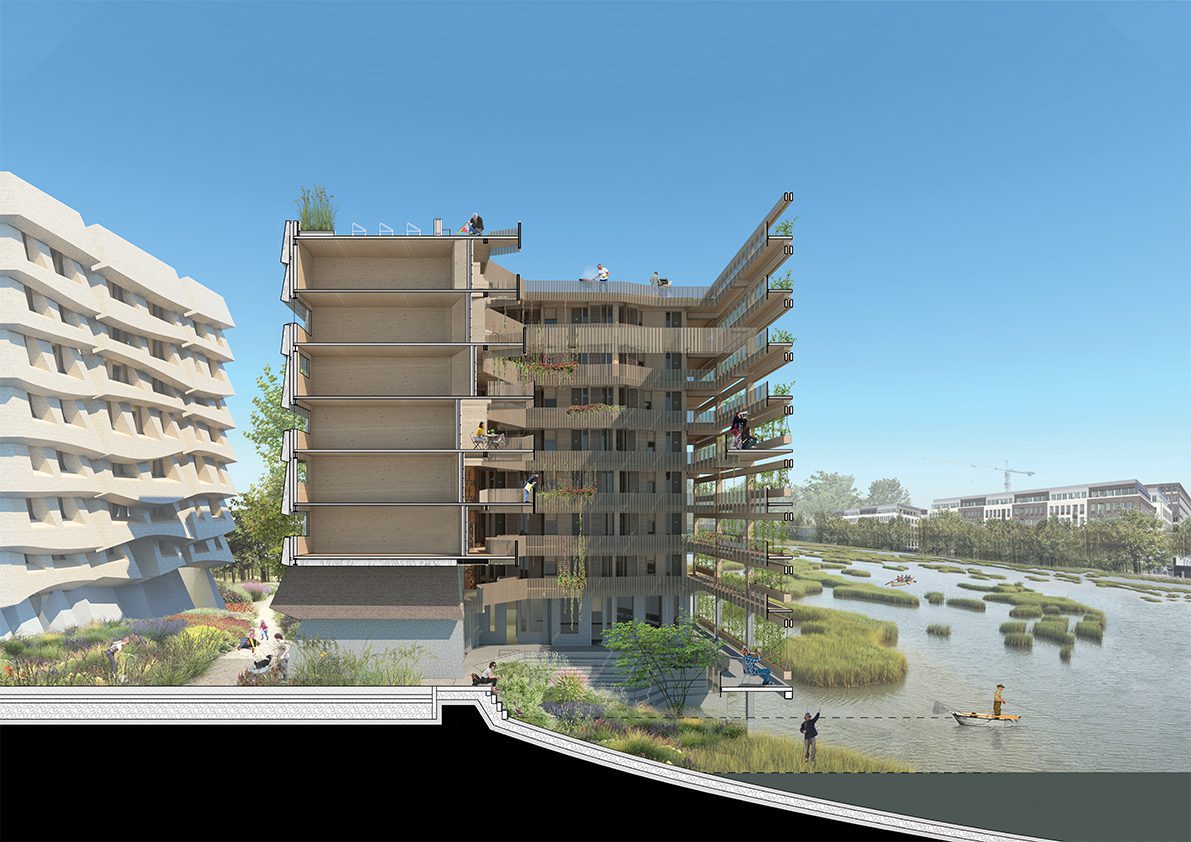
The concept is all about creating contrast: one side is closed, solid and sculpted, with a hard edge to the street. The other side is open and filigree; its balconies are carved and shaped by the functions within the flats.
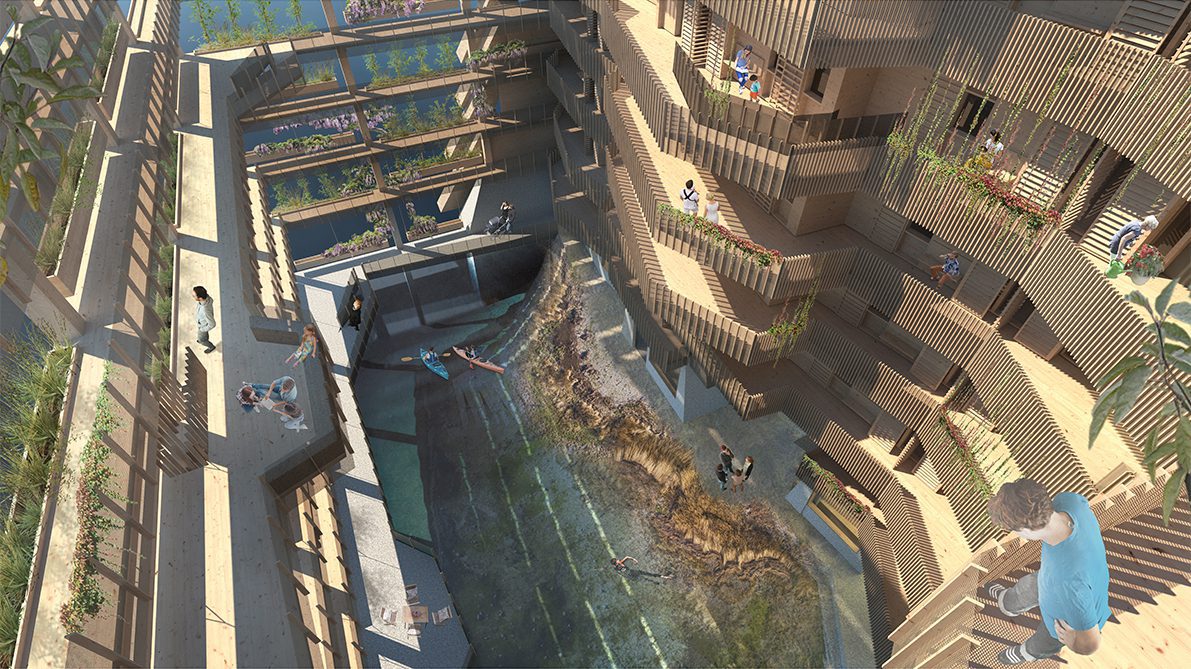
The carved-out courtyards contain a shifting landscape of water and green space. The shared balconies provide views over the landscape, creating a strong relationship with the nature that lies outside the flat’s front doors.

Adjustable louvres and folding furniture have been integrated into the timber entrance systems, allowing for balconies to be inhabited as extensions of the interior living spaces.
Further work
- Critical Practice Manifesto — Bred in captivity
- Design Think Tank – Global currents ; Welcome to the forest
Contact details