

Knowledge
Professor Sadie Morgan OBE: ‘Let’s bring a bit of joy back in our lives’
LSA alumnus wins at Built Environment Awards 2026
Job opportunity: Caretaker
Dezeen School Show: LSA MArch
LSA Part 0 leads shortlisted at the NLA Awards
The LSA Award 2026 Winner: Caspar Barker
LSA Student Highly Commended at Architects for Health Student Design Awards
LSA student named a finalist for the Test of Time Awards
Architectural Education as a Situated Practice and the Little Free Library
From Crisis to Opportunity: Reframing the Future for Architecture Graduates
Architectural Education as a Situated Practice | London Festival of Architecture
LSA Student shortlisted for the AJ New Talent Award
If Only We Will: Degree Show 2026
Belonging by Design: A Collective Act | London Festival of Architecture
Design Think Tank: Call for Practice Briefs
LSA International Field Trip 2026: Belgium
LSA Representation in the AJ Small Projects 2026 shortlist
LSA Student Placement with Ryder Architecture
Alumni Case Study: Elliott Wang
Open Evening 1 April 2026
Design For Life returns this February
Call for Abstracts: Learnings/Unlearnings Conference
Part 0 Lead wins at Inspire Future Generations Awards
Applications open for MArch in Designing Architecture
The University of the Built Environment appoints new Professors
Get to know Lee Ivett
Open Evening 20 January 2026
LSA faculty nominated for Inspire Future Generations Awards
Yang Yang Chen shortlisted for Young Talent award
LSA Part 0 co-leads shortlisted for Inspire Future Generations Awards
LSA tutor is RIBA House of the Year finalist
Lee Ivett Open Evening Speech
Hugh Strange Architects: House of the Year 2025 shortlist
Lee Ivett starts as Head of School
LSA tutor wins Young Architect of the Year 2025
Open Evening 19 November 2025
AJ Student Prize | Postgraduate Winner: Amy Wilkinson
Hugh Strange Architects Shortlisted for RIBA Stirling Prize 2025
‘Design for Life’ returns this November – Part 4
Lee Ivett appointed as Head of School at London School of Architecture
George Moldovan shortlisted for 2025 Structural Timber Awards
‘A Seat at the Table’ Summer Show 2025
University of the Built Environment
OPEN DAY 11 June 2025
Future Skills Think Tank
LSA and UCEM merge
Future Skills Think Tank
Festival of the Future
Sixty years on from the London County Council: legacy, impact, learning
Dr Neal Shasore stepping down as Head of School and Chief Executive of the London School of Architecture (LSA) in February 2025
Load moreDesign Think Tank – Architectural Agency

Debating chamber
Civic engagement with local government is at its lowest point in recent times, with many feeling disenfranchised. The relationship between the people and their local council is increasingly being characterised by conflict rather than collaboration, not aided by the continued reduction of central government funding.
Almost two-thirds of London residents report not a single instance of contact with their local authority, 85 per cent see no council improvements, while 90 per cent of council officers feel deflated, and powerless to make any significant impact.
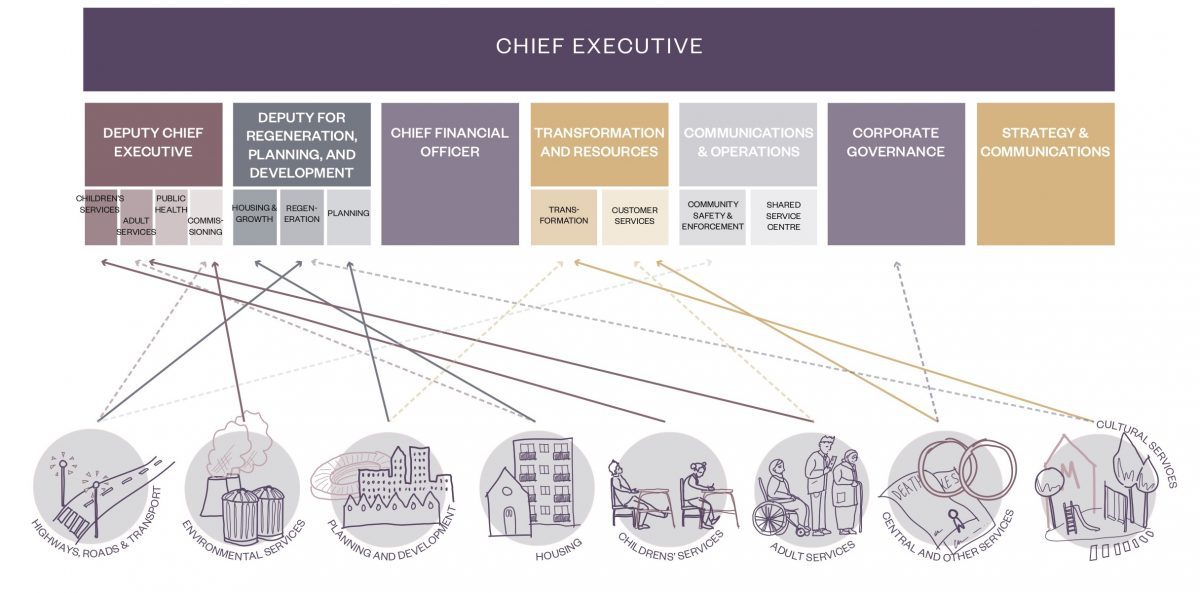
Existing council structure: despite key overlaps in the important functions that the council must perform, responsibility for related functions often fall to separate and hierarchically organised departments, leading to a confusion of accountability, and a frustrating absence of joined up thinking
Using the economically and politically divided London Borough of Haringey as a testbed, Architectural Agency seeks to reimagine the ways in which the council and the public come face to face. Our agenda:
-Engage and empower residents, giving them a sense of validity;
-Emphasise the local and reduce the influence of national parties;
– Celebrate democratic acts as a moment of collective action;
-Enable serendipitous interactions within the council, and between the council and the public;
-Create an approachable, accessible and legible face for all residents.
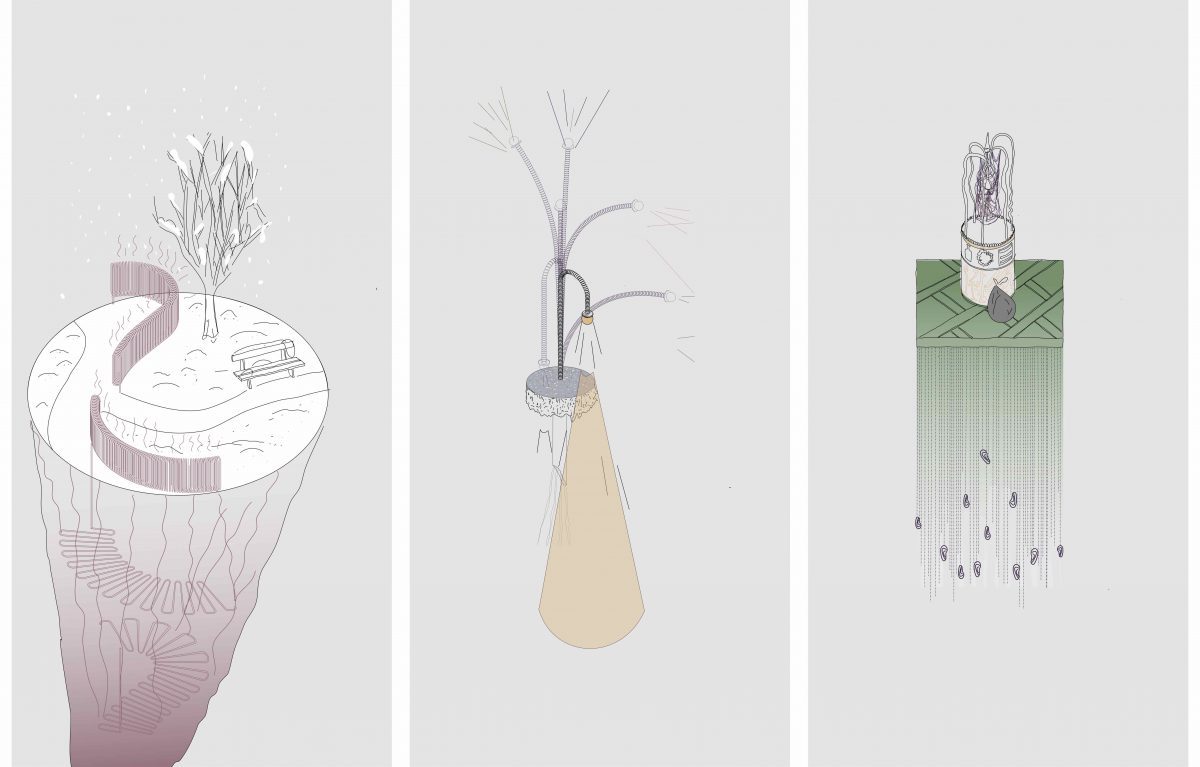
Turning railings into radiators to form a gathering point for social exchange, ‘The Nervous Lamp Post’ a sensitive lamp post whose changing position reflects the public mood, and ‘The Whispering Bin’ an everyday location where policy and proposal ideas may be collected
The new model for the civic sphere operates across several scales: reimagined street furniture adds humour and animation to everyday interaction with the council, while turning every lamppost and bin into an opportunity for communication across the borough; digital tools allow for the distribution of democratic acts and debate; a new centralised and reorganised civic centre gives a legible and approachable face to previously austere office buildings, while allowing a more efficient and holistic approach to council business; new participatory systems of democracy, inspired by current and ancient precedents, put constituents at the heart of decision-making processes and allow for political decision-making to take a new form as a celebratory shared ritual.
Our strategies seek to address the borough as a whole, to increase engagement, which is as low as 29.5 per cent in disadvantaged areas of Haringey such as Tottenham Hale.

We also propose to enthuse residents by augmenting the everyday encounter with the local authority. Innocuous street furniture such as bins, road signs and bus stops are constant, if unassuming, evidence of the council’s presence. Architectural Agency takes a more romantic approach to these objects to create hybrid typologies that define public interaction with the council. Street-railing radiators and filtered rainwater dispensers may become gathering points for social exchange.
Further, the reinvented functional objects are used to facilitate direct communication between the public and the council, with bins and lampposts forming a new communicative nervous system for Haringey. These systems enable the flow of information from every street to the new centralised point of contact at the heart of the borough, and vice versa.

Site Plan: The reorganised and centralised council is arranged on the site. The dead-end River Park Road has been converted into a lively, covered yard, which feeds between the street, and the offices to either side, forming a new public thoroughfare and interface for the entire council
The new civic centre, a counterpoint to the unclear and disorganised layout of services and operations in Haringey, is in Wood Green, just north of the geographical centre of the borough. A consolidated and restructured council enables ease of contact between council staff, as well as between officers and the public.
All new offices are amalgamated onto the current primary site of council operations, along with a new debating chamber and auditorium, and a new library to replace the existing Wood Green Library. The existing buildings are stripped back and repurposed, and the current dead-end street River Park Road is converted into a lively covered yard, which becomes the new focal point of the council.
Current council sites such as those of Wood Green Library and the former civic centre will be retained for council redevelopment. Within the boundary of the Wood Green Area Action Plan, these sites form strategic opportunities in anticipation of a Crossrail 2 station at either Wood Green or Turnpike Lane.

The new town square filled with people during a voting celebration
The current organisation of council departments too easily allows for the confusion and obfuscation of accountability, and precludes joined-up thinking. Architectural Agency proposes a reorganisation of the internal council structure, which recognises the key overlaps of function, and enables better communication between departments. New overarching departments allow for a holistic approach (such as Natural and Built Environment, which recognises the intersection of Planning and Regeneration with Housing, Environmental Services, and Highways).At the cornerpoint of the new civic centre, directly opposite Wood Green station, is housed the new debating chamber, giving a defining civic presence to the offices, and an immediately discernible identity to the area. The new chamber, skinned in a translucent fibreglass, sits within the stripped-back structure of the existing building. The debating chamber forms a focal point for borough-wide celebrations and events in the new town square, the setting for the publicly facing civic centre, which provides a stark and much-needed contrast to the faceless and unwelcoming council offices of today.
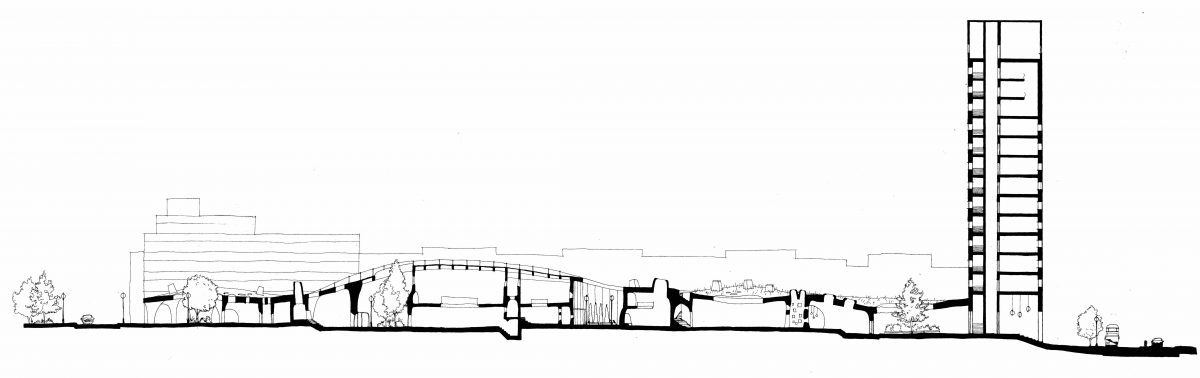
Long section.
Architectural Agency is led by Maxine Pringle from aLL Design and Andrew McEwan from Orms. Students: Annecy Attlee, Simon Banfield, Josh Fenton, Vojtech Nemec, Craig Page.