

Knowledge
Professor Sadie Morgan OBE: ‘Let’s bring a bit of joy back in our lives’
LSA alumnus wins at Built Environment Awards 2026
Job opportunity: Caretaker
Dezeen School Show: LSA MArch
LSA Part 0 leads shortlisted at the NLA Awards
The LSA Award 2026 Winner: Caspar Barker
LSA Student Highly Commended at Architects for Health Student Design Awards
LSA student named a finalist for the Test of Time Awards
Architectural Education as a Situated Practice and the Little Free Library
From Crisis to Opportunity: Reframing the Future for Architecture Graduates
Architectural Education as a Situated Practice | London Festival of Architecture
LSA Student shortlisted for the AJ New Talent Award
If Only We Will: Degree Show 2026
Belonging by Design: A Collective Act | London Festival of Architecture
Design Think Tank: Call for Practice Briefs
LSA International Field Trip 2026: Belgium
LSA Representation in the AJ Small Projects 2026 shortlist
LSA Student Placement with Ryder Architecture
Alumni Case Study: Elliott Wang
Open Evening 1 April 2026
Design For Life returns this February
Call for Abstracts: Learnings/Unlearnings Conference
Part 0 Lead wins at Inspire Future Generations Awards
Applications open for MArch in Designing Architecture
The University of the Built Environment appoints new Professors
Get to know Lee Ivett
Open Evening 20 January 2026
LSA faculty nominated for Inspire Future Generations Awards
Yang Yang Chen shortlisted for Young Talent award
LSA Part 0 co-leads shortlisted for Inspire Future Generations Awards
LSA tutor is RIBA House of the Year finalist
Lee Ivett Open Evening Speech
Hugh Strange Architects: House of the Year 2025 shortlist
Lee Ivett starts as Head of School
LSA tutor wins Young Architect of the Year 2025
Open Evening 19 November 2025
AJ Student Prize | Postgraduate Winner: Amy Wilkinson
Hugh Strange Architects Shortlisted for RIBA Stirling Prize 2025
‘Design for Life’ returns this November – Part 4
Lee Ivett appointed as Head of School at London School of Architecture
George Moldovan shortlisted for 2025 Structural Timber Awards
‘A Seat at the Table’ Summer Show 2025
University of the Built Environment
OPEN DAY 11 June 2025
Future Skills Think Tank
LSA and UCEM merge
Future Skills Think Tank
Festival of the Future
Sixty years on from the London County Council: legacy, impact, learning
Dr Neal Shasore stepping down as Head of School and Chief Executive of the London School of Architecture (LSA) in February 2025
Load moreDante Hall — The People’s Peninsula

Ferry Passage – A thin passage leading down to the banks of the River Thames creates a separation between housing and industry.
The People’s Peninsula — A new urban typology combining housing and industry in London. By Dante Hall.
Location
Leamouth Peninsula, Tower Hamlets
Objectives
To reintegrate industry within the city and create more liveable and lively neighborhoods.
Motivation
London’s current regeneration schemes have become synonymous with the spread of homogenous residential developments.
Strategy
The People’s Peninsula identifies three typologies of industrial space based on their relationship to the home and uses this to develop a new, better integrated spatial design strategy.
Impact
The project aims to inspire a new way of regeneration design, which stops the spread of homogenous residential developments by re-integrating industry into the fabric of the city and re-establishes a dense mix of use to foster neighbourhoods and communities.
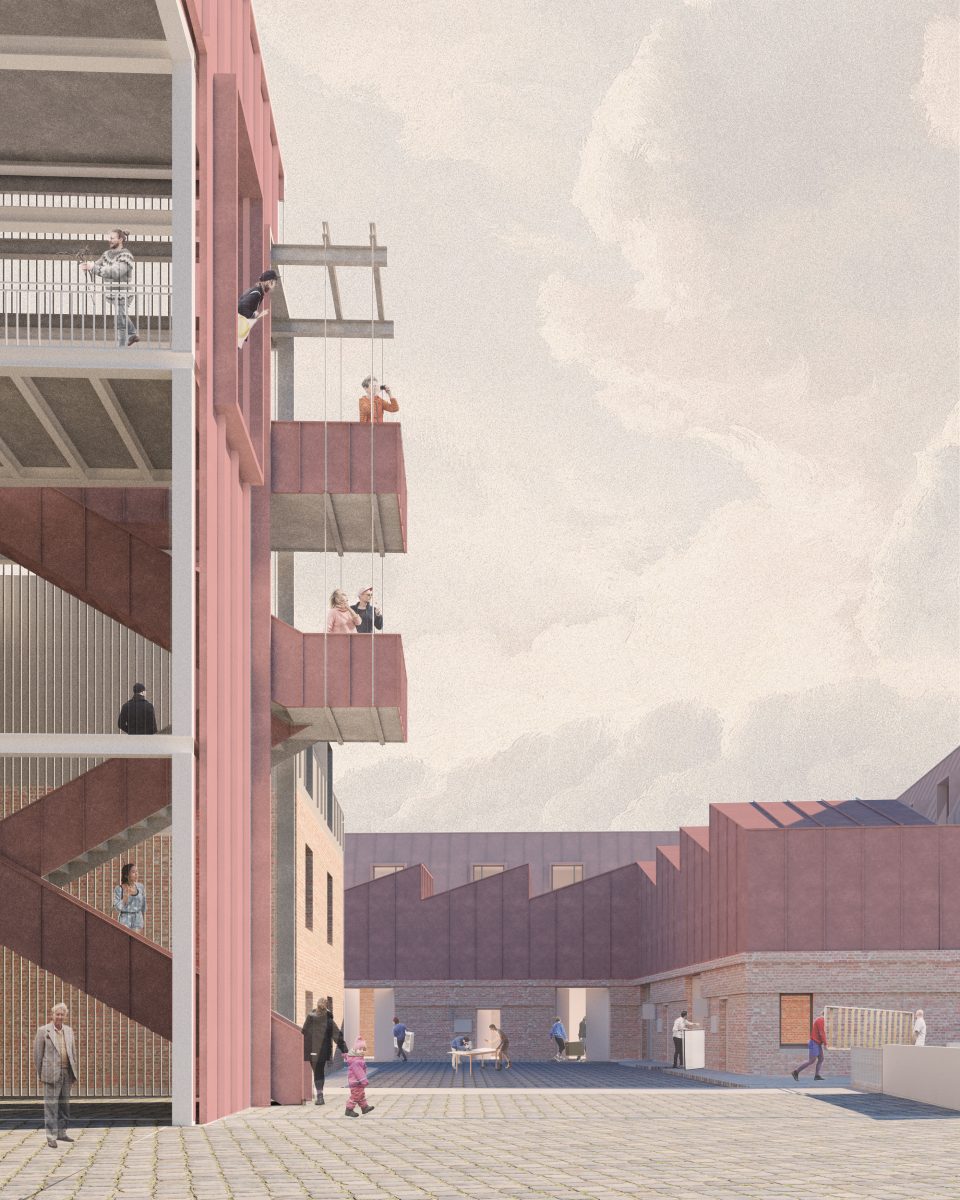
Yard – A public staircase provides access to the viewing platform over the River Thames, boatyard, and entrance into the yard.

Yard — a space between the live-adjacent industry and housing is created for outdoor work, access, and deliveries.
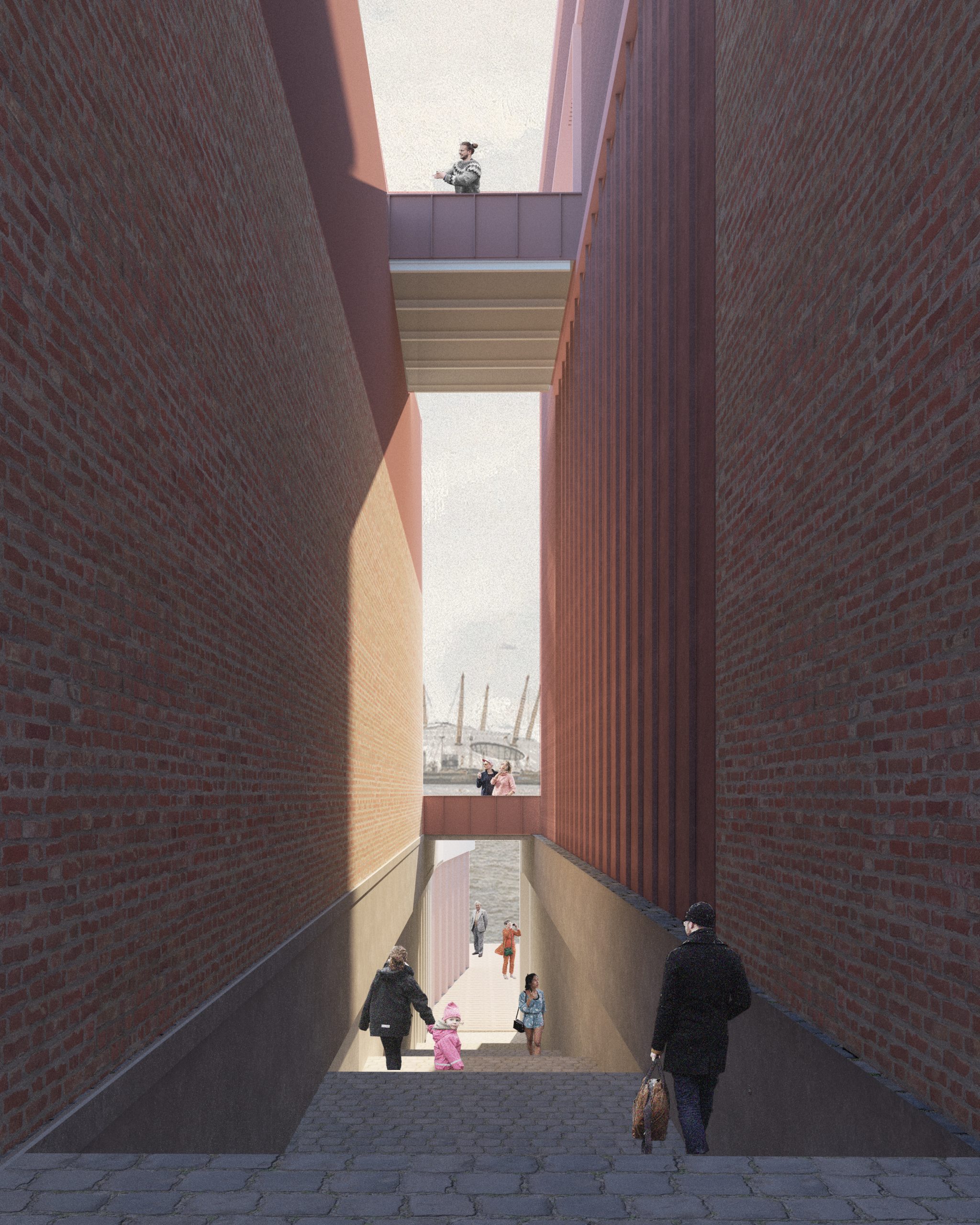
Ferry Passage — in the early 1900s, there was public access from site level down to the water’s edge. This project proposes to re-excavate the Ferry Passage, creating an intentional space between the housing and larger industry.
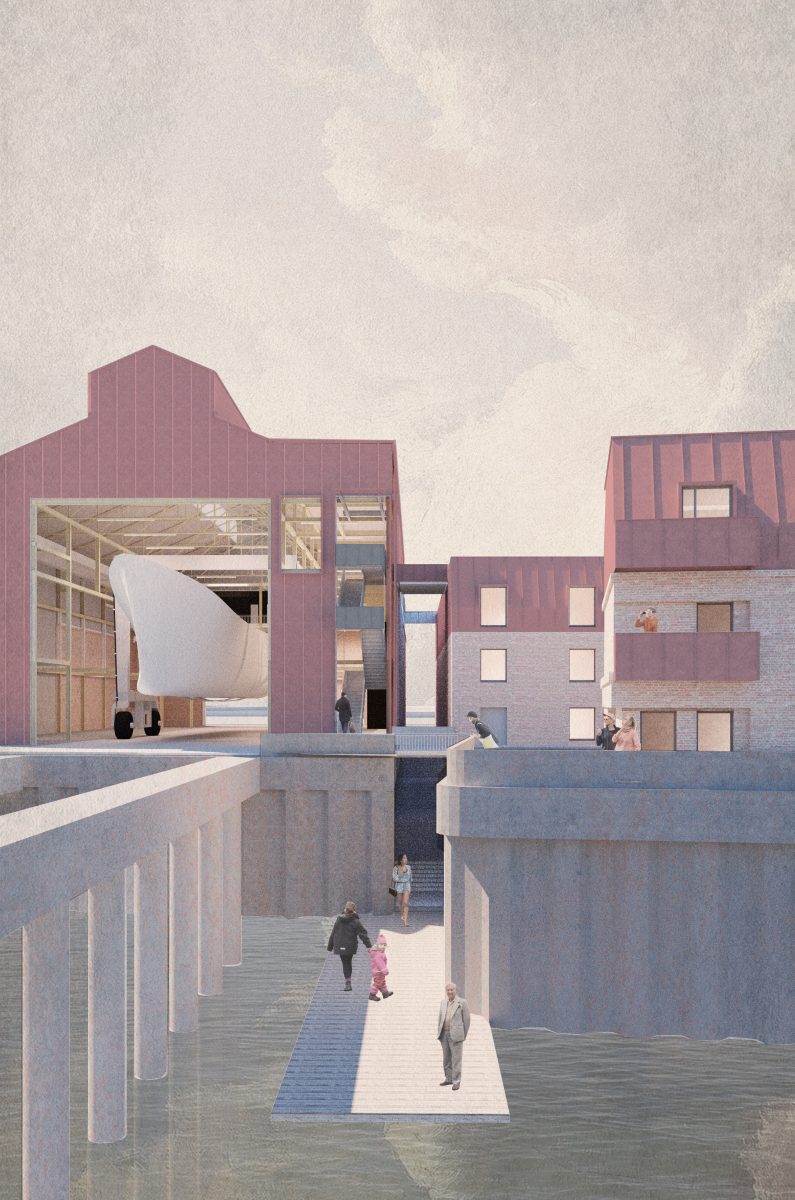
Water’s Edge — the ferry passage creates a path down to the River Thames, re-engaging the public with the water.
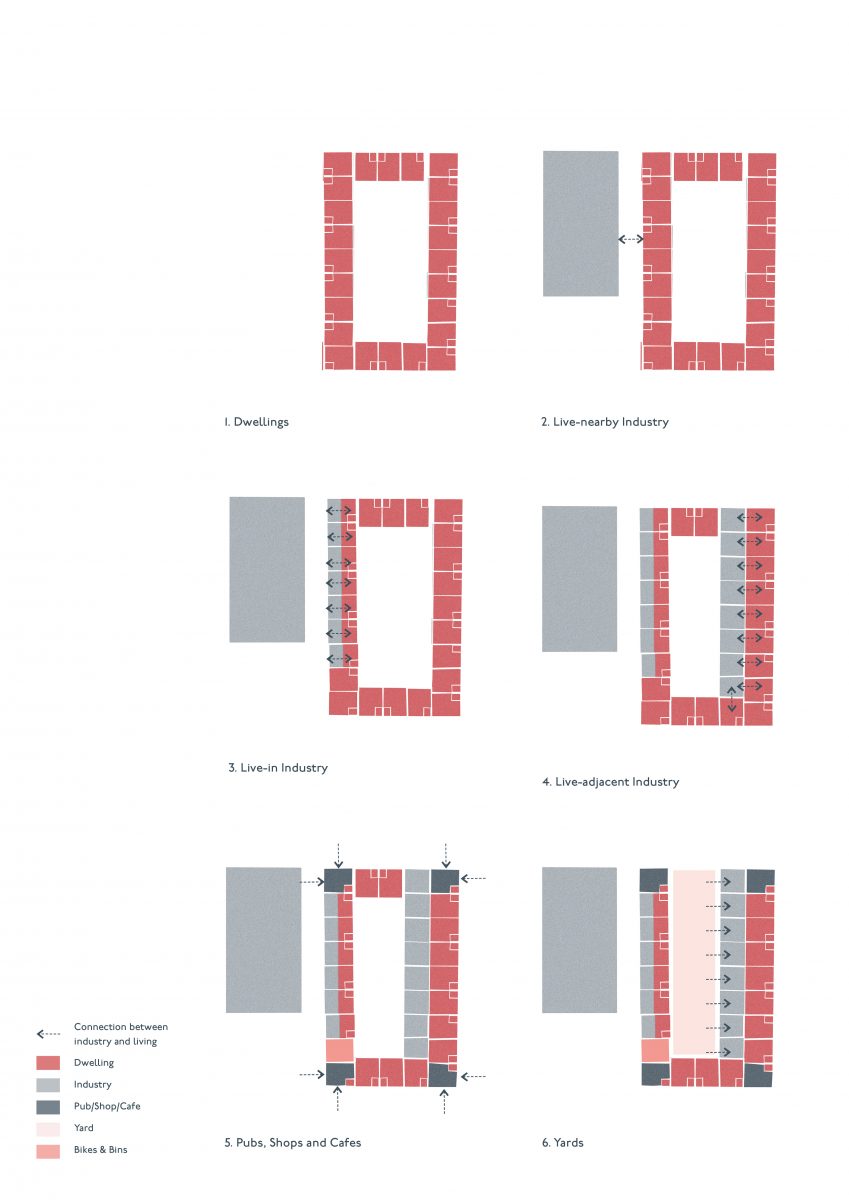
Spatial Design Strategy
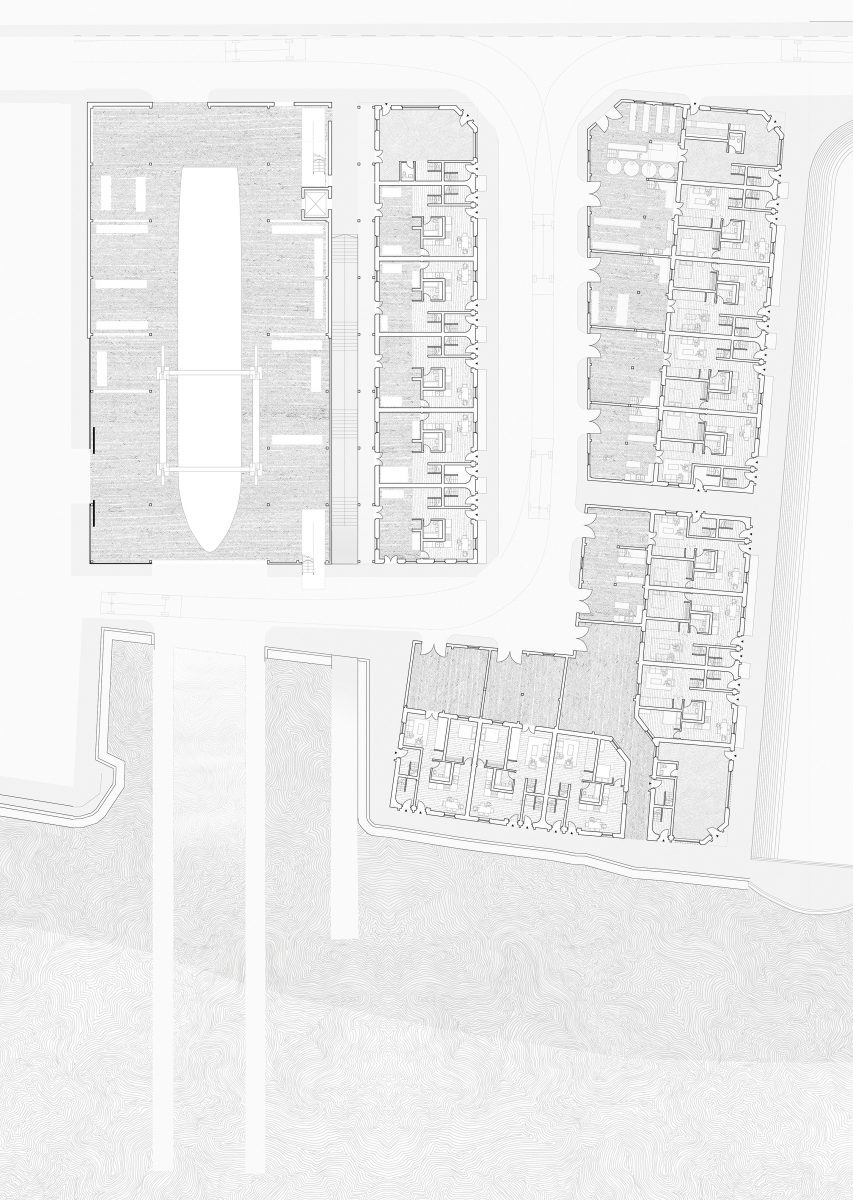
Ground Floor Plan
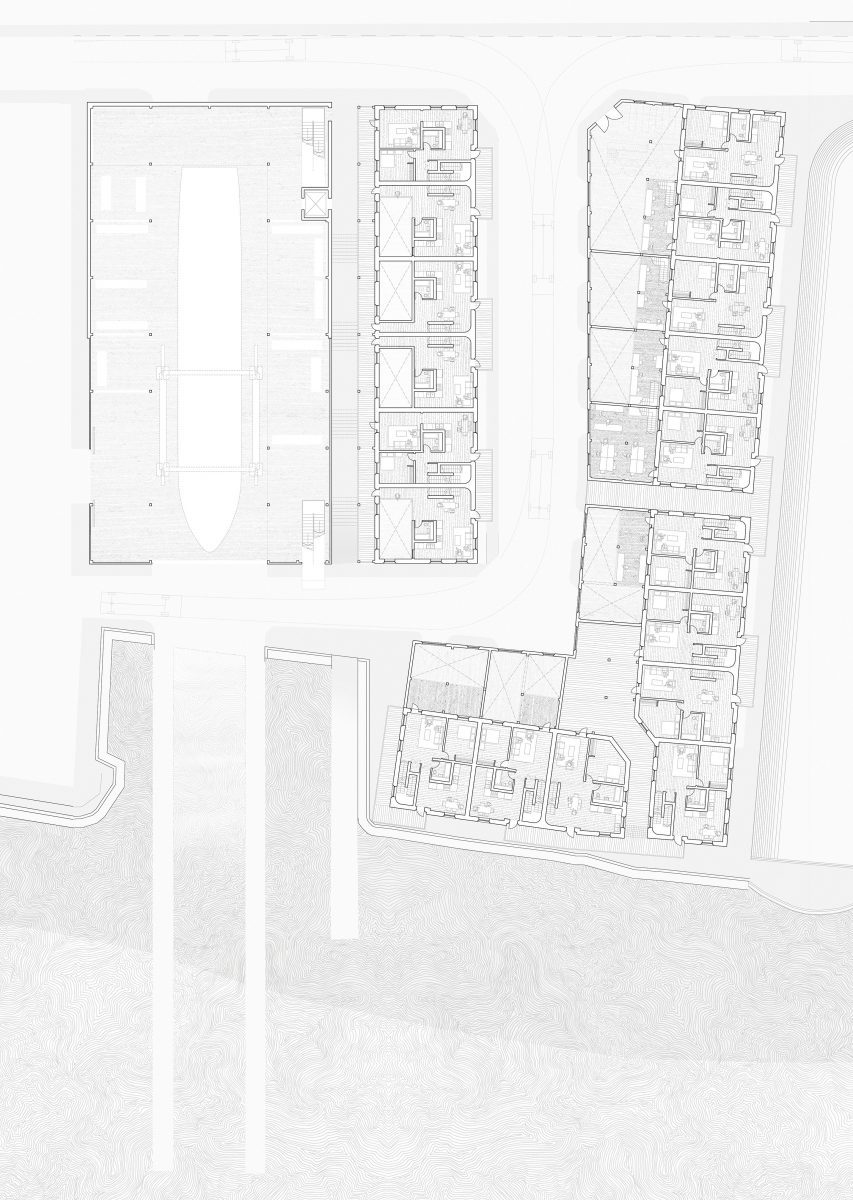
First Floor Plan
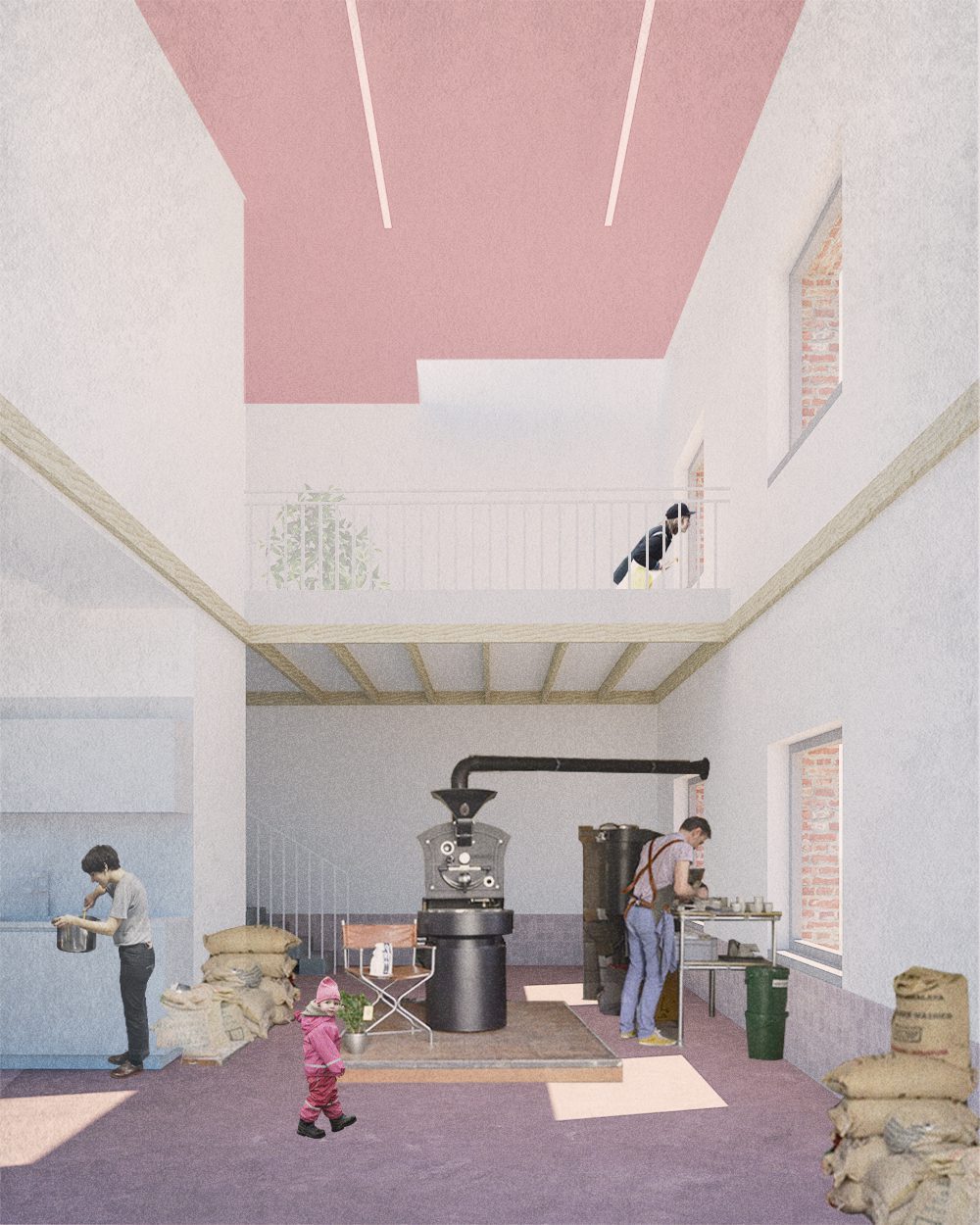
1. Live-in Typology — there is no spatial separation between work and the home.
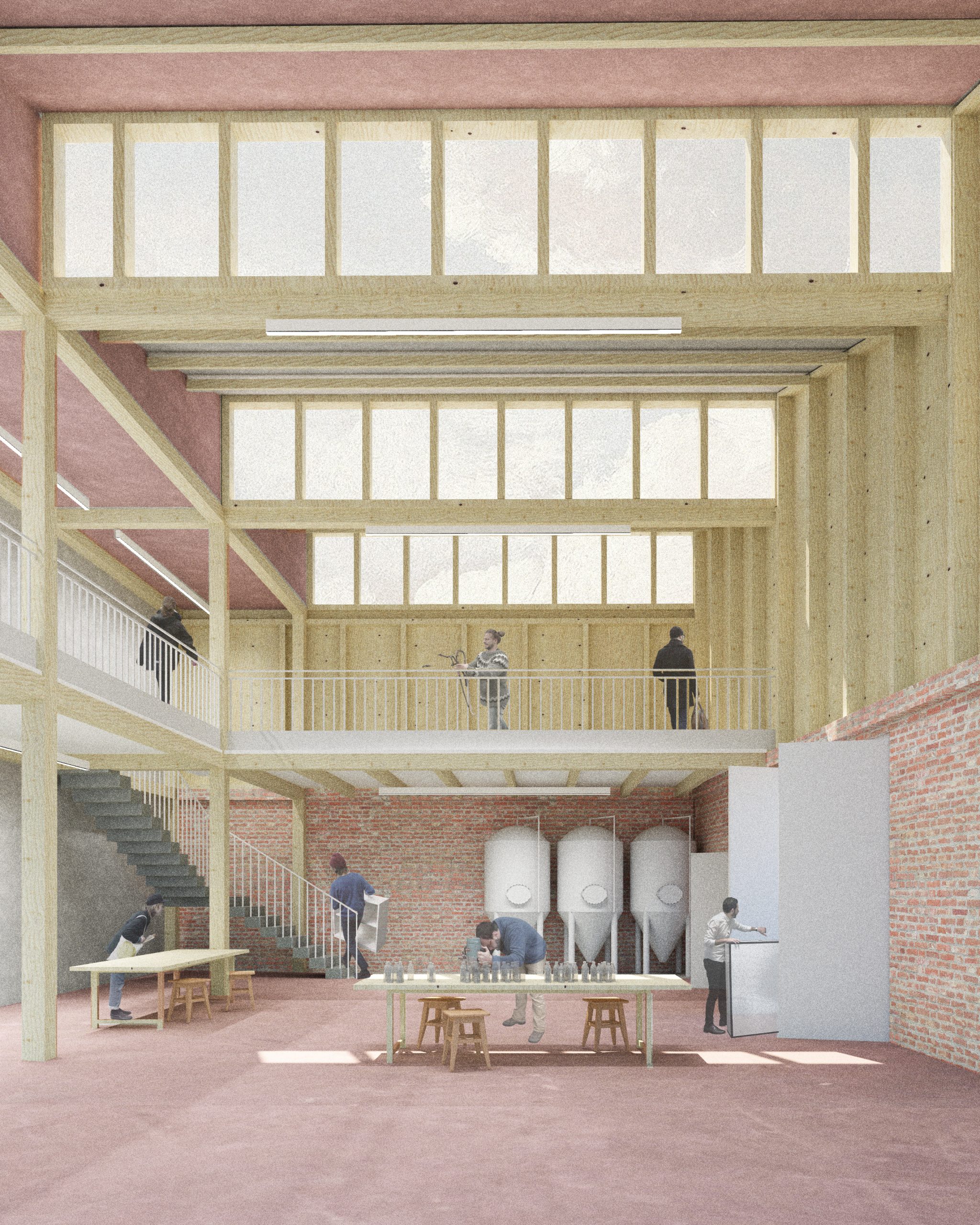
2. Live-adjacent Typology — there is some spatial separation between work and the home.

3. Live-Nearby Typology — there is a total spatial separation between work and the home.