

Knowledge
Professor Sadie Morgan OBE: ‘Let’s bring a bit of joy back in our lives’
LSA alumnus wins at Built Environment Awards 2026
Job opportunity: Caretaker
Dezeen School Show: LSA MArch
LSA Part 0 leads shortlisted at the NLA Awards
The LSA Award 2026 Winner: Caspar Barker
LSA Student Highly Commended at Architects for Health Student Design Awards
LSA student named a finalist for the Test of Time Awards
Architectural Education as a Situated Practice and the Little Free Library
From Crisis to Opportunity: Reframing the Future for Architecture Graduates
Architectural Education as a Situated Practice | London Festival of Architecture
LSA Student shortlisted for the AJ New Talent Award
If Only We Will: Degree Show 2026
Belonging by Design: A Collective Act | London Festival of Architecture
Design Think Tank: Call for Practice Briefs
LSA International Field Trip 2026: Belgium
LSA Representation in the AJ Small Projects 2026 shortlist
LSA Student Placement with Ryder Architecture
Alumni Case Study: Elliott Wang
Open Evening 1 April 2026
Design For Life returns this February
Call for Abstracts: Learnings/Unlearnings Conference
Part 0 Lead wins at Inspire Future Generations Awards
Applications open for MArch in Designing Architecture
The University of the Built Environment appoints new Professors
Get to know Lee Ivett
Open Evening 20 January 2026
LSA faculty nominated for Inspire Future Generations Awards
Yang Yang Chen shortlisted for Young Talent award
LSA Part 0 co-leads shortlisted for Inspire Future Generations Awards
LSA tutor is RIBA House of the Year finalist
Lee Ivett Open Evening Speech
Hugh Strange Architects: House of the Year 2025 shortlist
Lee Ivett starts as Head of School
LSA tutor wins Young Architect of the Year 2025
Open Evening 19 November 2025
AJ Student Prize | Postgraduate Winner: Amy Wilkinson
Hugh Strange Architects Shortlisted for RIBA Stirling Prize 2025
‘Design for Life’ returns this November – Part 4
Lee Ivett appointed as Head of School at London School of Architecture
George Moldovan shortlisted for 2025 Structural Timber Awards
‘A Seat at the Table’ Summer Show 2025
University of the Built Environment
OPEN DAY 11 June 2025
Future Skills Think Tank
LSA and UCEM merge
Future Skills Think Tank
Festival of the Future
Sixty years on from the London County Council: legacy, impact, learning
Dr Neal Shasore stepping down as Head of School and Chief Executive of the London School of Architecture (LSA) in February 2025
Load moreThe London Salon: Cultural Infrastructure
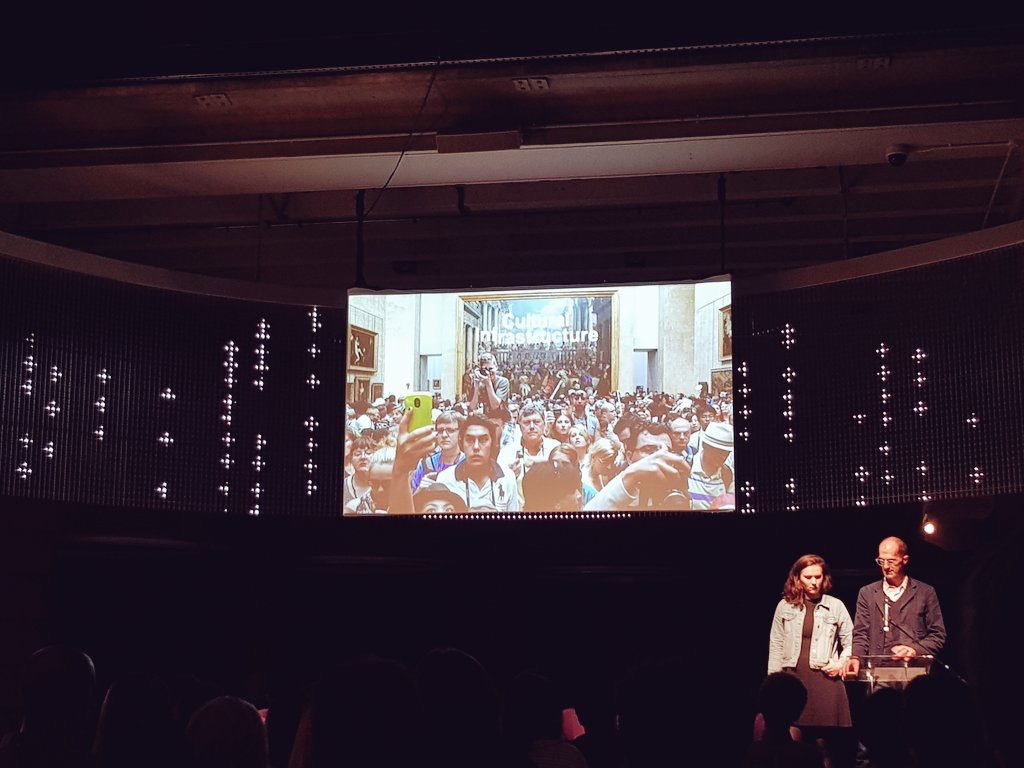
Last month one of our second year students, Molly Judge presented with David Hills from DSDHA at Theatrum Mundi’s London Salon event discussing Cultural Infrastructure at The Museum of London. Theatrum Mundi invited DSDHA, We Made That and Assemble to present design strategies for new ways to build infrastructures for cultural life in the city.
Building on a two-year long research into Cultural Infrastructure, DSDHA worked collaboratively with Metabolic Cities for the Design Think Tank module last year, addressing issues raised by the announcement of the Mayor’s Cultural Infrastructure Plan.
The work presented by Molly and David at the salon was a collaborative research project where students Louie Austen, Charlotte Hurley, Molly Judge, Lloyd Martin and Sheenwar Siti worked with Deborah Saunt, Roberta Marcaccio and Alistair Blake from DSDHA, under the theme of Cultural Infrastructure. The Metabolic Cities research project resulted in devising a city-wide spatial strategy that considered the much needed spaces for cultural participation and production in the city, at a time when they are considerably under threat.
Metabolic Cities devised the strategy ‘MeSS’, a viable way of tweaking existing planning policies and taxation schemes to ensure that the vulnerable spaces required for culture are not priced out of the city. The MeSS spatial framework of small to medium scale flexible spaces (ideal for studios, workshops and rehearsal spaces) stitches between transport infrastructure, new developments and public space to favour a more permissive and playful environment that preserves London’s cultural vibrancy as well as its economical and social well being.
Since the Design Think Tank module last year, both DSDHA and Metabolic Cities have continued their research into Cultural Infrastructure, and can be followed on the Metabolic Cities twitter page @DTT_MC and DSDHA’s Cultural Infrastructure research page