

Knowledge
Professor Sadie Morgan OBE: ‘Let’s bring a bit of joy back in our lives’
LSA alumnus wins at Built Environment Awards 2026
Job opportunity: Caretaker
Dezeen School Show: LSA MArch
LSA Part 0 leads shortlisted at the NLA Awards
The LSA Award 2026 Winner: Caspar Barker
LSA Student Highly Commended at Architects for Health Student Design Awards
LSA student named a finalist for the Test of Time Awards
Architectural Education as a Situated Practice and the Little Free Library
From Crisis to Opportunity: Reframing the Future for Architecture Graduates
Architectural Education as a Situated Practice | London Festival of Architecture
LSA Student shortlisted for the AJ New Talent Award
If Only We Will: Degree Show 2026
Belonging by Design: A Collective Act | London Festival of Architecture
Design Think Tank: Call for Practice Briefs
LSA International Field Trip 2026: Belgium
LSA Representation in the AJ Small Projects 2026 shortlist
LSA Student Placement with Ryder Architecture
Alumni Case Study: Elliott Wang
Open Evening 1 April 2026
Design For Life returns this February
Call for Abstracts: Learnings/Unlearnings Conference
Part 0 Lead wins at Inspire Future Generations Awards
Applications open for MArch in Designing Architecture
The University of the Built Environment appoints new Professors
Get to know Lee Ivett
Open Evening 20 January 2026
LSA faculty nominated for Inspire Future Generations Awards
Yang Yang Chen shortlisted for Young Talent award
LSA Part 0 co-leads shortlisted for Inspire Future Generations Awards
LSA tutor is RIBA House of the Year finalist
Lee Ivett Open Evening Speech
Hugh Strange Architects: House of the Year 2025 shortlist
Lee Ivett starts as Head of School
LSA tutor wins Young Architect of the Year 2025
Open Evening 19 November 2025
AJ Student Prize | Postgraduate Winner: Amy Wilkinson
Hugh Strange Architects Shortlisted for RIBA Stirling Prize 2025
‘Design for Life’ returns this November – Part 4
Lee Ivett appointed as Head of School at London School of Architecture
George Moldovan shortlisted for 2025 Structural Timber Awards
‘A Seat at the Table’ Summer Show 2025
University of the Built Environment
OPEN DAY 11 June 2025
Future Skills Think Tank
LSA and UCEM merge
Future Skills Think Tank
Festival of the Future
Sixty years on from the London County Council: legacy, impact, learning
Dr Neal Shasore stepping down as Head of School and Chief Executive of the London School of Architecture (LSA) in February 2025
Load moreDesign Think Tanks – New Knowledge
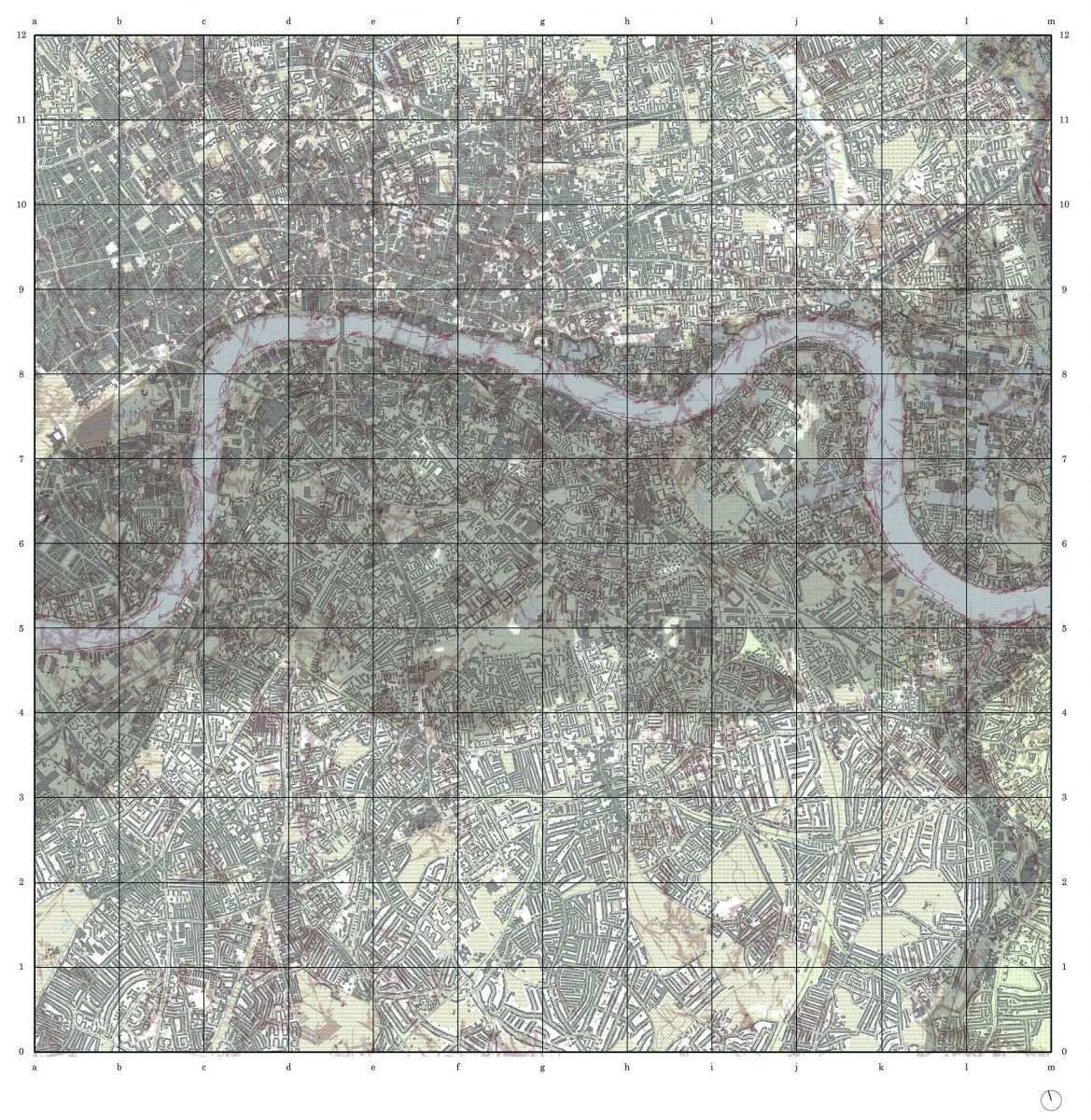
Map of a re-wilded London, exhibiting tidal fluctuation affecting the New London Flood Plain and the growing potential of the re-fertilised land
We are facing an environmental crisis, caused in large part by our anthropocentric hold on the world. The Hedgehog Disco, a reference to Timothy Morton’s ecological rhetoric, outlines a new way of living in collaboration with nature; not in nostalgia for an Edenic past, but in an optimistic vision of a possible future.

Schedule of accommodation
Our proposal brings the human and non-human together as one collective, using design to break down the distinctions we make between humanity and nature. The tower uses a mix of materials – simultaneously natural and sustainable – to form an armature into which specific species-led spaces can be carved. The design is, therefore, flexible (accommodating both the human and the non-human) and also modest; playing host to only that which is necessary for a more natural way of living with nature. Situated both in the Thames and on its banks, all elements of the site and nature are used to host spaces for basic living, as well as for celebrated activities: the rituals.
We have developed a manifesto throughout the project that, along with our design, should be read as a propositional polemic to provoke contemporary attitudes and lazy invocations of the ‘sustainable’.
A MANIFESTO FOR DWELLING WITH THE NON-HUMAN
- LOVE THE DISGUSTING, INERT AND MEANINGLESS
- CELEBRATE CONFLICT AND TENSION, RATHER THAN AVOIDING OR CONTROLLING IT
- ALLOW DECAY, ENABLING NATURE TO BECOME A HOST
- REMOVE BARRIERS AND INVITE EXCHANGE, RECONNECTING WITH EACH OTHER AS WELL AS OUR WORLD
- ACCEPT TRANSIENT COMMUNITIES, AND REALIGN WITH NOMADIC TENDENCIES.
The proposal started with a sensual analysis of the site, mapping such atmospheric qualities as smells and conflict in order to understand the site in a more animalistic way.
Having calculated the average nomadic population of each species present on the site at any one time, and the average spaces required for these ‘dwellers’ to inhabit, we made the project a tower, realising that different species make use of a variety of heights; from the underground to the tree canopies, and higher.

Construction detail section showing permeability and natural decay over time
This information and the site investigations informed material proposals: limecrete sourced from materials including the shellfish inhabiting the Thames (a durable underwater building material and more permanent core) incorporates detritus as an aggregate; waste that is usually considered a disgusting nuisance becomes simultaneously useful and beautiful.
Having studied the ground composition, readily available clay could be used to create mud bricks that are burrowed into in order to accommodate a range of humans and non-humans: an inhabitable skin. Decay of these materials, which we observed over time, provides further opportunities for various species to inhabit.
The Three Rituals
We focused our design specifically on spaces for the enactment of rituals: day-to-day activities elevated to post-anthropocentric acts that encourage engagement in nature. These take the form of architectural elements that mediate between the private individual and the world at large. By using the design of the ritual spaces to help to create a closer connection between the human and non-human, the community we propose draws inspiration from the kibbutz, where community is valued over blood ties.
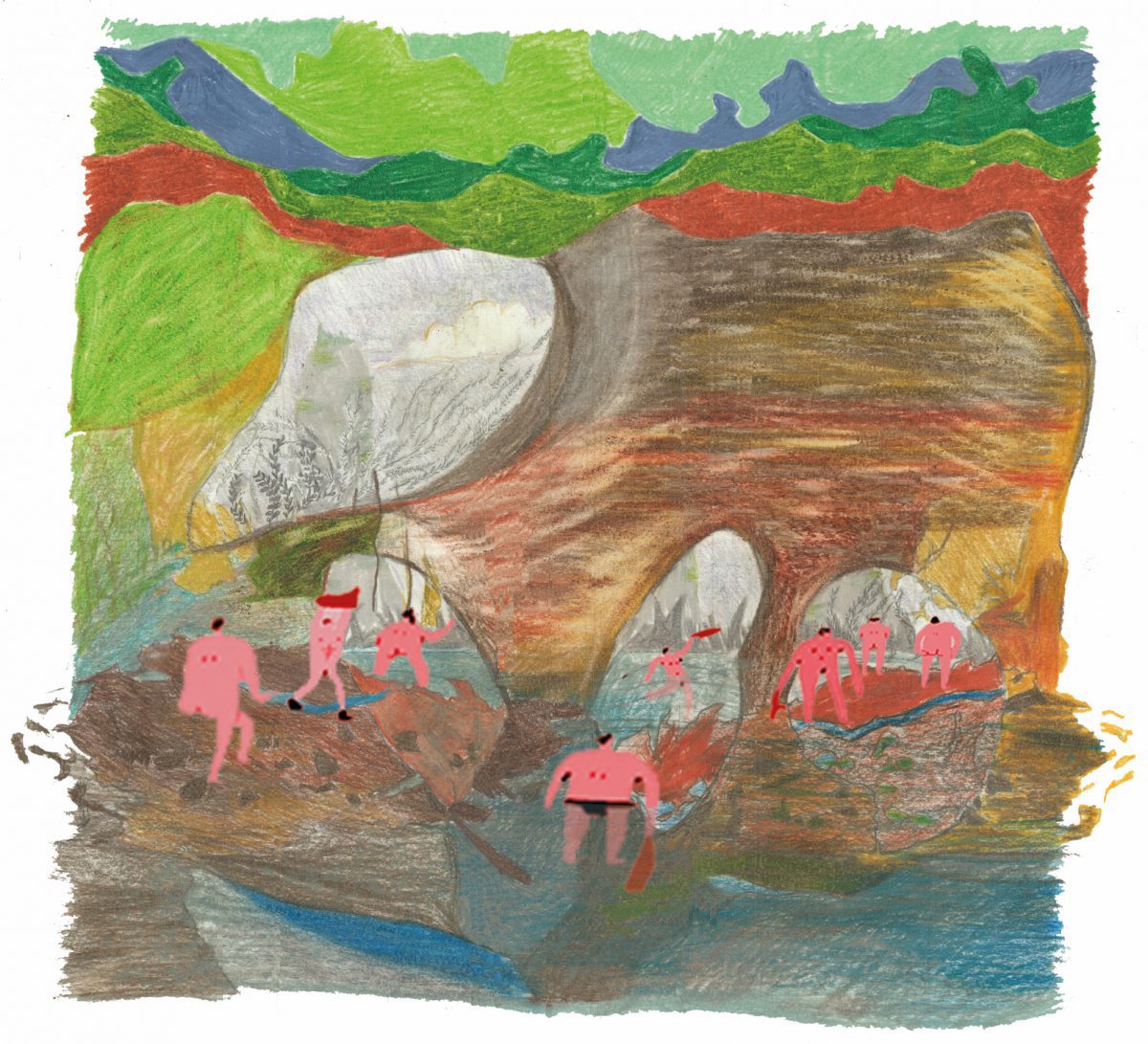
Tidal Ritual
The Tidal Ritual
At spring tide (twice a month) the Thames rises high enough to breach the limecrete dyke, and the community engage in the act of washing. Dwellers process down through a series of vaulted chambers, and, as a group, enter the deepest waters where, unconcerned by the muddiness of the ground or the non-humans sharing their bathwater, they begin to wash themselves and one another. The banks provide space for lounging: facilitating storytelling and teaching among fellow bathers. The ritual lasts until the waters have receded.
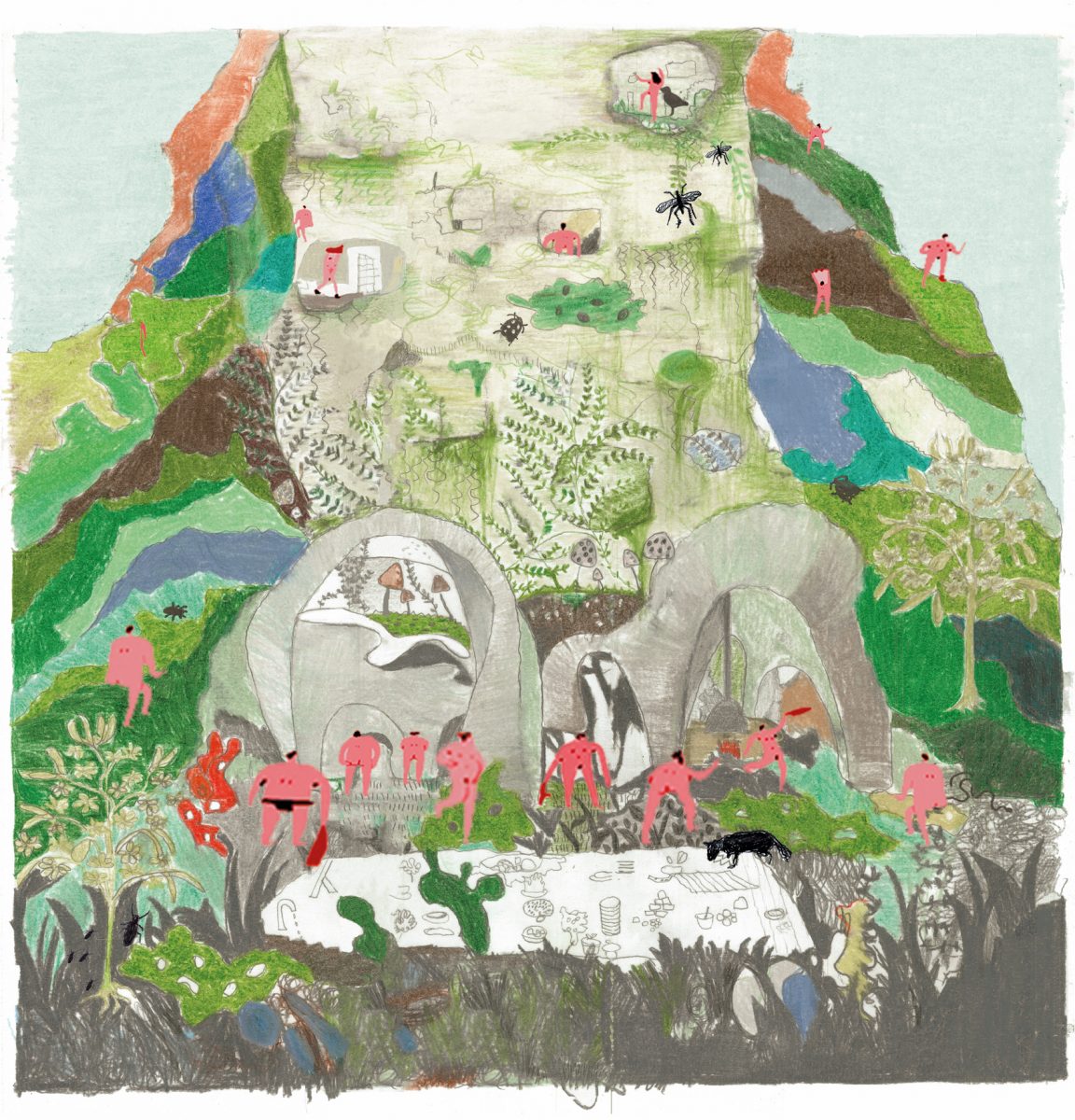
Seasonal ritual
The Seasonal Ritual
Surrounded by meadow and hedgerows for foraging, both non-humans and humans congregate to share food. Nature is encouraged to grow freely and, surrounded by water, the area becomes a fertile and verdant space. Boundaries are blurred between the external and internal: dining spaces are more open, dwellers are sheltered by nature, while smaller spaces or pods are carved out higher up the tower for dining as individuals or smaller groups. The size of the space excavated dictates how public or private it is.
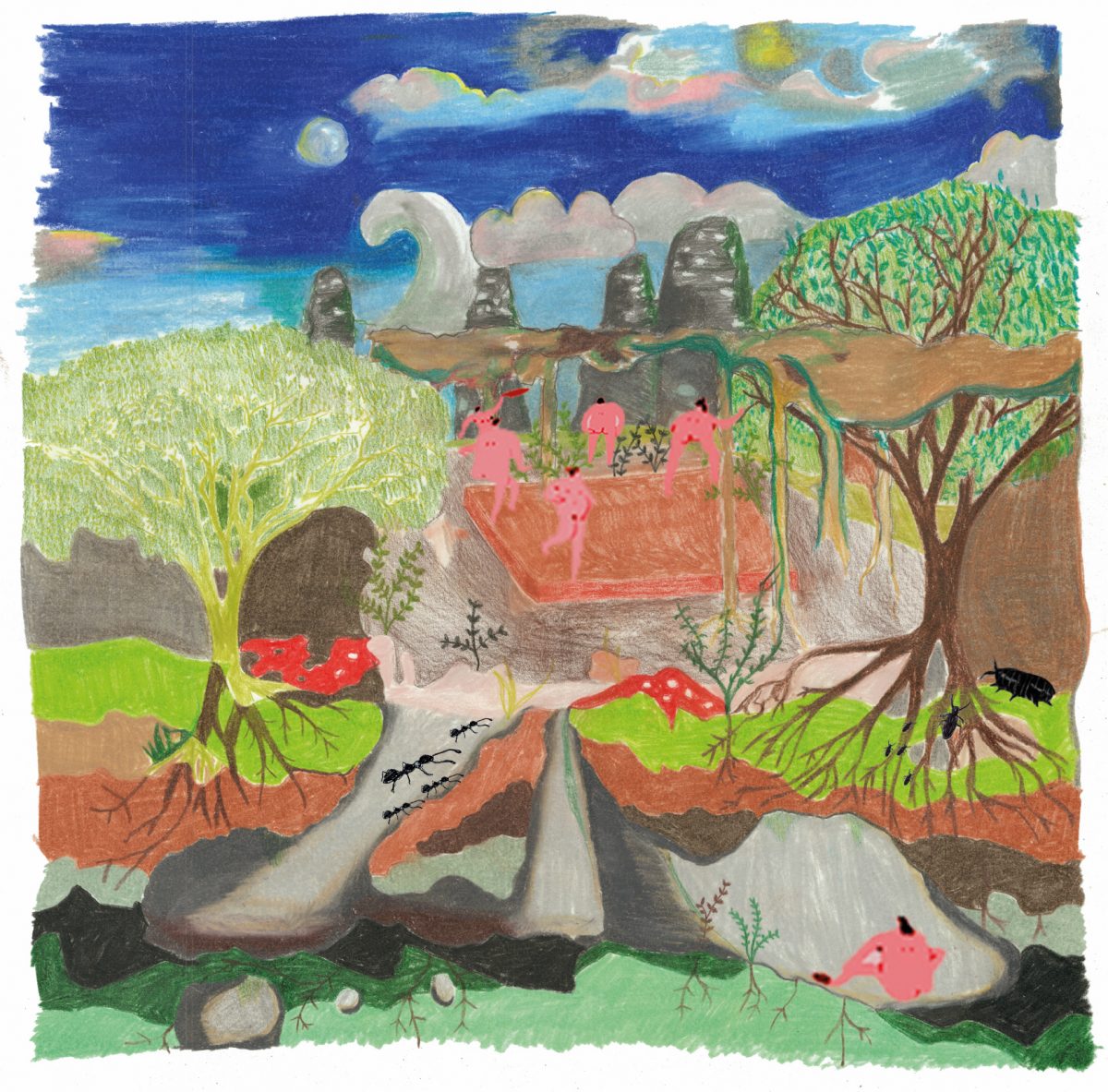
Lifecycle ritual
The Lifecycle Ritual
Higher up, undulating, burrowed-out areas are shared among different species for a range of rituals: reproduction, birth and death. A contrast is evident to the usual sterile and open conditions of a hospital, once seen as the norm. Similarly, most species seek peaceful, quiet spaces when dying. This is accounted for at the top of the tower, where last breaths are taken surrounded by nature, less sterile than pre-Event conditions. Instead, it allows dwellers to reflect on their connection to the Earth and the role they play on it as an equal, not its master.
New Knowledge is led by Anthony Engi-Meacock and Giles Smith from Assemble. Students: Michael Craddock, Maelys Garreau, Matthew Lo, Toby Parrott, Živilė Volbikaitė, Philippine Wright