

Knowledge
Professor Sadie Morgan OBE: ‘Let’s bring a bit of joy back in our lives’
LSA alumnus wins at Built Environment Awards 2026
Job opportunity: Caretaker
Dezeen School Show: LSA MArch
LSA Part 0 leads shortlisted at the NLA Awards
The LSA Award 2026 Winner: Caspar Barker
LSA Student Highly Commended at Architects for Health Student Design Awards
LSA student named a finalist for the Test of Time Awards
Architectural Education as a Situated Practice and the Little Free Library
From Crisis to Opportunity: Reframing the Future for Architecture Graduates
Architectural Education as a Situated Practice | London Festival of Architecture
LSA Student shortlisted for the AJ New Talent Award
If Only We Will: Degree Show 2026
Belonging by Design: A Collective Act | London Festival of Architecture
Design Think Tank: Call for Practice Briefs
LSA International Field Trip 2026: Belgium
LSA Representation in the AJ Small Projects 2026 shortlist
LSA Student Placement with Ryder Architecture
Alumni Case Study: Elliott Wang
Open Evening 1 April 2026
Design For Life returns this February
Call for Abstracts: Learnings/Unlearnings Conference
Part 0 Lead wins at Inspire Future Generations Awards
Applications open for MArch in Designing Architecture
The University of the Built Environment appoints new Professors
Get to know Lee Ivett
Open Evening 20 January 2026
LSA faculty nominated for Inspire Future Generations Awards
Yang Yang Chen shortlisted for Young Talent award
LSA Part 0 co-leads shortlisted for Inspire Future Generations Awards
LSA tutor is RIBA House of the Year finalist
Lee Ivett Open Evening Speech
Hugh Strange Architects: House of the Year 2025 shortlist
Lee Ivett starts as Head of School
LSA tutor wins Young Architect of the Year 2025
Open Evening 19 November 2025
AJ Student Prize | Postgraduate Winner: Amy Wilkinson
Hugh Strange Architects Shortlisted for RIBA Stirling Prize 2025
‘Design for Life’ returns this November – Part 4
Lee Ivett appointed as Head of School at London School of Architecture
George Moldovan shortlisted for 2025 Structural Timber Awards
‘A Seat at the Table’ Summer Show 2025
University of the Built Environment
OPEN DAY 11 June 2025
Future Skills Think Tank
LSA and UCEM merge
Future Skills Think Tank
Festival of the Future
Sixty years on from the London County Council: legacy, impact, learning
Dr Neal Shasore stepping down as Head of School and Chief Executive of the London School of Architecture (LSA) in February 2025
Load moreWhy we teach the history of design methodologies
ALAN POWERS
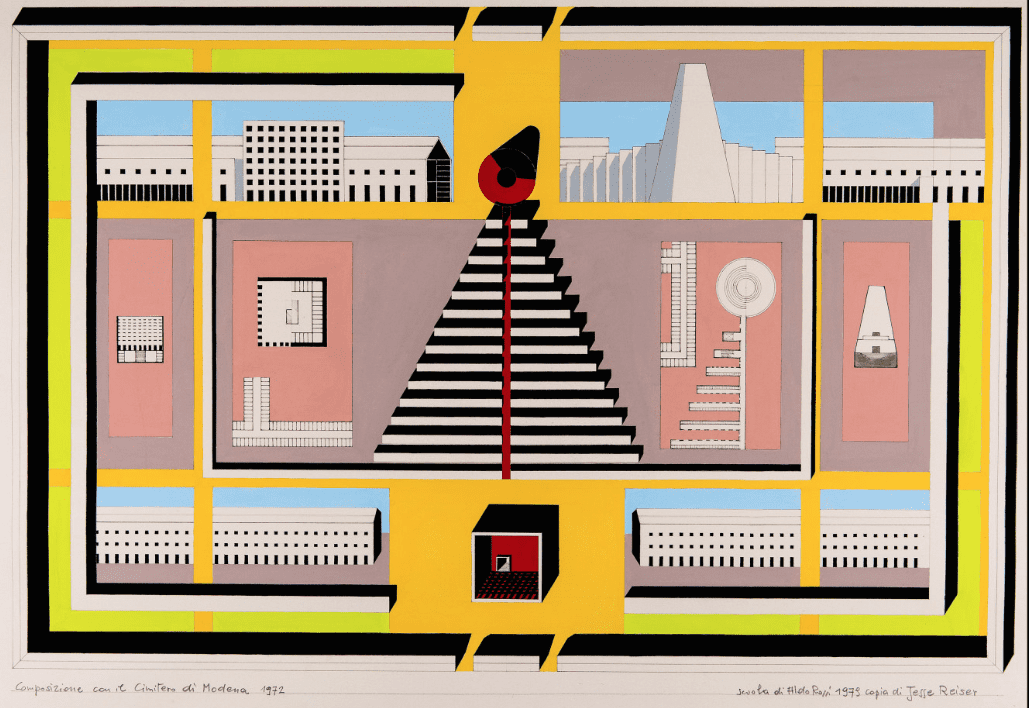
Composition with Modena Cemetary (1979) by Aldo Rossi – from the collection of Drawing Matter, with whom the LSA partners
In 1959, John Summerson referred to ‘the old plod plod from Brunelleschi to Bernini, from Wren to Soane’ of history as taught in schools of architecture. Today, students are engaged in history by their institutions in many ways that have banished such rigidity, while history has been embraced by theory and sometimes smothered in an unequal alliance as pure ideas float free of anchorage in evidence towards self-reference and scholasticism.
In this fragmented state of historical study in architecture schools, the activity of the architect is often lost to view. Taking place during the Proto-Practice Year, the History of Design Methodologies module was suggested by the idea that we have lost all sense of how architects through time have gone about the most crucial part of their work, the conceptualisation of space, construction, ornament, meaning and urban situation. The evidence ranges from the study of buildings for which no documentation exists, but from which a process of design and execution can be extrapolated, through the stages of architectural pedagogy which formalised the language of design still used in part today, to the more recent past when, in the wake of Modernism’s overthrow of the languages of centuries past, different forms of improvisation have taken the place of the old certainties.
While the structural techniques, ideologies and iconographies of past buildings may seem remote and irrelevant, the essential principles and strategies for bringing form out of chaos on which the designs were developed are entirely contemporary in their relevance offering a potentially de-historicised toolkit and a deeper level of connection with architecture as a creative and critical activity and an opportunity to engage with past elements of cities from a position of knowledge and understanding.
The module represents a relatively modest alternative view of the role of history in a Part 2 course, grounded in expert knowledge but applied in the spirit of an open enquiry that aims to help students to situate their own practice both in a historical and contemporary context, including the history of the recent past. The material forms two cycles of six lecture/seminar/visit classes, which will be given in alternate years so that all students experience the full range. As currently structured, these are not divided by chronology, but by questions of their formalist or anti-formalist assumptions.