

Express your interest
Part 2 modules
First-year modules
In the first year, students spend three days per week working in practice for the student placement, and the other two days in the studio working on group and individual design proposals in response to a series of module briefs.
In-person teaching days: Monday and Tuesday
Practice-based days: Wednesday – Friday
Design Cities
Module Leader: David Knight
Credits: 20
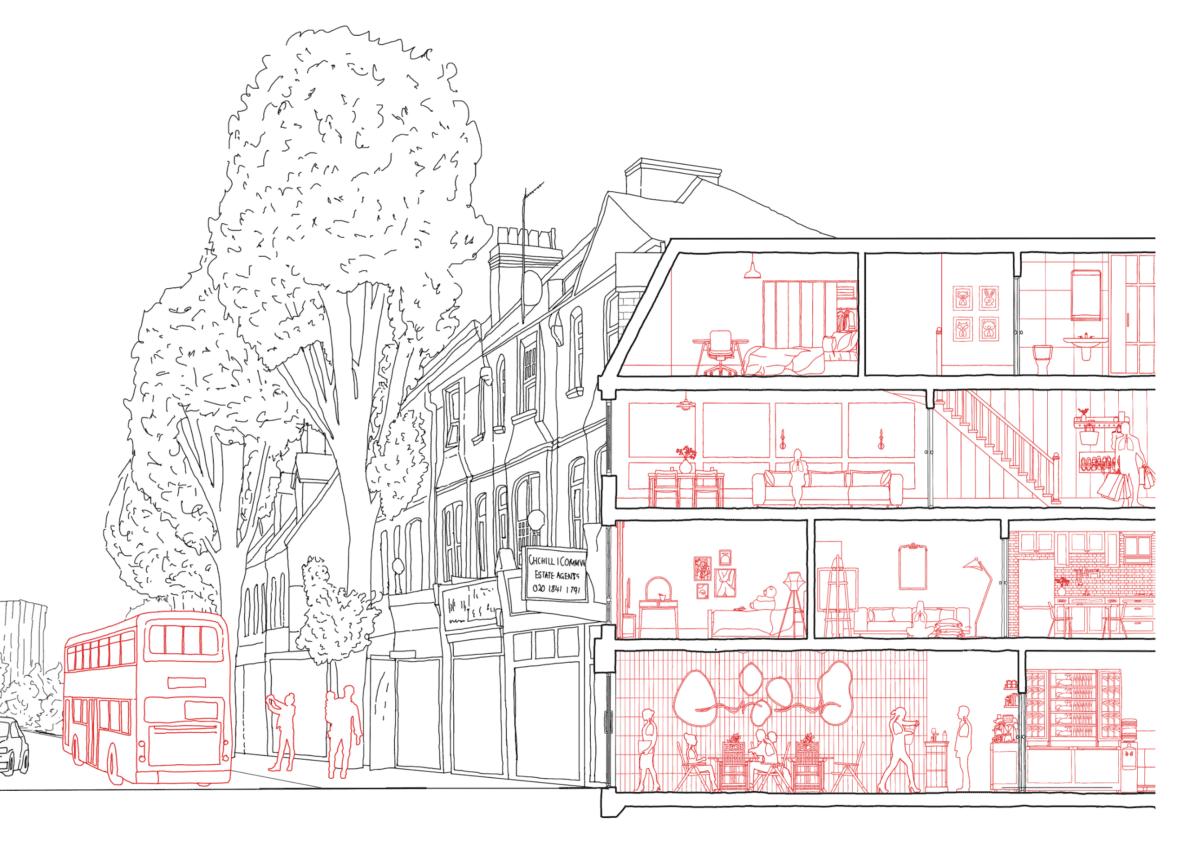
Look around Greater London and ask two deceptively simple questions: how was this built environment produced, and how should it be produced?
Design Cities introduces you to the systems, structures, power dynamics, practices and influences that create and continually reshape the city. You will explore how political and economic forces become visible in architecture and urban form, and how different development processes produce distinct aesthetic, typological and morphological outcomes.
Architecture is only one part of that story. The module places the architect among a much wider cast of people who shape the built environment, bringing in practitioners and activists from other fields to broaden your understanding of how urban change happens, who drives it, and who it affects.
You will use architectural tools including drawing and mapping to explore these concepts visually and tangibly. The module explores three general models of development:
- Private, led by developers and the private sector
- Public, led by local authorities and the state
- Other approaches that are alternative, radical or activist in nature.
Working collaboratively in groups, you will investigate and test spatial strategies from these different perspectives before developing an individual design proposal of your own. The result is a deeper, more critical understanding of urban development and your potential role within it. Both your individual contribution and your group work form part of the assessment.

Design Think Tank
Module Leader: Dr Nicola Antaki
Credits: 20
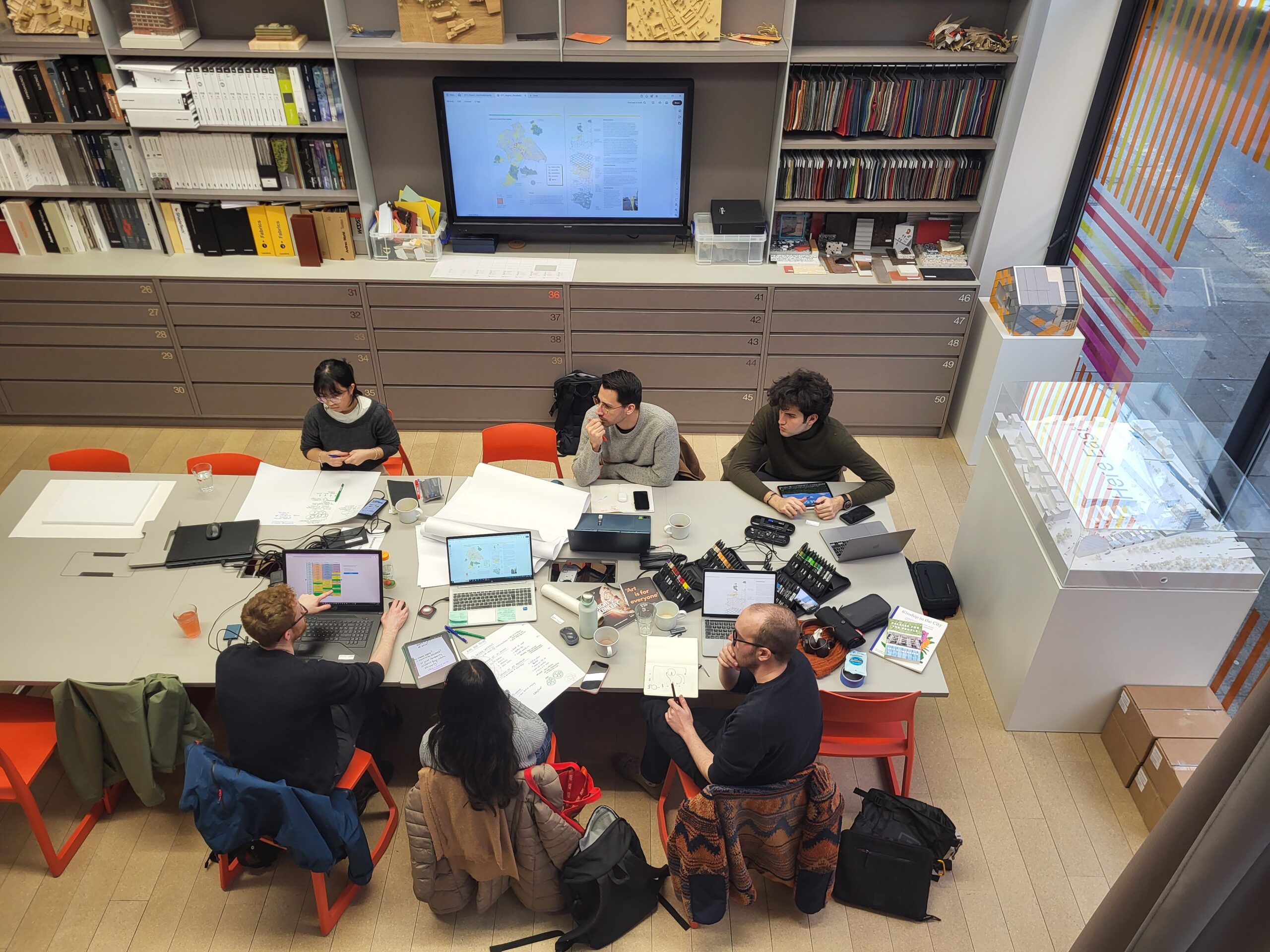
Design Think Tank (DTT) places you at the heart of a current built environment challenge in London and asks you to tackle the problem through research, collaboration with practitioners, and architectural imagination.
Each year, the LSA selects a shortlist of DTT topics from ideas proposed by its Practice Network. These are tangible issues affecting London’s built environment that demand urgent consideration and innovative thinking, leading to inventive design propositions that can contribute to meaningful social and environmental progress and generate beneficial urban change.
You will choose one of the shortlisted topics and work collaboratively with other students to investigate it in depth. Each group is led by senior staff from the practice that proposed the DTT topic, and LSA staff will work alongside the DTT leaders to guide the group through the research and design process.
Your group will bring this work together in a comprehensive report setting out both the research and the design propositions. Where relevant to the study, that report may be distributed to political leaders, administrators, business leaders and opinion formers in London and beyond. It is a chance to practise architecture as a collaborative discipline, with the potential to speak directly to people involved in shaping the city.
Critical Practice: Placement
Module Leader:Donald McCrory
Credits: 40
Your workplace becomes a principal site of investigation in Critical Practice: Placement. This is the work-based half of the two inter-related Critical Practice modules, giving you the opportunity to examine how architecture is actually practised (the other half, Critical Practice: Theory, asks you to imagine how you might want to practise in the future).
You will look closely at the opportunities and constraints that shape professional life, and explore the relationship between process and product, ideas and outcomes. The aim here is to develop a more rigorous understanding of how decisions made in practice influence the work that is ultimately produced.
You will then compile a Critical Practice reflection that draws together your experience and demonstrates a comprehensive understanding of the practice in which you are working. Alongside this key deliverable of the module, you will undertake a detailed analysis of one of the practice’s projects, enabling you to examine the stages involved from initial design to completed construct.
Your developmental work will be guided by tutors and supported through a weekly conversation with your Practice Mentor at your placement.
Critical Practice: Theory
Module Leader:Donald McCrory
Credits: 20
What kind of architect do you want to become, and what do you want your practice to stand for? Critical Practice: Theory, the School-based half of the two inter-related Critical Practice modules, gives you the space to articulate your ideals. While Critical Practice: Placement focuses on how you are practising now, Critical Practice: Theory asks you to look ahead and think about how you would like to practise in the future and what sort of architect you aspire to become.
You will explore contemporary architectural practice through theories and ideas drawn from architecture and beyond, locating the architect within a much wider field of relationships and responsibilities. That means thinking beyond individual buildings to consider the profession in the context of the construction industry, the creative economy, humanity and the geosphere. The aim is to give you a broader frame through which to question established models of practice, test your own values and develop a clear sense of professional purpose.
Your work will culminate in a Critical Practice Manifesto. This is your opportunity to bring your thinking together and articulate your personal intent for future practice.

Design Direction
Module Leader:David Knight
Credits: 20
Design Direction is the final module of your first year of study and marks the time where you cement your own design position. This module also shifts the emphasis from group work to individual project work and asks you to draw together what you have discovered through the previous two design modules and Critical Practice.
Through a series of focused design exercises, you will define and refine your position around a topic, site and programme of your choosing. You will also begin to establish the research and design methodology that will carry your ideas forward. You will be encouraged to embrace environmental, sustainable, political, social and atmospheric factors, exploring both their pragmatism and their poetics.
From this process, you will develop the initial thesis agenda that you will take into Year 2. Your brief will identify key provocations for that design thesis, securing questions and propositions that can later be tested in a complex architectural project.
Along the way, you will build a sharper command of the tactics, tools and techniques needed to test ideas with agility and rigour. You will work across typologies relevant to your emerging thesis and move confidently between scales, from the 1:1 detail to the building, the urban block and the wider metropolitan context. By the end of the module, your design direction should be distinctly yours, with a clear methodology and a strong foundation for the work ahead.
Second-year modules
Throughout year 2, you are supported to develop your own direction and to set the terms of your own enquiry. You will develop an individual Design Thesis project, supported by a methodological exploration of precedent, typology and morphology in Design Research and Design Tectonic.

Design Tectonic
Module Leader: Dr Hugh Strange
Credits: 30
Design Tectonic asks you to push your Thesis Design Project beyond its proposition and explore, in depth, how your architectural scheme could actually be constructed.
Running alongside your design studio work throughout the year, the module allows you to advance your technical design skill, awareness and ability to deploy appropriate sustainable, environmental, structural, and material strategies, while demonstrating an ethical and safe approach to your design decisions.
Through advanced investigation, analysis, speculation and testing, you will examine how materials, structures and processes can influence, strengthen and refine your architectural proposition as it develops.
A range of consultants and specialists relevant to your project themes and aims will advise you as the work progresses, giving you access to focused expertise and enabling you to develop a deep understanding of how a design idea becomes buildable.

Design Research
Module Leader: Marianna Janowicz
Credits: 30
Design Research fosters intellectual curiosity, methodological rigour and critical reflection, positioning research as an active and creative component of architectural design practice. The module will give you the framework to undertake advanced architectural enquiry independently, equipping you with the knowledge and skills to carry out your own research in support of your design practice.
You will explore and critically engage with a diverse range of research methodologies relevant to contemporary architecture, and will develop an understanding of how different forms of knowledge are generated, analysed and applied within architectural practice and research.
The module culminates in an independent research project using a methodology of your choice. Through it, you will develop new insights, evidence and critical perspectives around a specific architectural enquiry. Those findings will support and underpin the development of your Design Thesis and Design Tectonic work. The development of this research will be tested and communicated through a range of appropriate media.

Design Thesis
Module Leader: Dr Ruth Lang
Credits: 60
Design Thesis provides the framework for an intense period of architectural experimentation in which you develop, test and refine a proposition of your own.
Structured in three stages – Proposition, Iteration and Synthesis – the module asks you to establish a design hypothesis, integrate it with a methodological position such as the one developed through your Critical Practice Manifesto, and then test that thinking through an architectural proposition. Critical reflection and iteration are central: you will examine what the design is doing, evaluate the relationship between intent and outcome, and use what you discover to strengthen, adapt or redirect the project.
You will develop a detailed brief that establishes the who, what, why, where and when of your thesis and reflects real-world conditions and constraints. You will refine the project typology and programme in response to your chosen site, client and stakeholder groups, propose a funding model, and position your formal and spatial ideas within the social, political and environmental context you have identified. The typology or programme does not need to correspond directly with your methodology or hypothesis; it serves as the vehicle through which you implement, test and communicate that approach.
As the thesis develops, you will make informed decisions across scales, from detail and building to public realm. Design Tectonic and Design Research run alongside the module, contributing complementary knowledge, methods and critical perspectives.
Your final portfolio will communicate the full complexity of the Design Thesis project. You will then edit that work for your Viva Voce and distil it further for exhibition at the LSA Summer Show.