

Knowledge
Open Evening 1 April 2026
Design For Life returns this February
Call for Abstracts: Learnings/Unlearnings Conference
Part 0 Lead wins at Inspire Future Generations Awards
Applications open for MArch in Designing Architecture
The University of the Built Environment appoints new Professors
Get to know Lee Ivett
Open Evening 20 January 2026
LSA faculty nominated for Inspire Future Generations Awards
Yang Yang Chen shortlisted for Young Talent award
LSA Part 0 co-leads shortlisted for Inspire Future Generations Awards
LSA tutor is RIBA House of the Year finalist
Lee Ivett Open Evening Speech
Hugh Strange Architects: House of the Year 2025 shortlist
Lee Ivett starts as Head of School
LSA tutor wins Young Architect of the Year 2025
Open Evening 19 November 2025
AJ Student Prize | Postgraduate Winner: Amy Wilkinson
Hugh Strange Architects Shortlisted for RIBA Stirling Prize 2025
‘Design for Life’ returns this November – Part 4
Lee Ivett appointed as Head of School at London School of Architecture
George Moldovan shortlisted for 2025 Structural Timber Awards
‘A Seat at the Table’ Summer Show 2025
University of the Built Environment
OPEN DAY 11 June 2025
Future Skills Think Tank
JOB OPPORTUNITY: HEAD OF SCHOOL
LSA and UCEM merge
Future Skills Think Tank
Festival of the Future
Sixty years on from the London County Council: legacy, impact, learning
Dr Neal Shasore stepping down as Head of School and Chief Executive of the London School of Architecture (LSA) in February 2025
PART 0 WINS INSPIRE FUTURE GENERATIONS AWARD FOR FURTHER EDUCATION/HIGHER EDUCATION
LSA AND PURCELL ANNOUNCE NEW PARTNERSHIP
LUCY CARMICHAEL APPOINTED CHAIR OF THE BOARD OF TRUSTEES
PART 0 IS AN INSPIRE FUTURE GENERATIONS (IFG) AWARDS FINALIST
WINTER EXHIBITION – WED 11 & THU 12 DEC: CURATED OPEN HOUSE, EXHIBITION AND OPEN EVENING FOR PART 1s
NEW ROLE: RESEARCH ASSOCIATE – FUTURE SKILLS THINK TANK
JOB OPPORTUNITY: MARKETING MANAGER
ATTEND THE BRITISH EMPIRE EXHIBITION SYMPOSIUM 2024
SEE OUR GRADUATING STUDENTS’ WORK
JOB OPPORTUNITY: CRITICAL PRACTICE TUTOR
PlanBEE: Matching young people with work in the Capital
The Dalston Pavilion
LSA Graduate Exhibition 2024
British Empire Exhibition: Call for Participation
LEAD OUR BRAND-NEW PRACTICE SUPPORT PROGRAMME
HELP DEFINE THE FUTURE OF EQUITABLE BUILT ENVIRONMENT EDUCATION
24/25 Admissions Open Evening – 6 March
2023 LSA GRADUATES WIN RIBA SILVER MEDAL AND COMMENDATION
Load moreNancy Jackson — The Conscious Homes of East Haringey
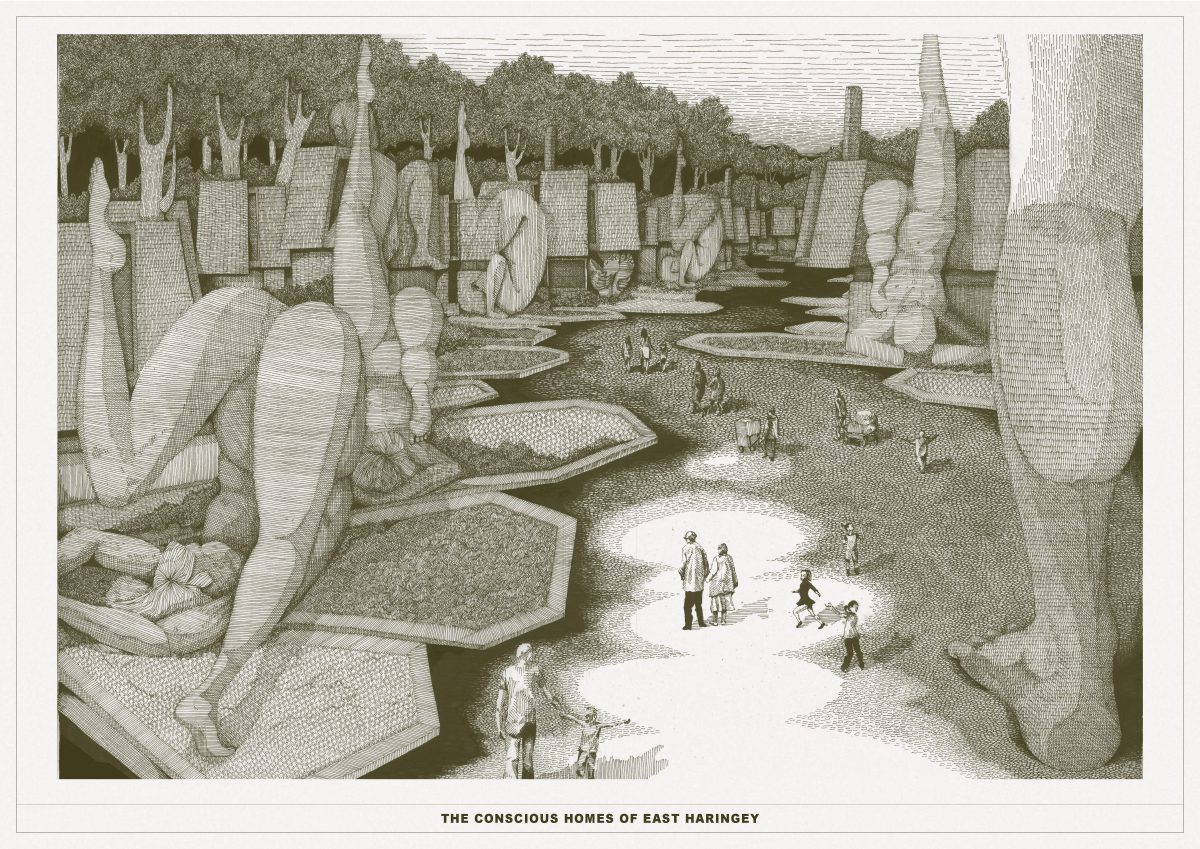
A speculation: What if our homes had consciousness?
The Conscious Homes of East Haringey — Consciousness: the state of being aware of and responsive to one’s surroundings. By Nancy Jackson.
Location
White Hart Lane, East Haringey, London Borough of Haringey
Objective
Families demonstrate awareness of construction and material behaviour, their homes actively respond to their changing requirements.
Motivation
Many new build homes across London are unaffordable, physically isolating, inflexible and materially dishonest. For young families, they fail to provide a true sense of home for children, or the space for a family to settle and evolve.
Strategy
The Conscious Homes of East Haringey grow, creating trailing streets, shifting in form and figuration, aiding gatherings and encouraging play. A hemp crop accompanies the homes on a roof-top park and is celebrated through the use of plant based building materials.
A primary timber structure facilitates growth and alteration to dwellings, also allowing underused space to be returned to the community for play and gatherings.
Impact
The combined effect is a conscious neighbourhood, where residents are aware of and responsive to their surroundings, and where architecture is aware of and responsive to the families living within. The homes celebrate belonging and are an expression of identity in a considered, playful way.
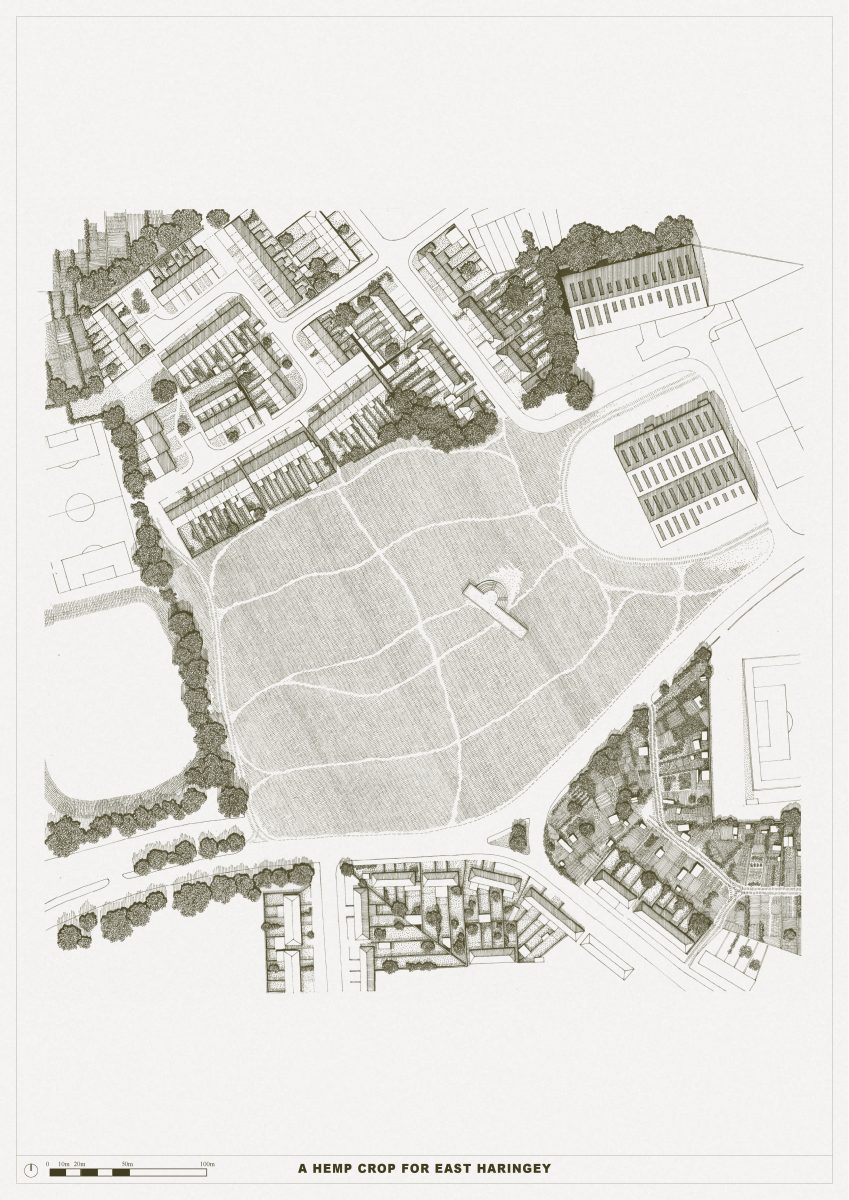
Hemp is grown and processed on site to become the identifiable building material of the homes.
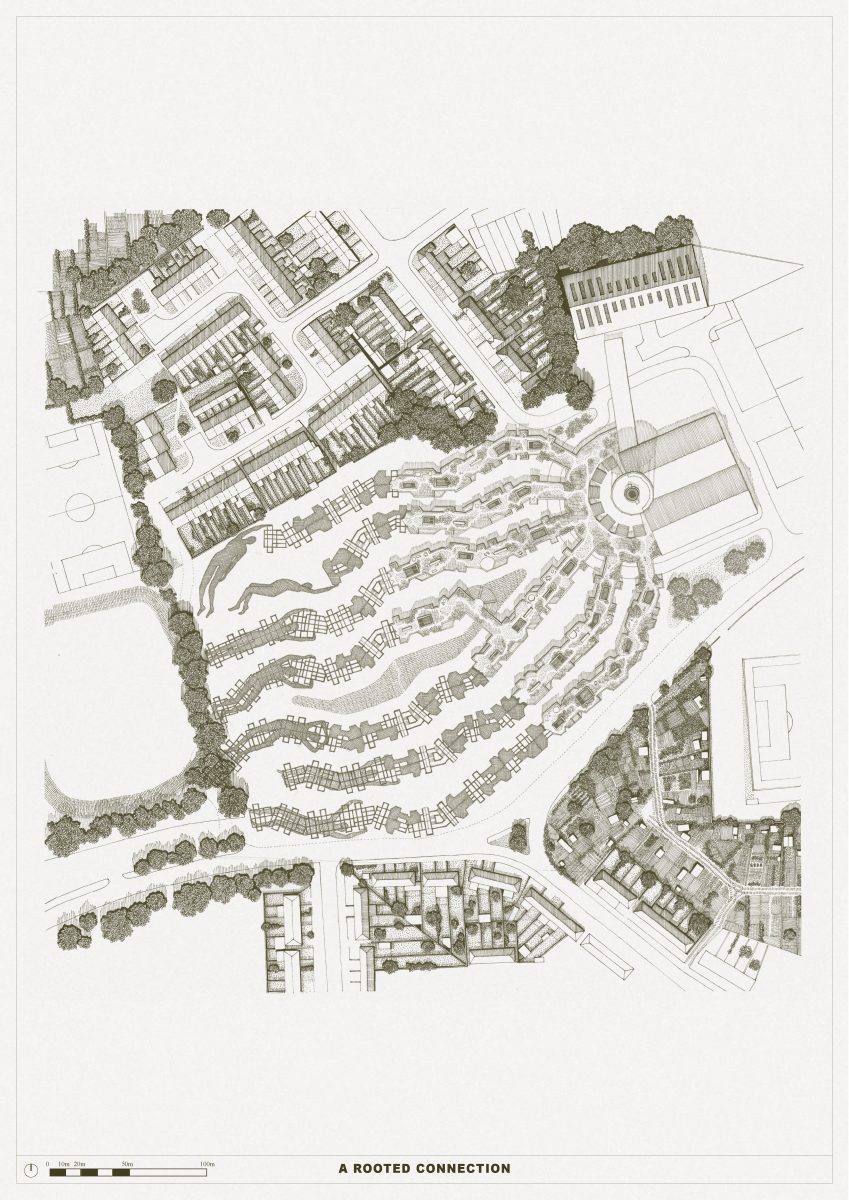
The Conscious Homes of East Haringey grow, creating trailing streets, shifting in form and figuration, aiding gatherings and encouraging play. A hemp crop accompanies the homes on a roof-top park and is celebrated through the use of plant based building materials.
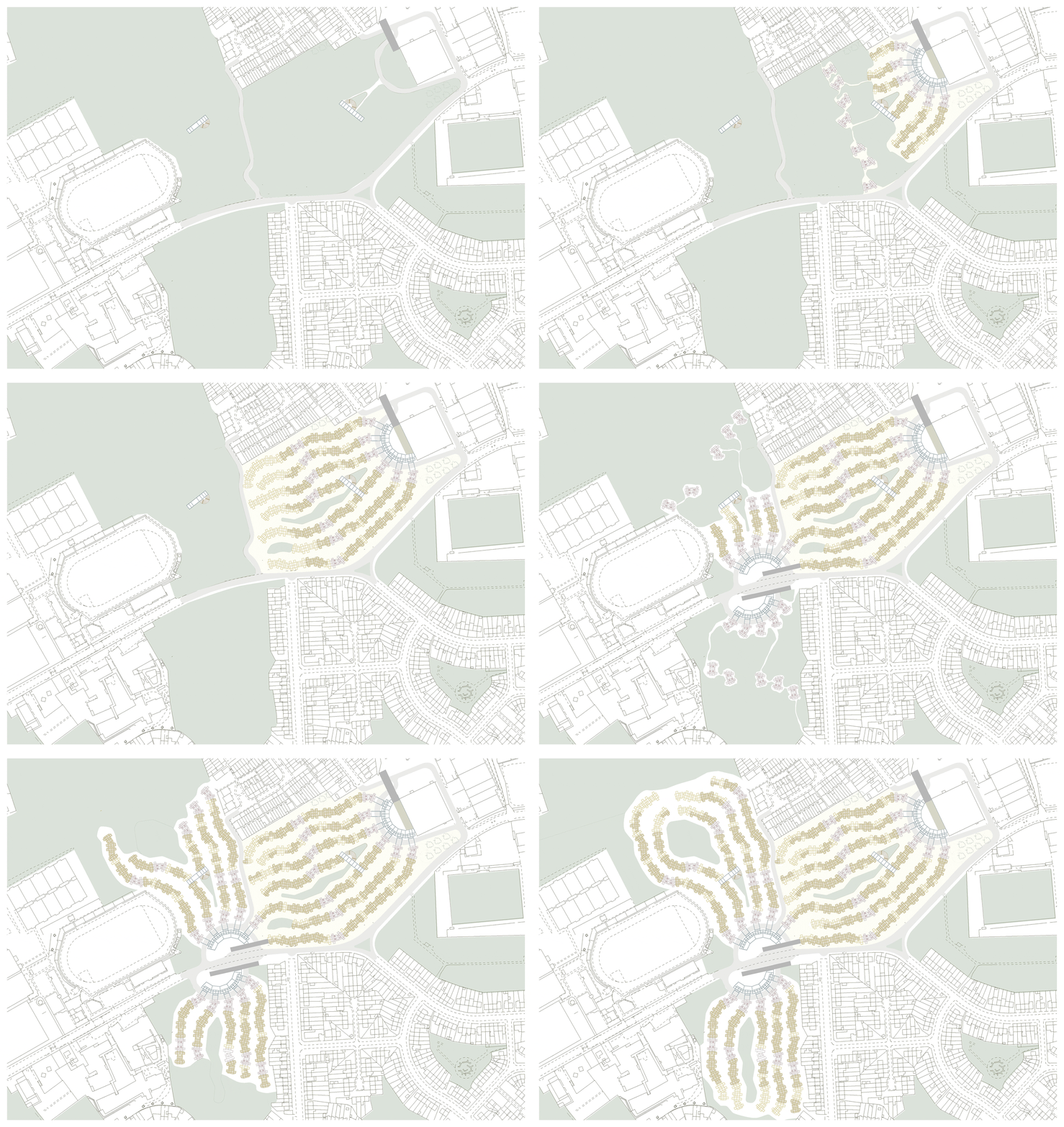
The architecture grows across the site as the community grows.
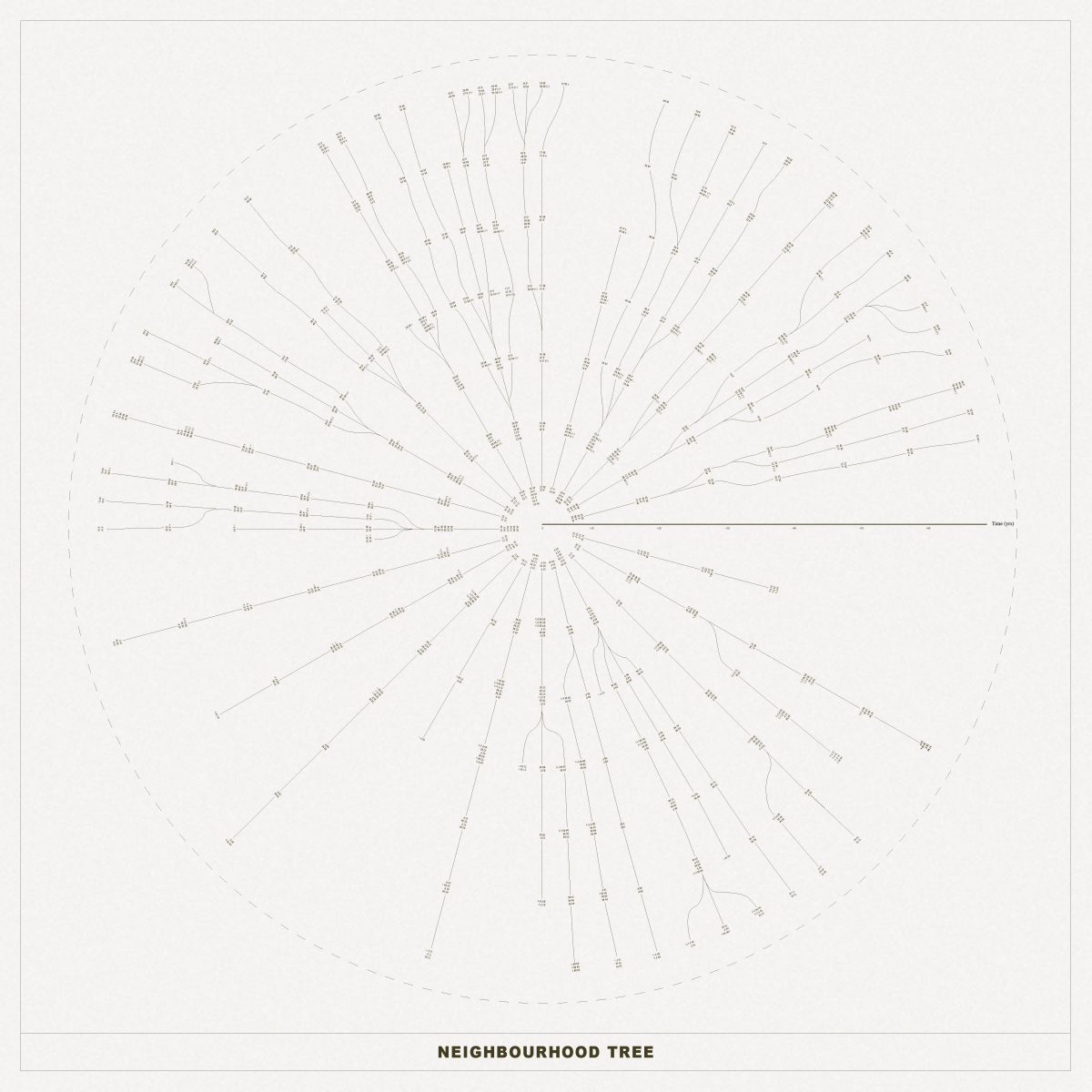
The neighbourhood tree: a masterplan formed by the growth and shrinking of families.
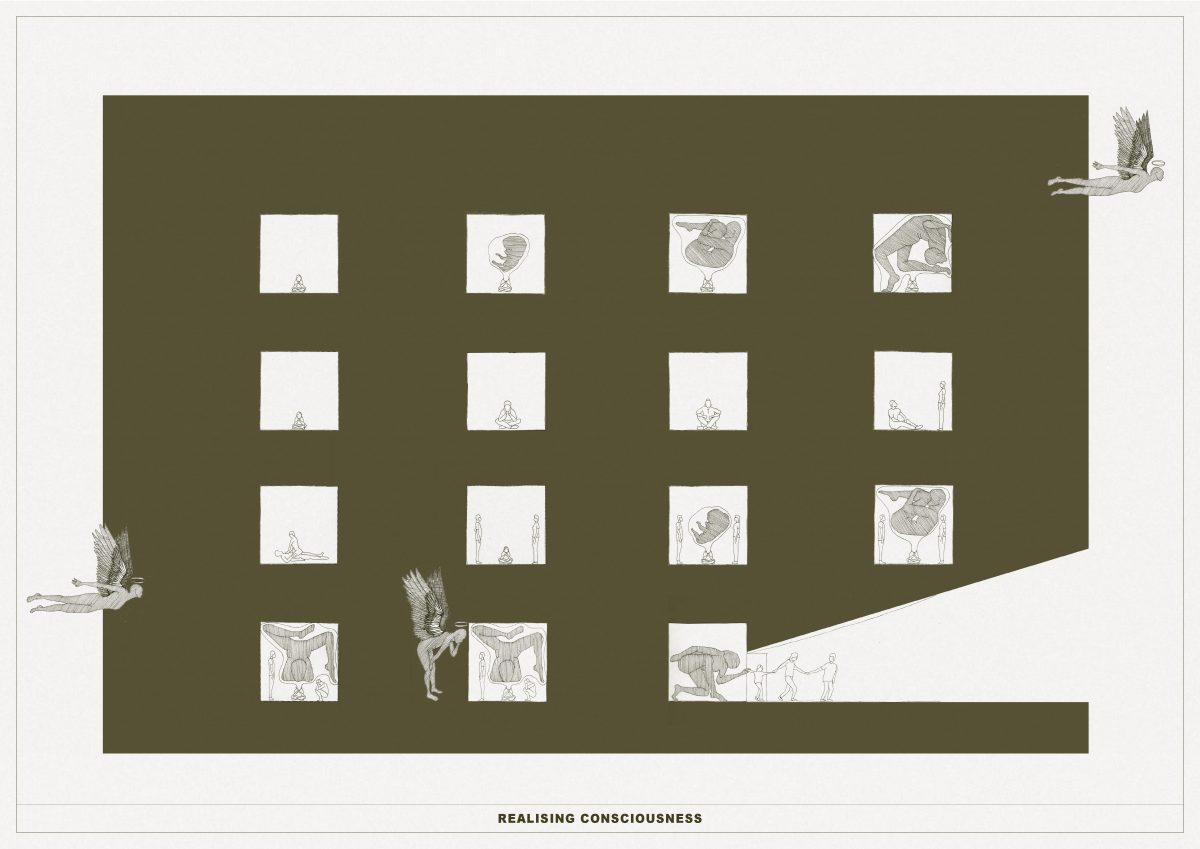
Many new build homes across London are unaffordable, physically isolating, inflexible and materially dishonest. For young families, they fail to provide a true sense of home for children, or for their imaginations to grow.
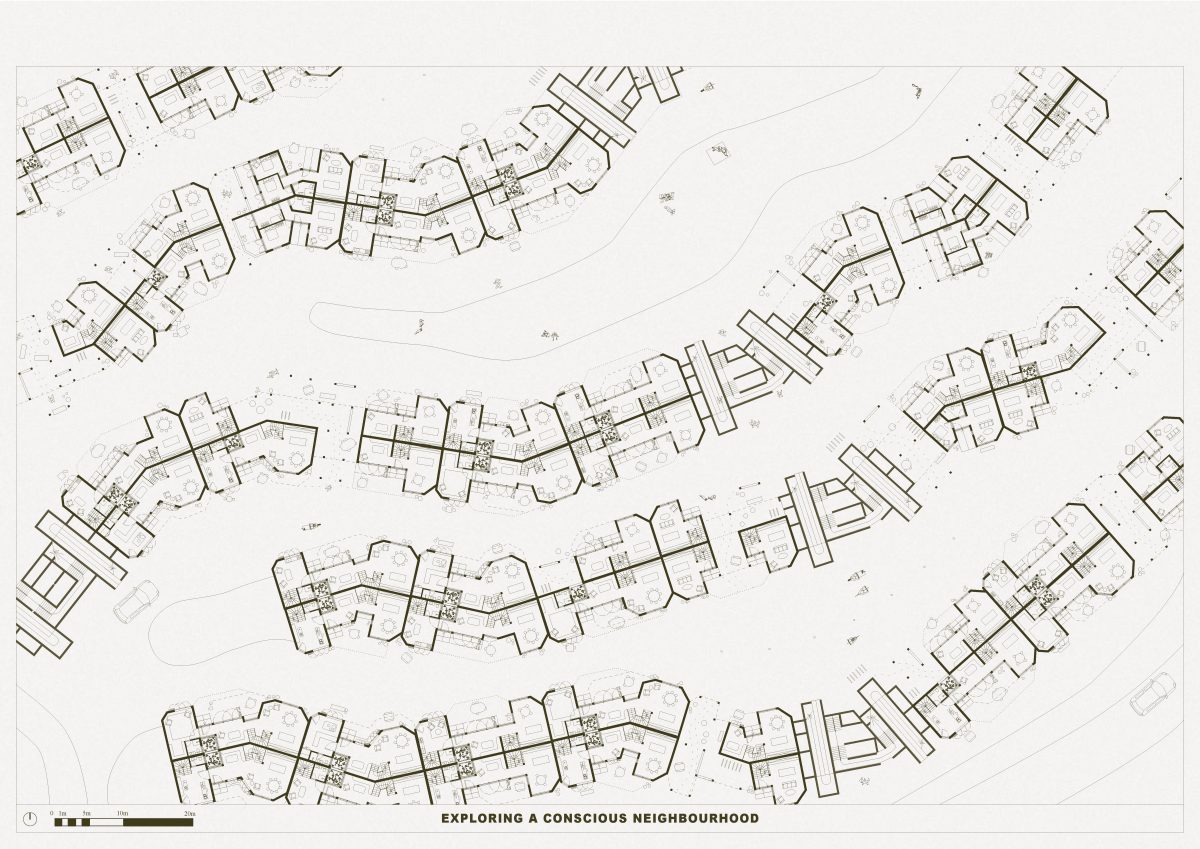
Permeable terraces give any underused space to the public realm for play and gatherings.
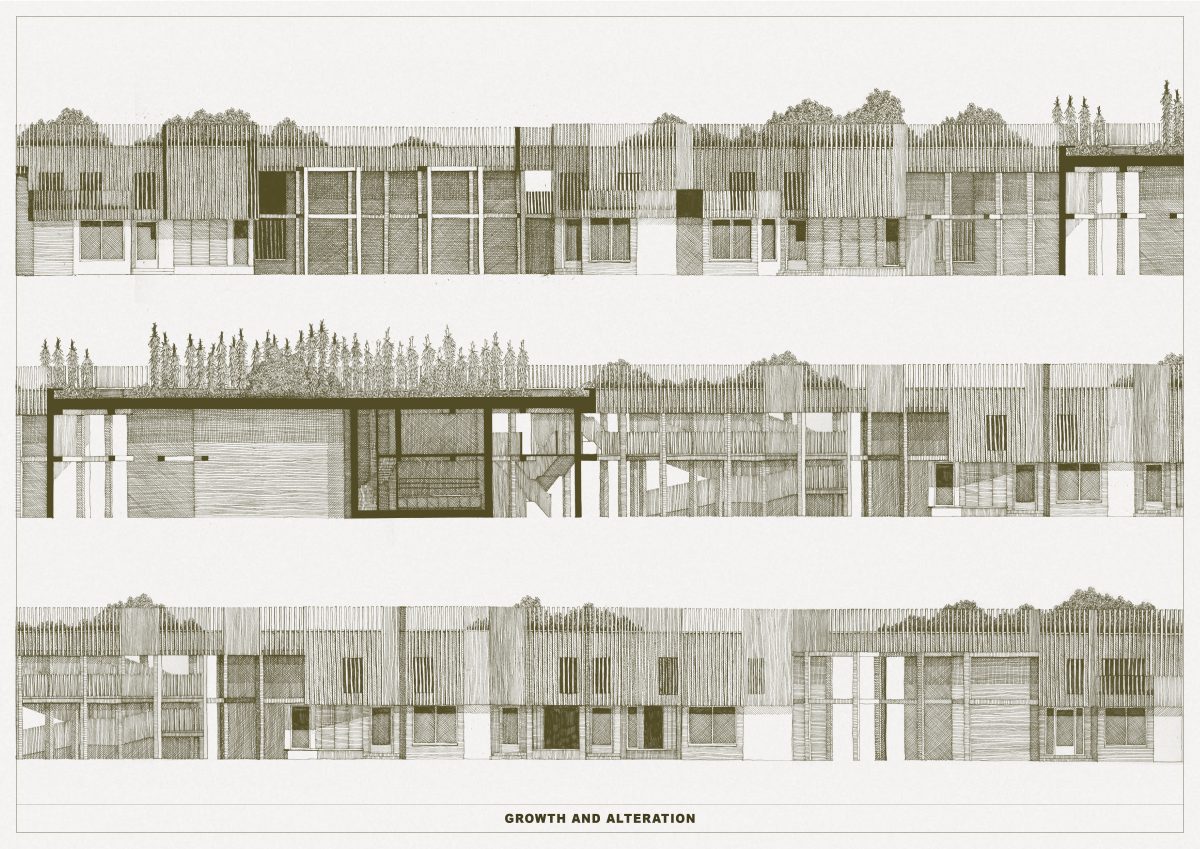
Patterns for a range of family homes create a varied street elevation of alcoves, overhangs and terraces.
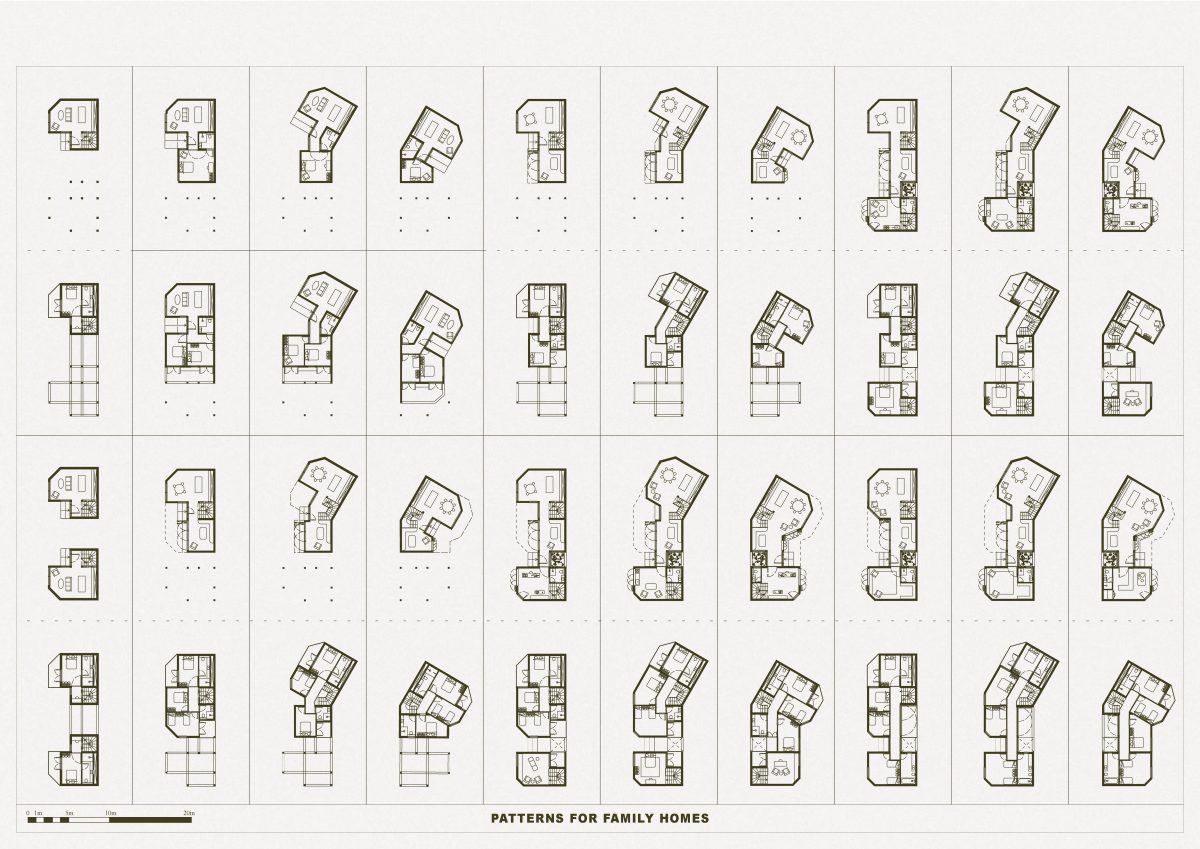
Families are aware of construction and material behaviour. Their homes actively respond to the family growth, shrinking and changing requirements.
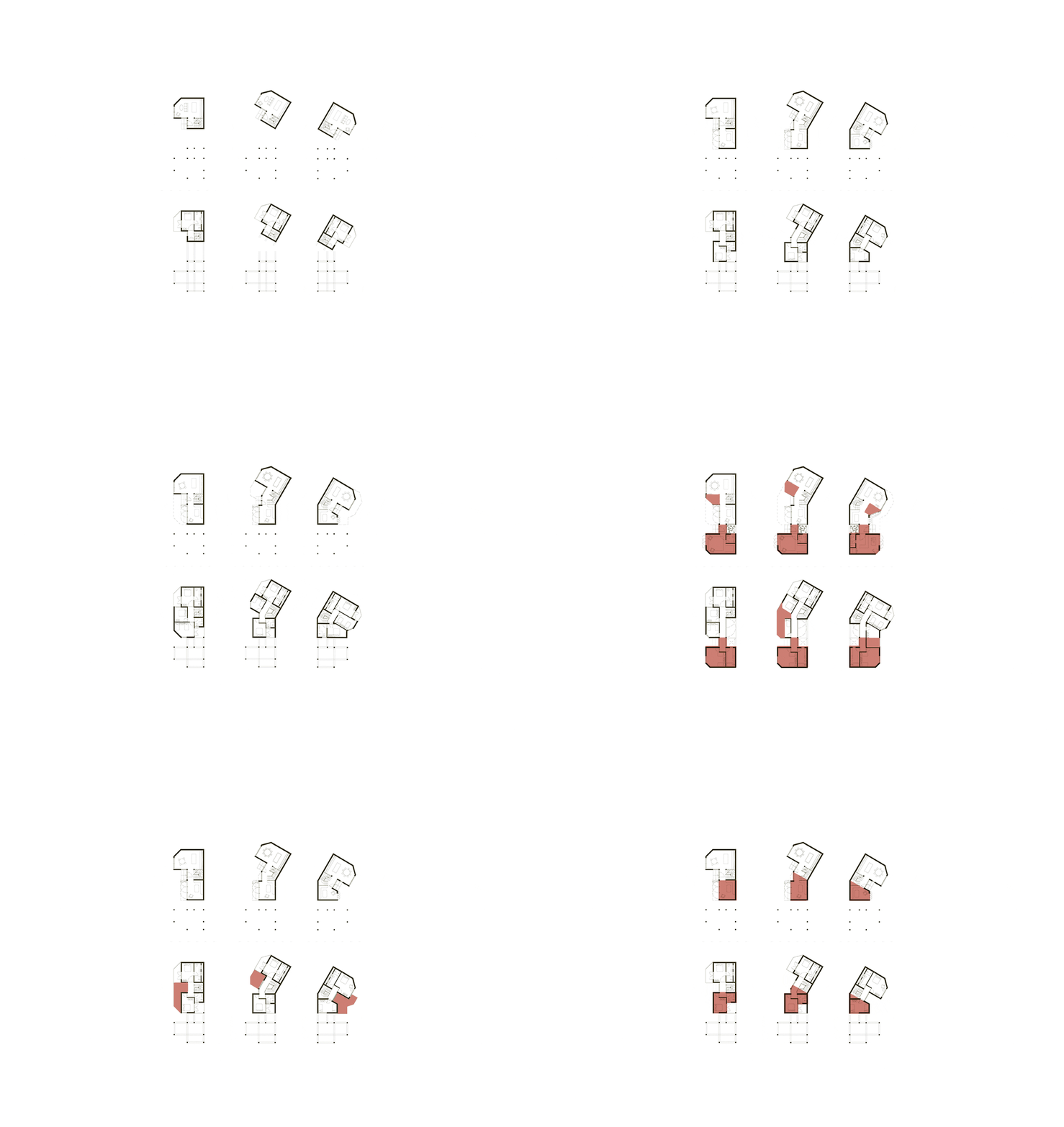
The proposal consists of a primary timber structure and patterns for a range of family homes with the opportunity for growth and alteration. If a family requires additional space, the framework accommodates. Inversely, the framework allows underused space to be returned to the community for play and gatherings.
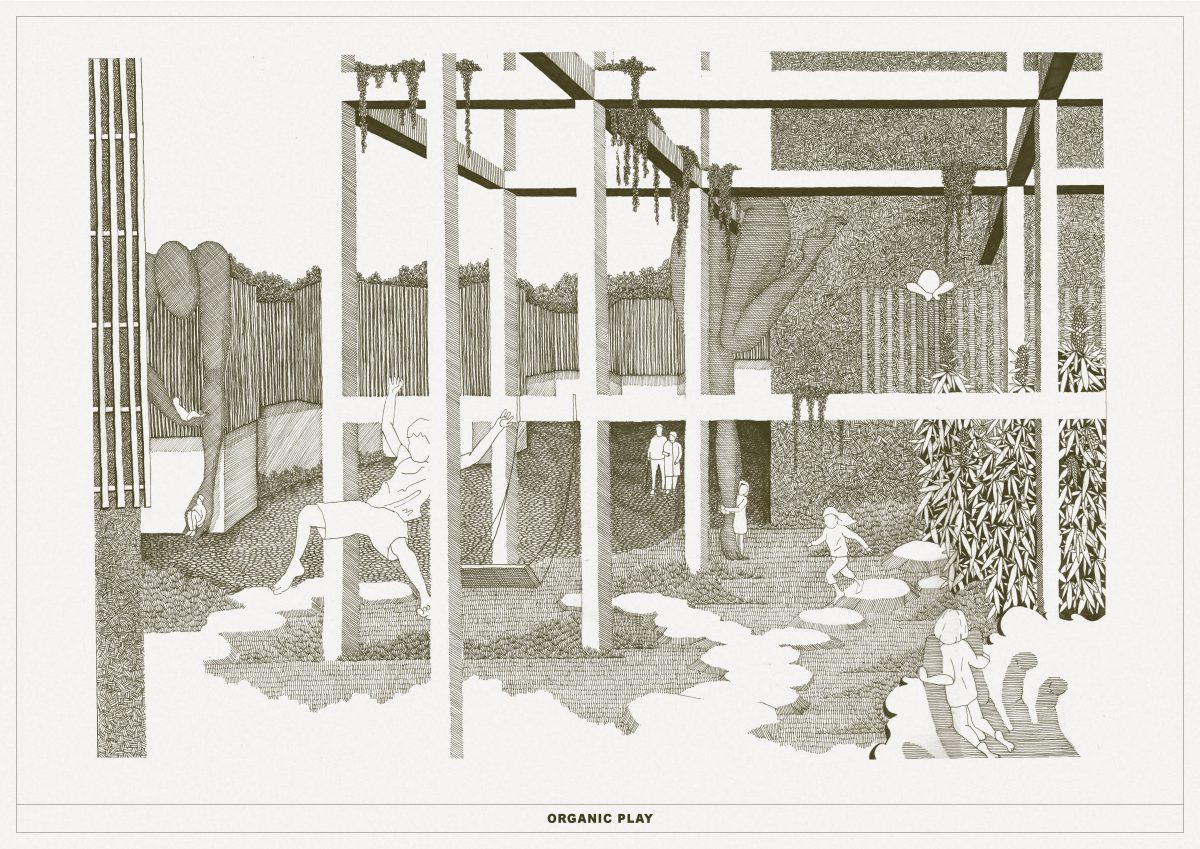
The primary structure acts as a framework for organic and imaginative play.
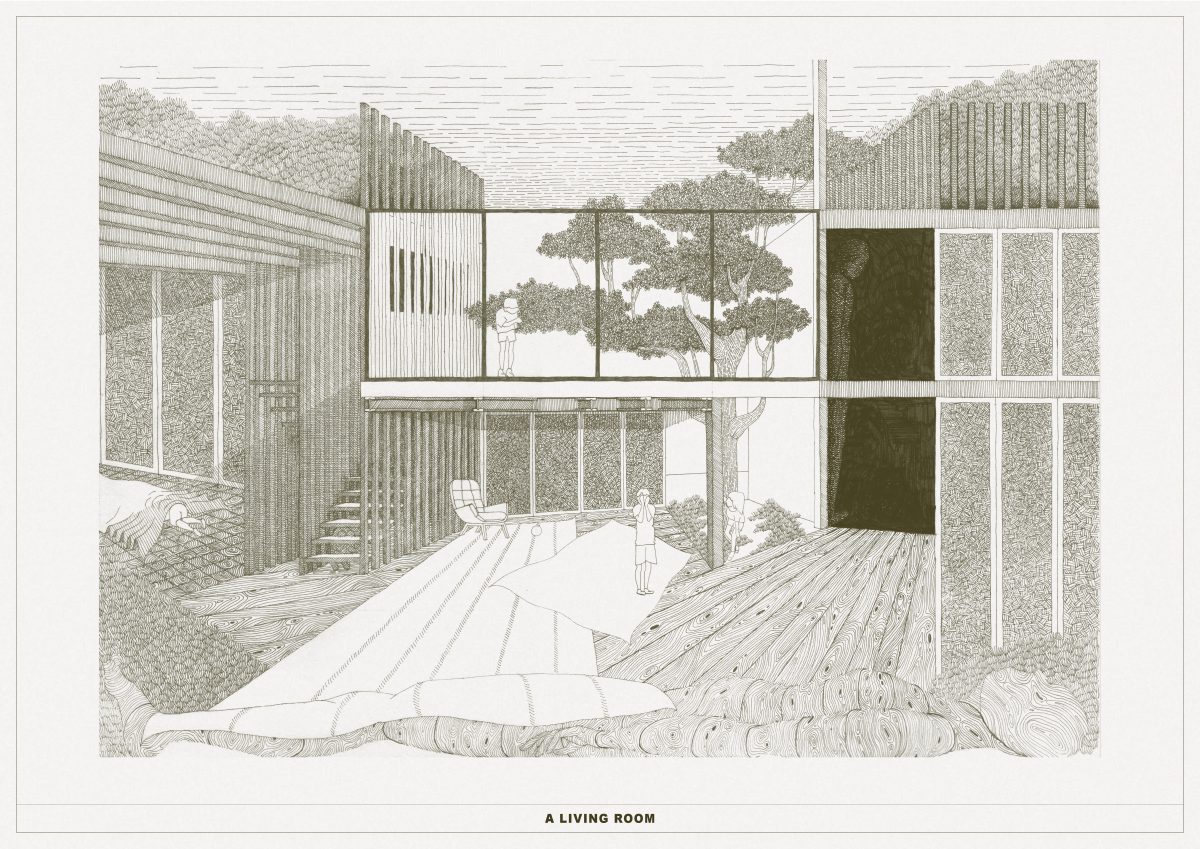
Material behaviour is celebrated internally and the arrangement of space encourages play.
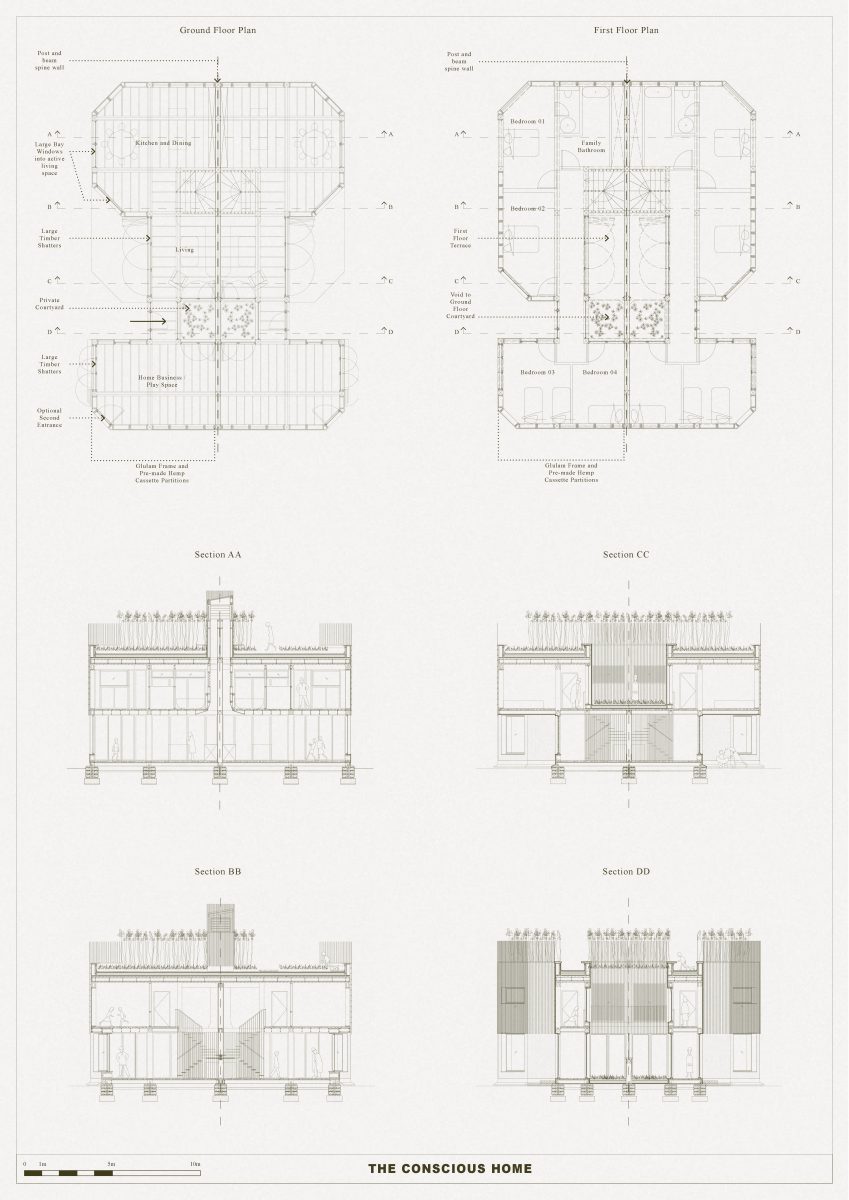
Typical plans and sections.
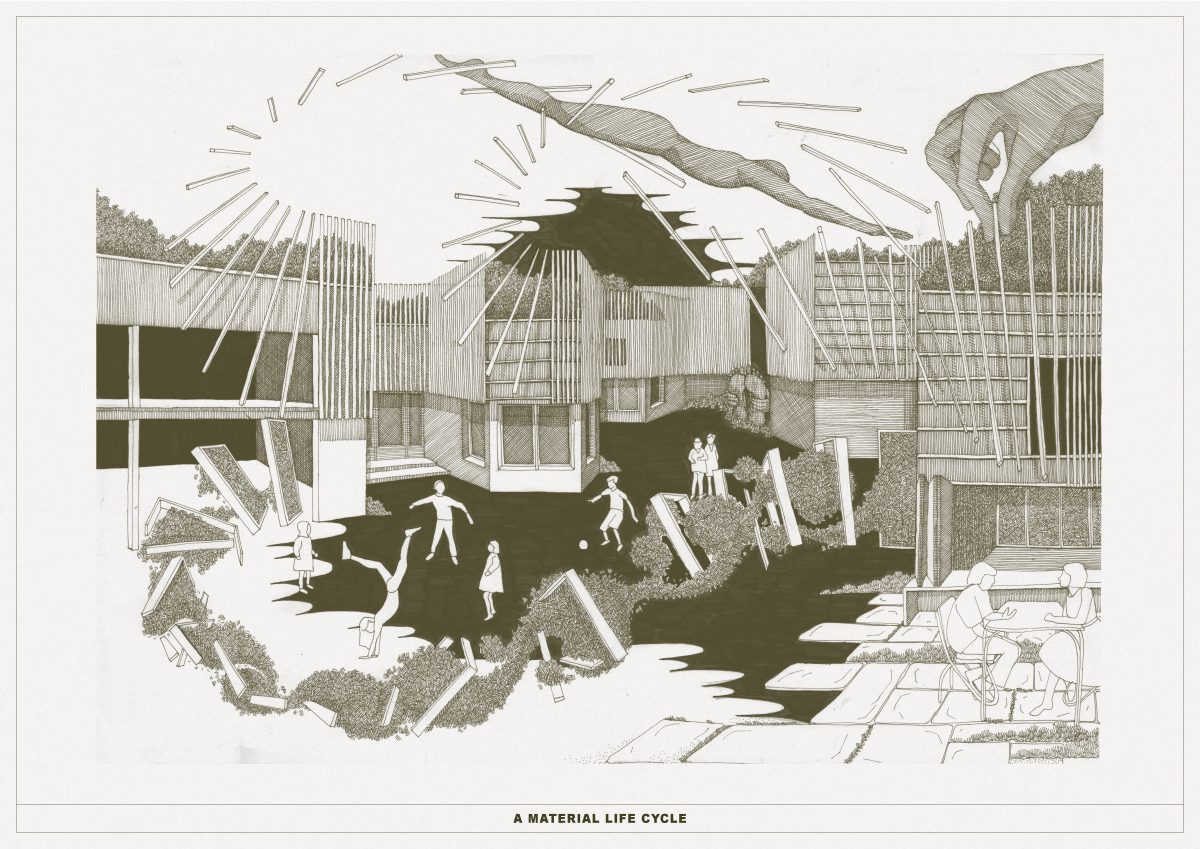
The timber secondary structures allow materials to be cannibalised elsewhere on the site as homes are altered. This circular economy is environmentally friendly whilst also reinforcing the identity of the neighbourhood and the awareness of construction, material behaviours and maintenance.
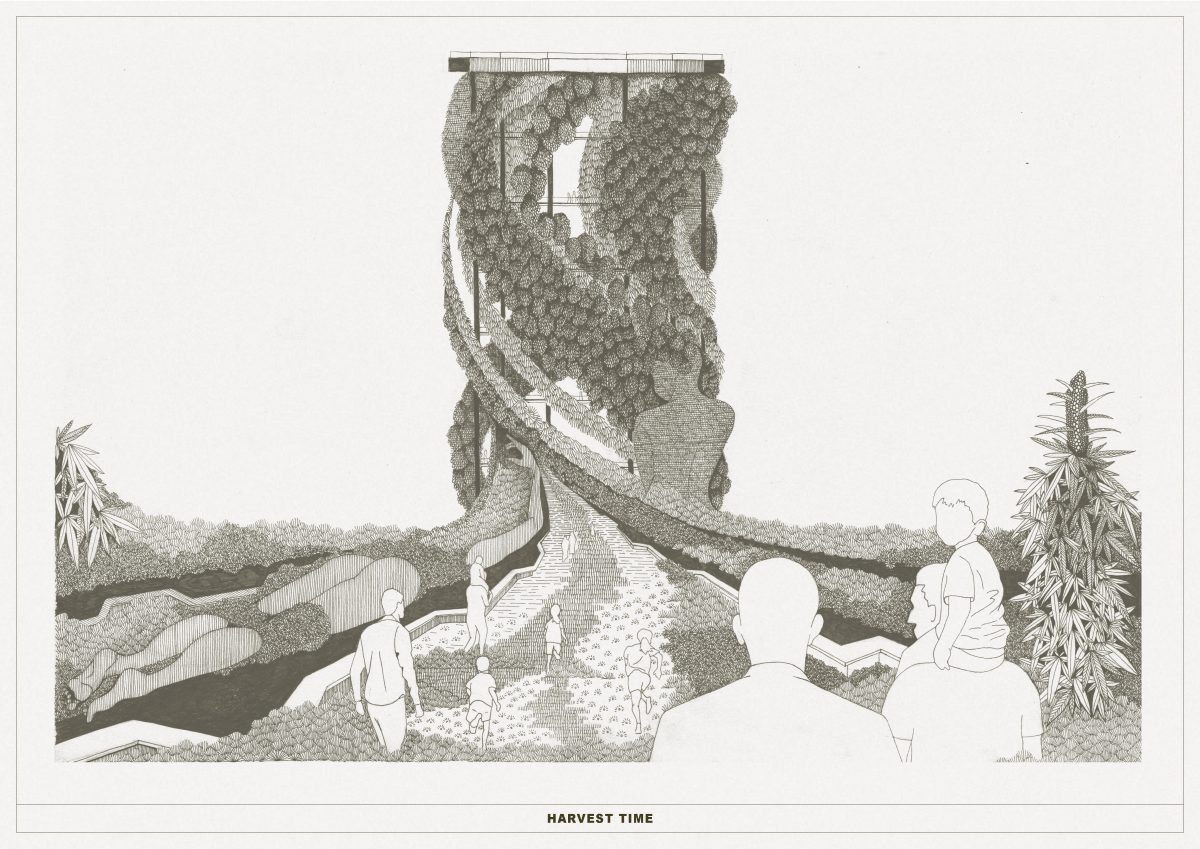
The processing of the hemp is celebrated yearly as the harvested crop is dried to form the skin of a civic tower. The tower pinpoints the primary gathering space for the neighbourhood and provides a platform for celebration of both the life events of the residents and the yearly harvest.
Further work
Contact details
- iamnancyjackson@gmail.com
- Instagram