

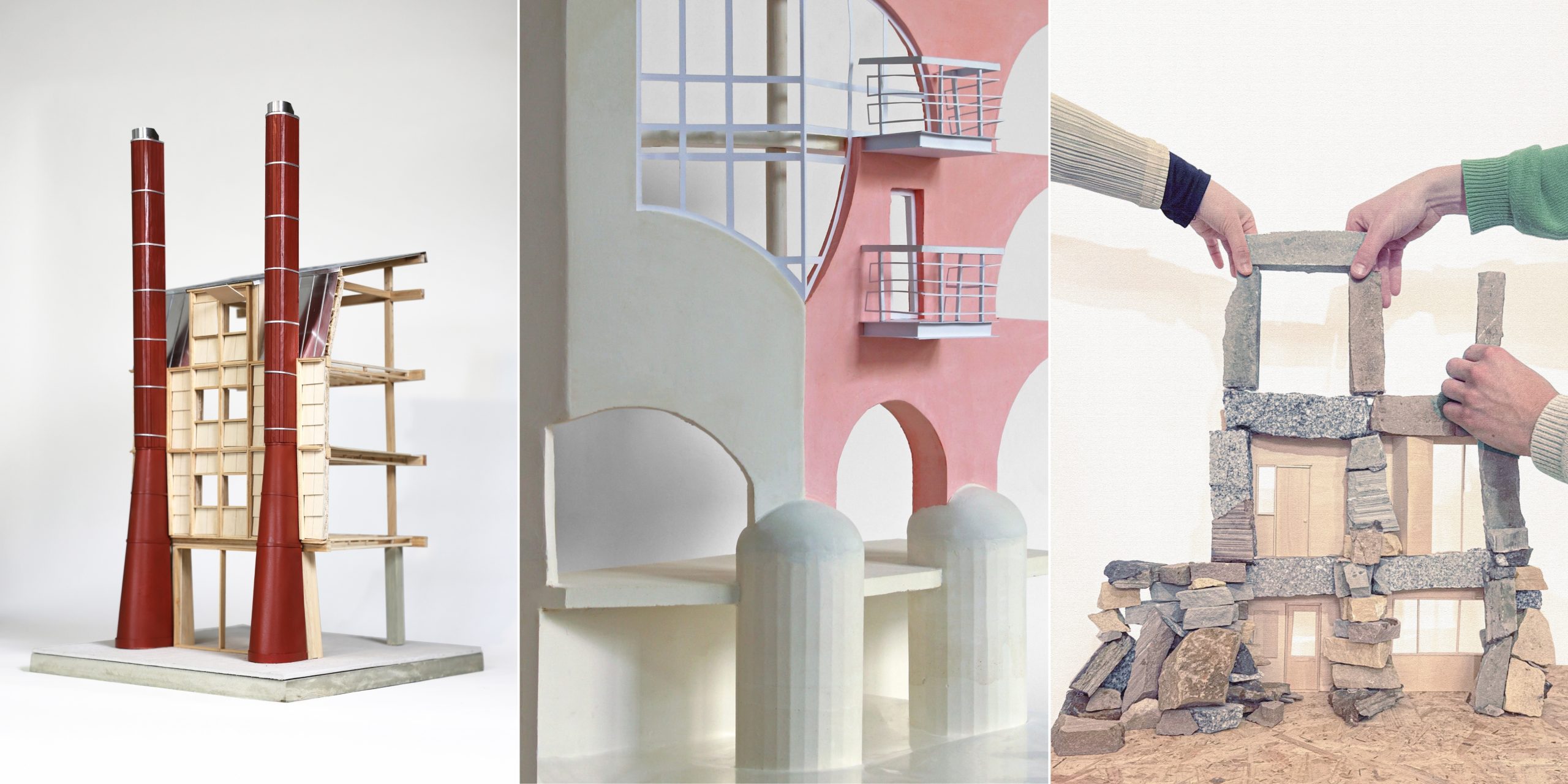
Design Tectonics Models 2026
The Tectonics course at the LSA priorities model-making as a way of developing and demonstrating an understanding of the spatial consequences of construction issues. Student’s models thus capture both how the buildings are put together, and the character of the resultant spaces and forms. They also foster an enjoyment of architecture and an enjoyment of making.
William Brooks
The project focuses on care leavers, young people required to become independent earlier than their peers, often without stable support. It proposes a housing and learning community that enables gradual independence through making and shared experience. Located within a historic builder’s yard in Bethnal Green, the scheme draws on its legacy of construction and repair. Architecture is used as a teaching tool, where materials, structure, and services are made visible. Workshops, shared spaces, and housing are integrated, positioning residents as active participants in the construction, maintenance, and ongoing life of their environment.
Sarah Dinsmore
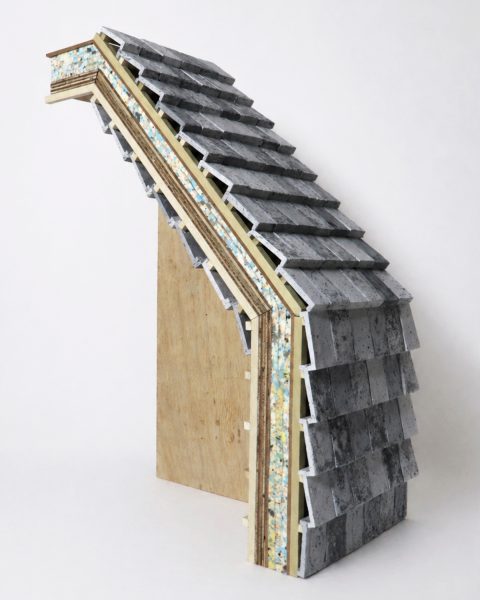
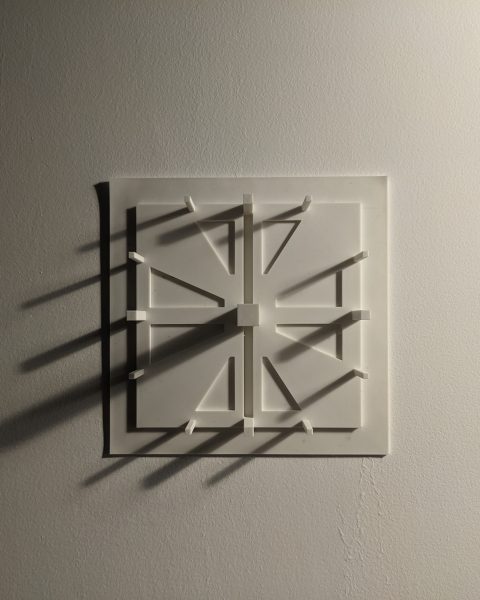

My model forms part of my thesis project, which explores how architecture can make time perceptible for people who experience space from a fixed position, such as bed-bound patients in a care or hospice setting.
The sectional model is a construction study of one of the room conditions. It tests how a wall and roof can be built up in layers to control light, shadow and atmosphere. The model exposes the different parts of the assembly: a timber structural core, a layered wall build-up, translucent elements, and an external slate-tile skin. I was interested in making the construction readable, rather than hiding it, so the model shows how the material layers work together to produce a specific spatial effect.
The white relief models are related studies of the courtyard as a clock. They test how the courtyard could become a temporal device rather than simply an external space. Using raised walls, edges, markers and cut-out forms, the models explore how sunlight could move across the courtyard surface and cast changing shadows throughout the day.
Emily Bradley
Unearthing the Murky: Reclaiming Urban Water Agency through the River Neckinger.
Water is recognised in the UK as a basic human right, defined as access to “sufficient, affordable, safe water for drinking, cooking and personal hygiene” (UK Government, 2006). This definition frames water as a controllable resource, detached from its wider ecological, cultural, and spatial potentials. ‘Uncovering the Murky’ challenges this position by asking the simple questions: what could water be beyond a resource? How might architecture enable cities to live with water rather than against it? Using the lost River Neckinger in Southwark as a site of investigation, the project tests how uncovering lost waterways can reconfigure relationships between humans, infrastructure, and more-than-human systems. Through research by design, this thesis explores how water can act as an active agent in shaping urban life, spatial practices, and environmental futures.
Caspar Barker
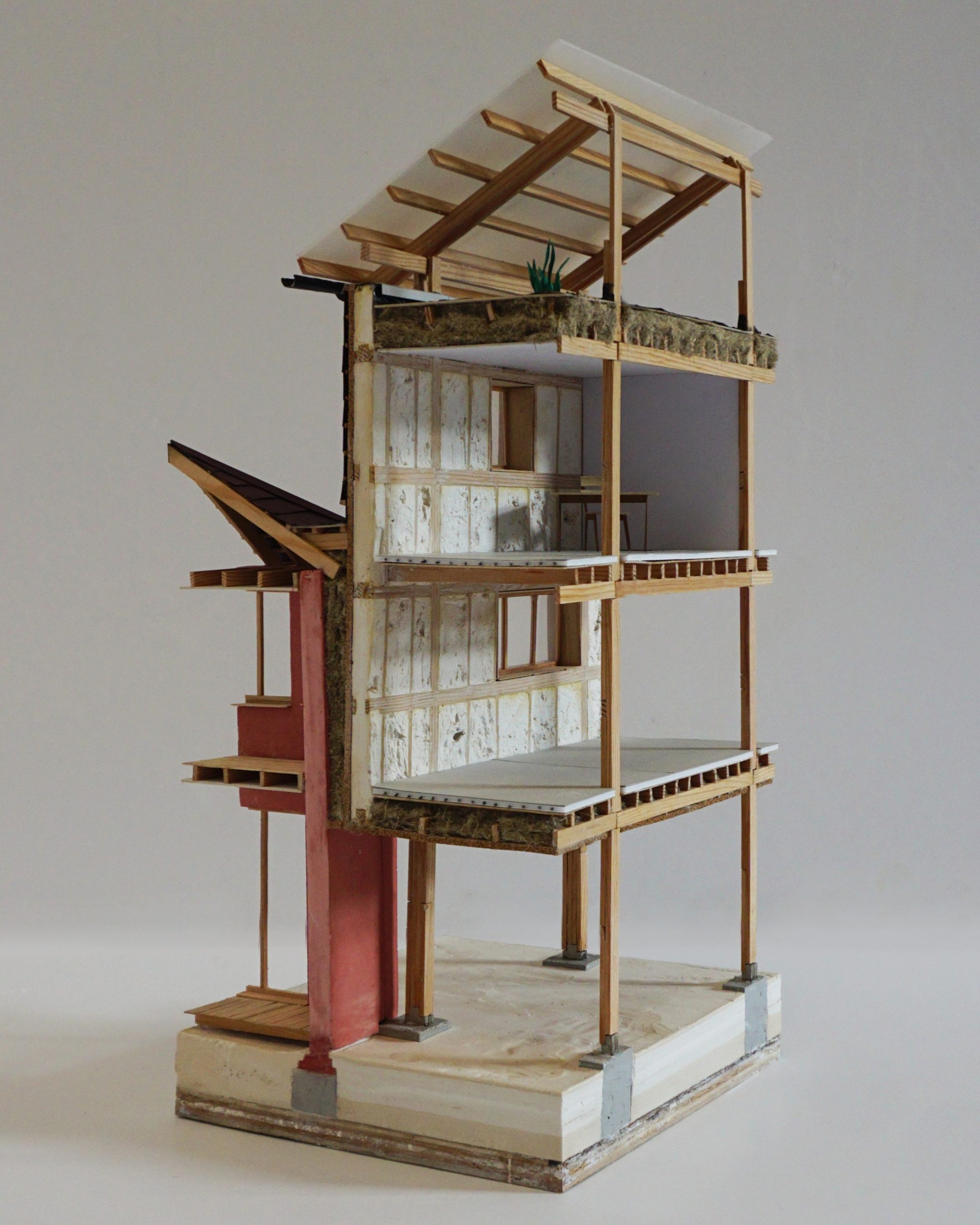
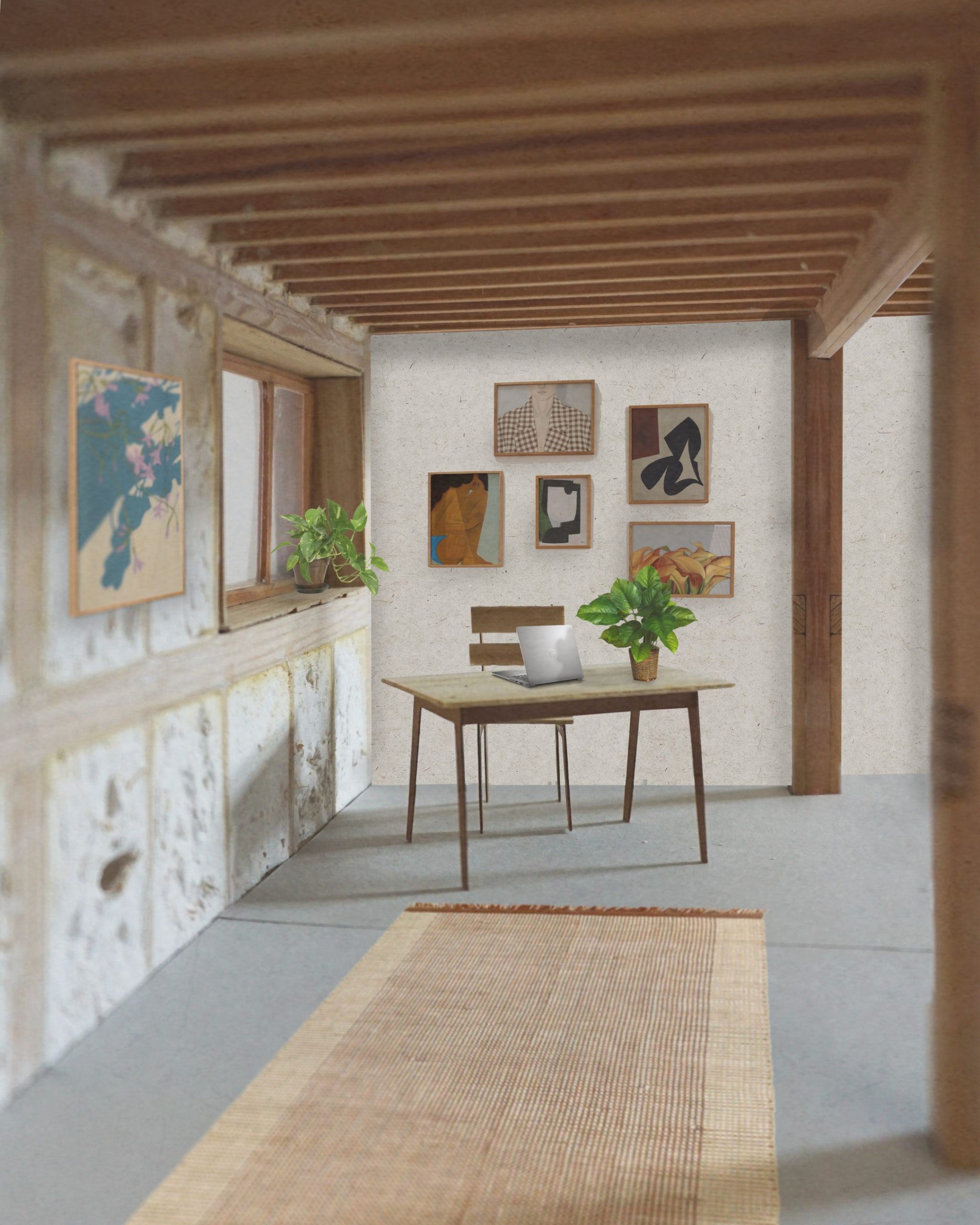
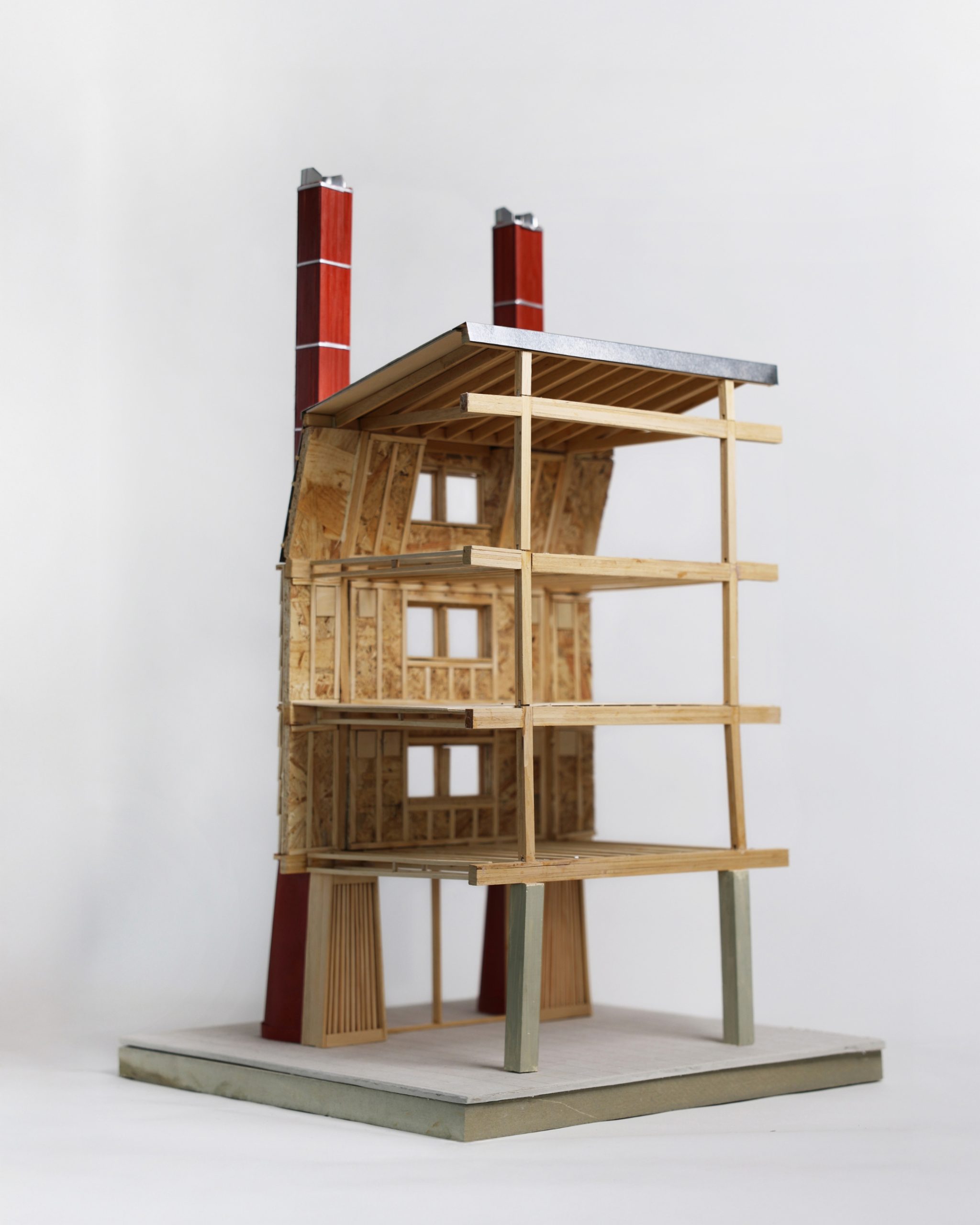
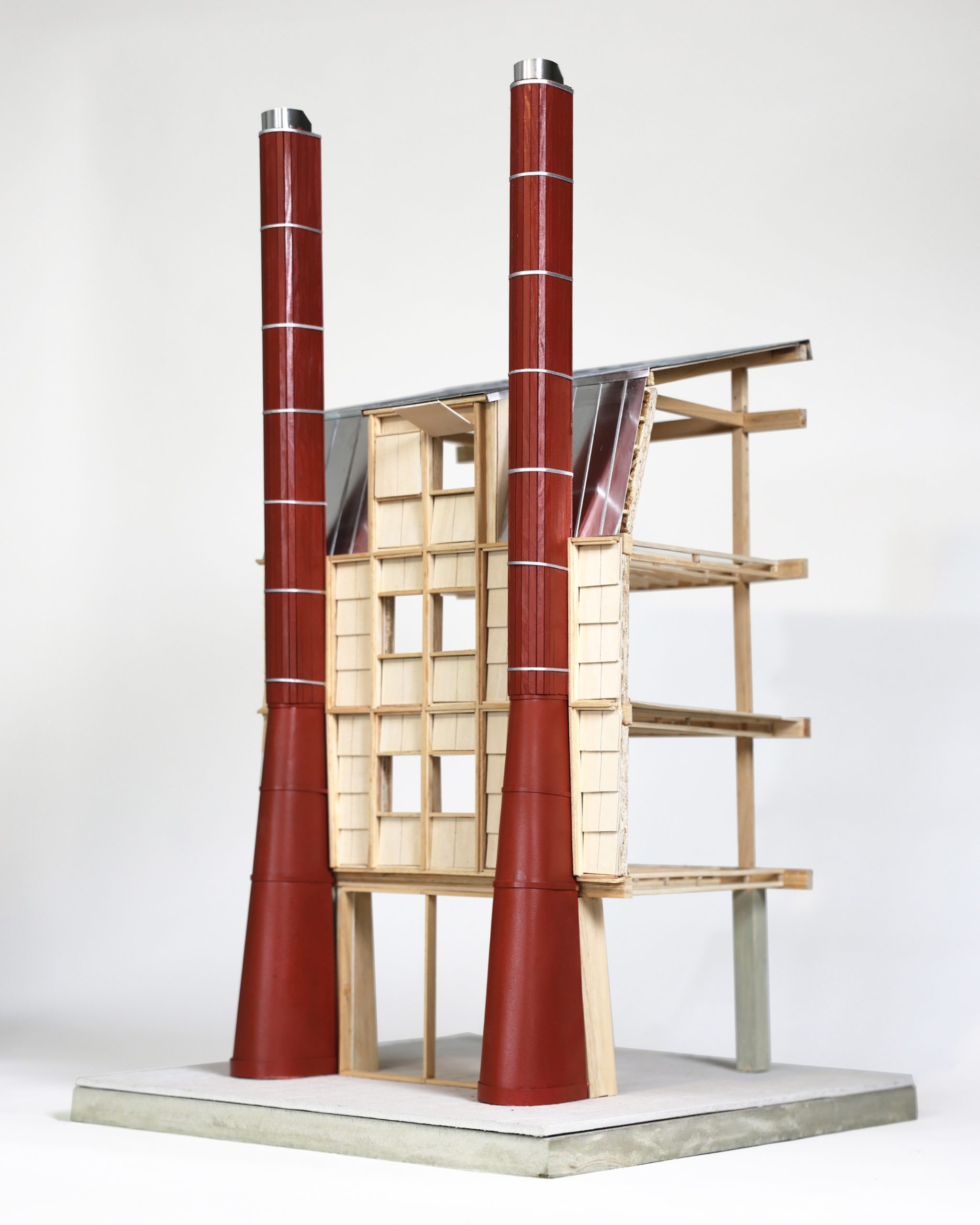
This is a tectonic model illustrating a low carbon self-build construction system inspired by the work of Walter Segal. It is composed from a repetitive frame of standard dimensioned timber with cast Hempcrete infill. In this model specifically the system has been deployed to introduce new homes replacing garages between two typical semidetached suburban houses. This test forms part of a larger thesis exploring the delivery of suburban densification through planning policy reform.
James Read & Caspar Barker
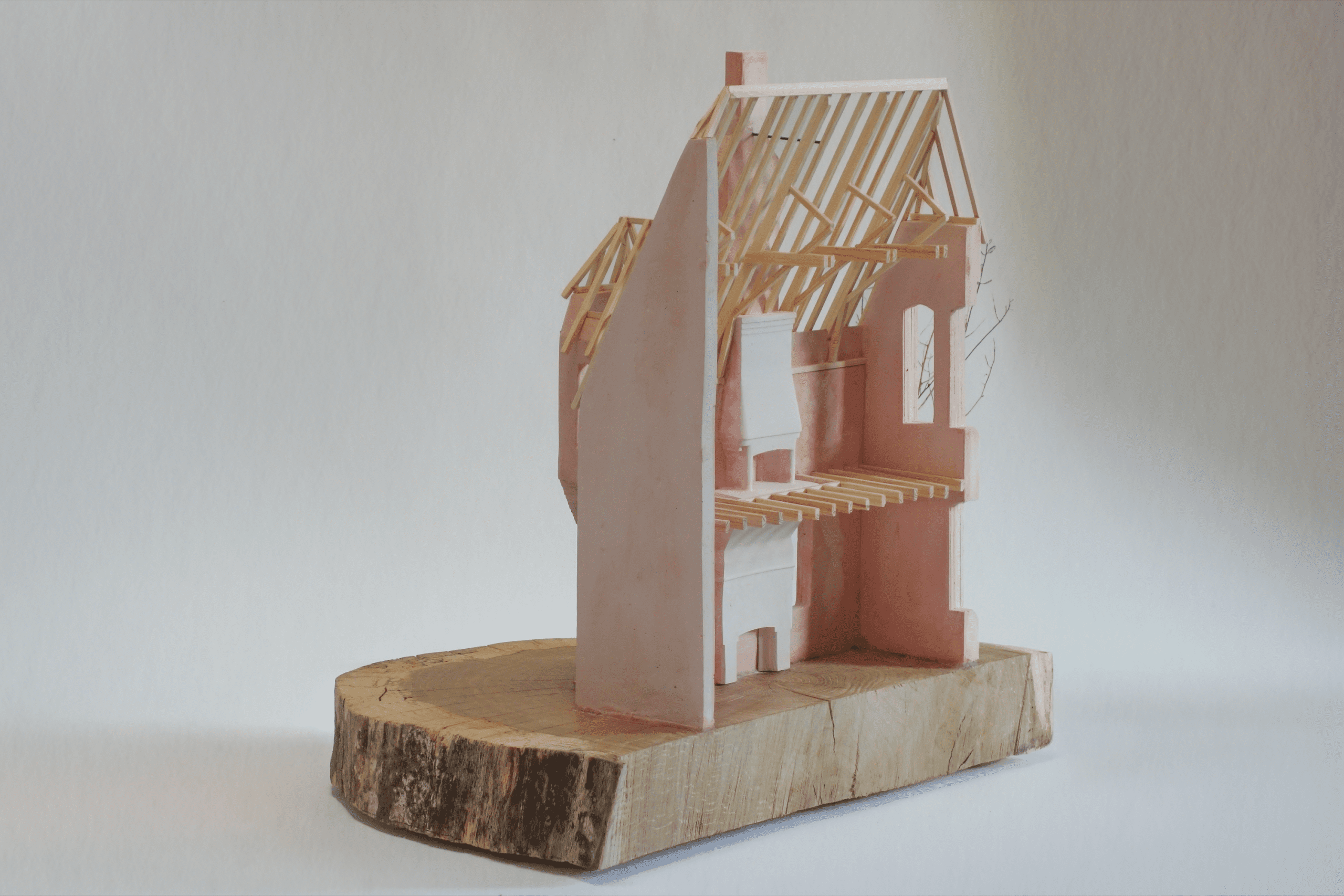
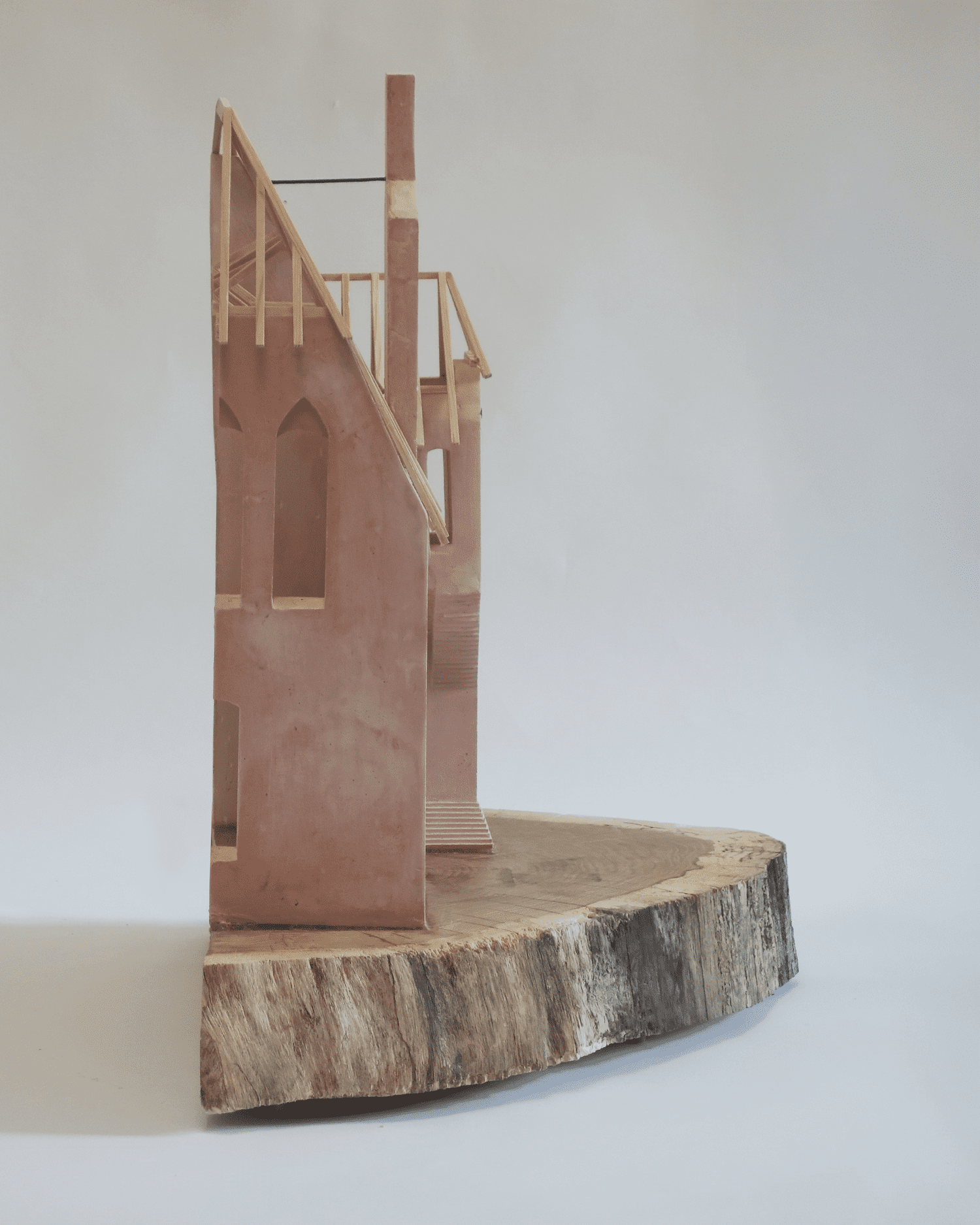
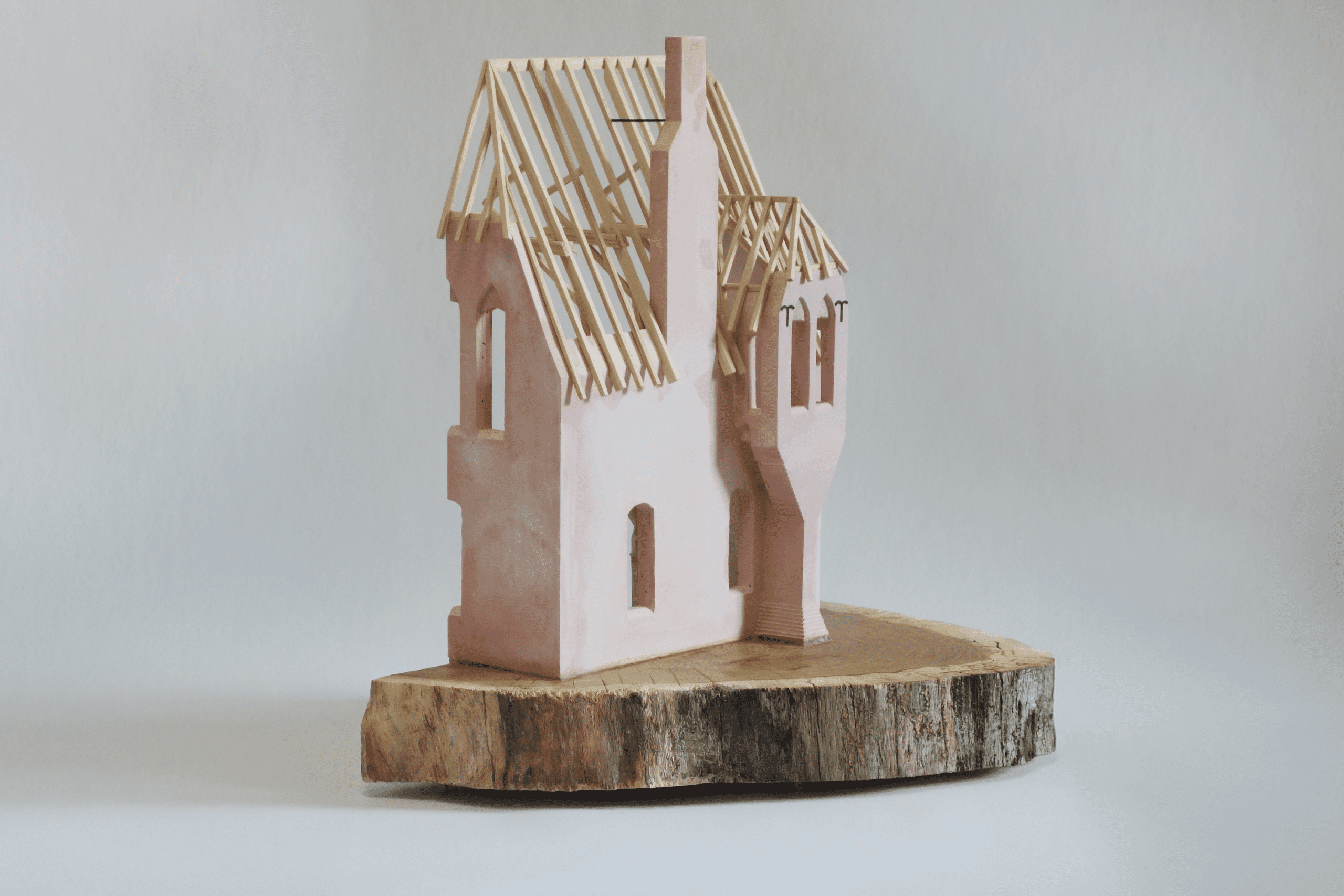
The Red House located in Bexleyheath was designed by architect Philip Webb in 1859 for the celebrated textile designer, poet, artist, writer, and socialist activist; William Morris. It was the first and only house that Morris ever commissioned, built, and lived in during his lifetime and it is considered by many, the earliest example of the ‘Arts and Crafts’ architectural style.
Webb’s design rejected ornamentation in favour of a celebration of the craft of construction itself. This sectional model focusses on the chimney and window seat build-up, which exemplify Webb’s attitude towards the celebration of craft, which came to define the Arts and Crafts movement.
Bihi Mohamed

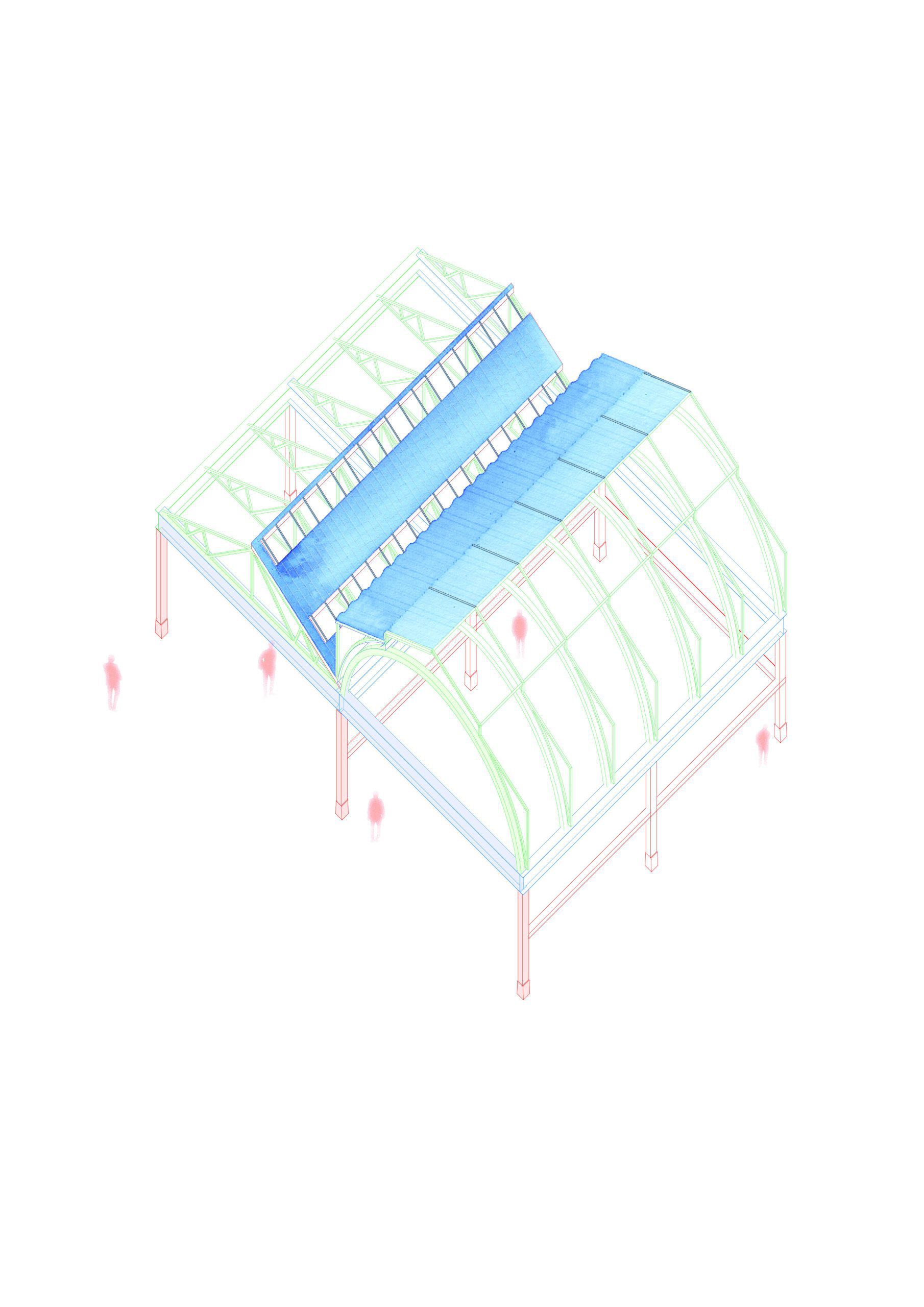
This tectonic model explores a roof transformation for Bridge Park Centre, reimagining the existing leisure complex as a cultural hub. On the left, the original structure, defined by triangular trusses, is retained as a framework for intervention. On the right, a new roof structure replaces the trusses, introducing a lighter system with integrated skylights. The new roof’s brings daylight deep into the plan and supports natural ventilation. The proposal works with the existing fabric while redefining it, using the roof to unify old and new spatial and environmental strategies.
James Read
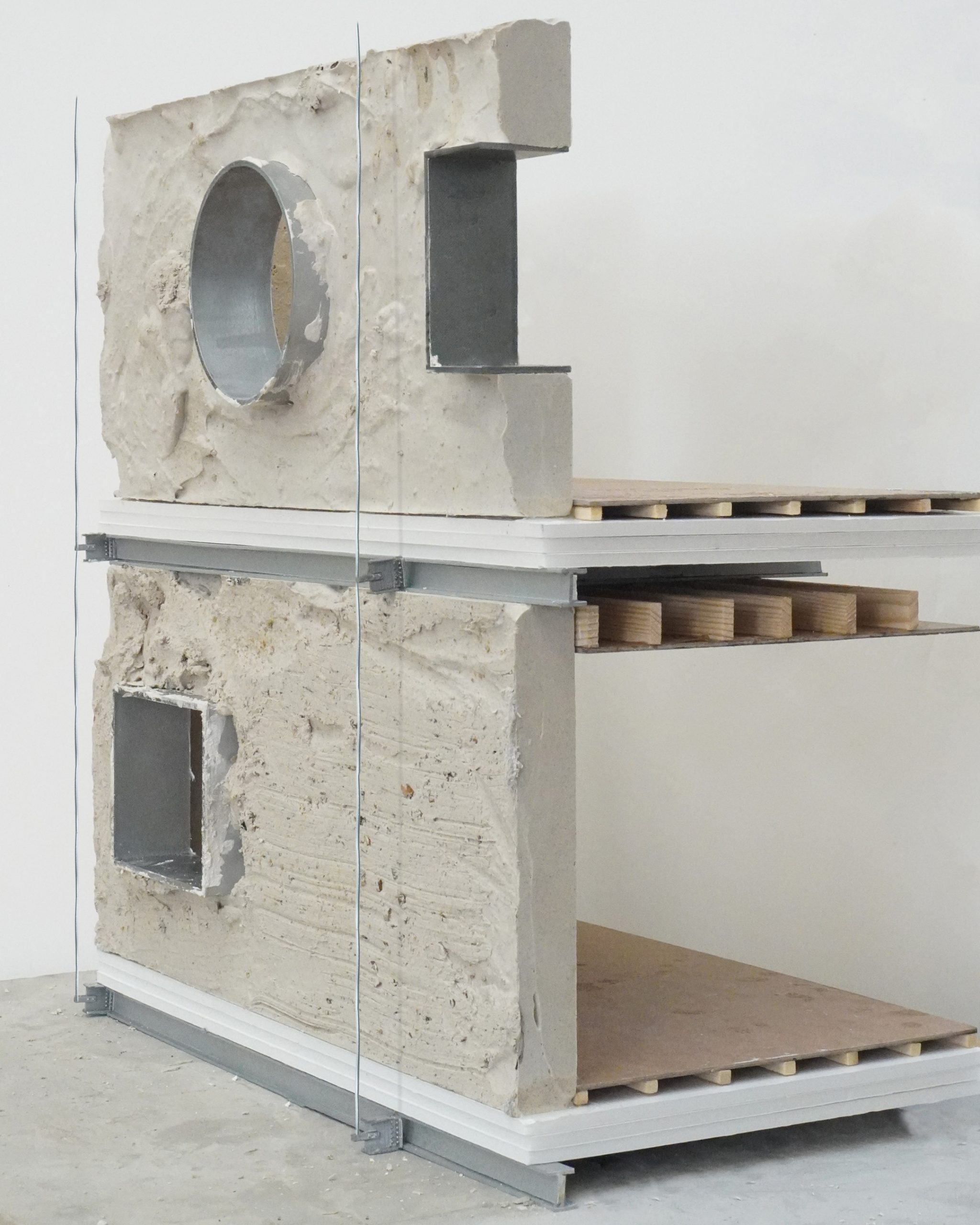
The project explores how sites can better harness their waste streams to produce the built fabric of the new, through pre-cast rammed earth construction: a re-imagination of an ancient building technique that has answered the call during housing crises of bygone centuries.
Inspired by Boltshauser, Lehm Ton Erde, and BC Materials’ research on the material, the tectonic element of the project proposes a pre-cast rammed earth system ready to be deployed on the site of Smithfield Market in London, acting as a waste harvester for the incessant buzz of demolition and construction in the city.
Sam Wimbush
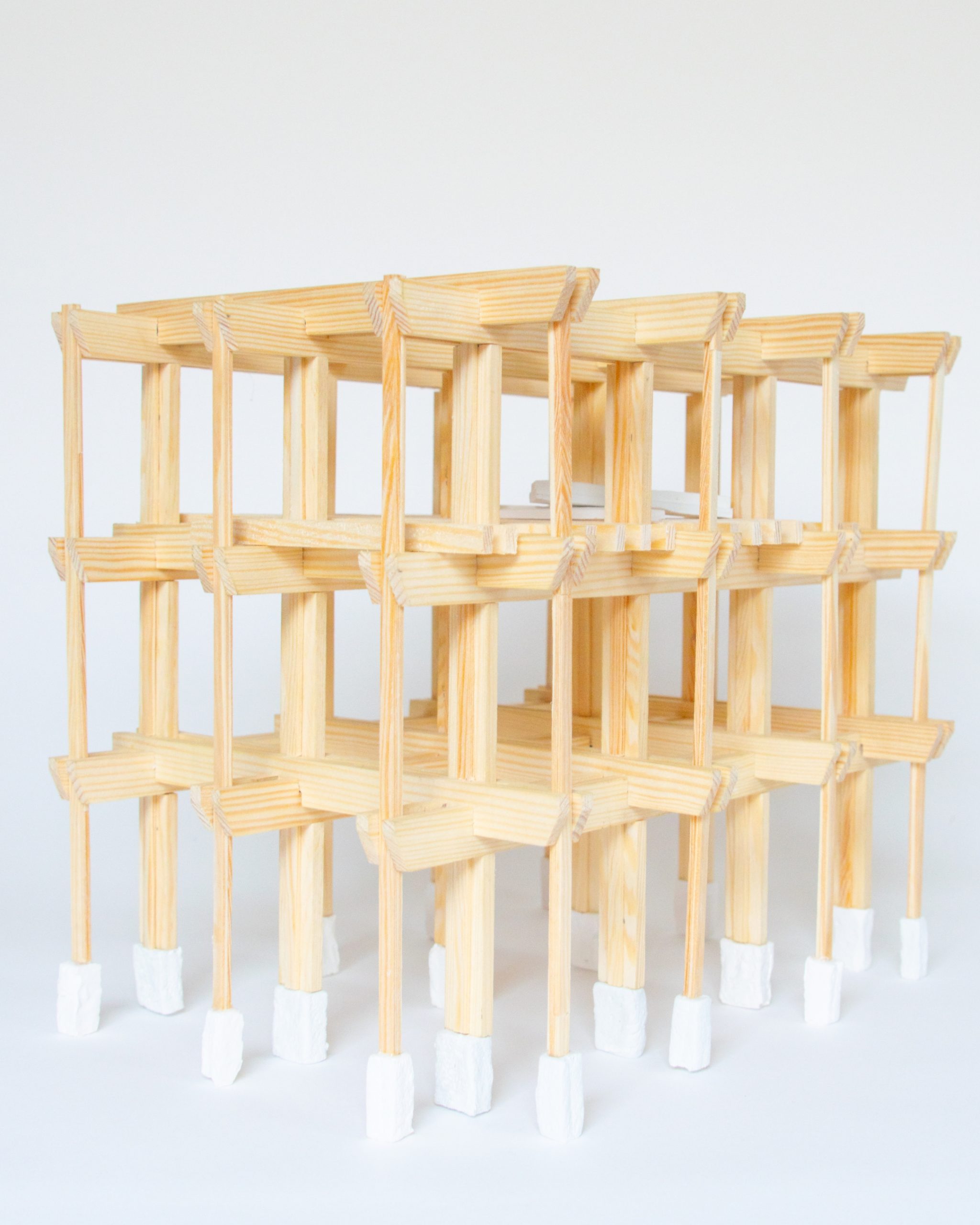
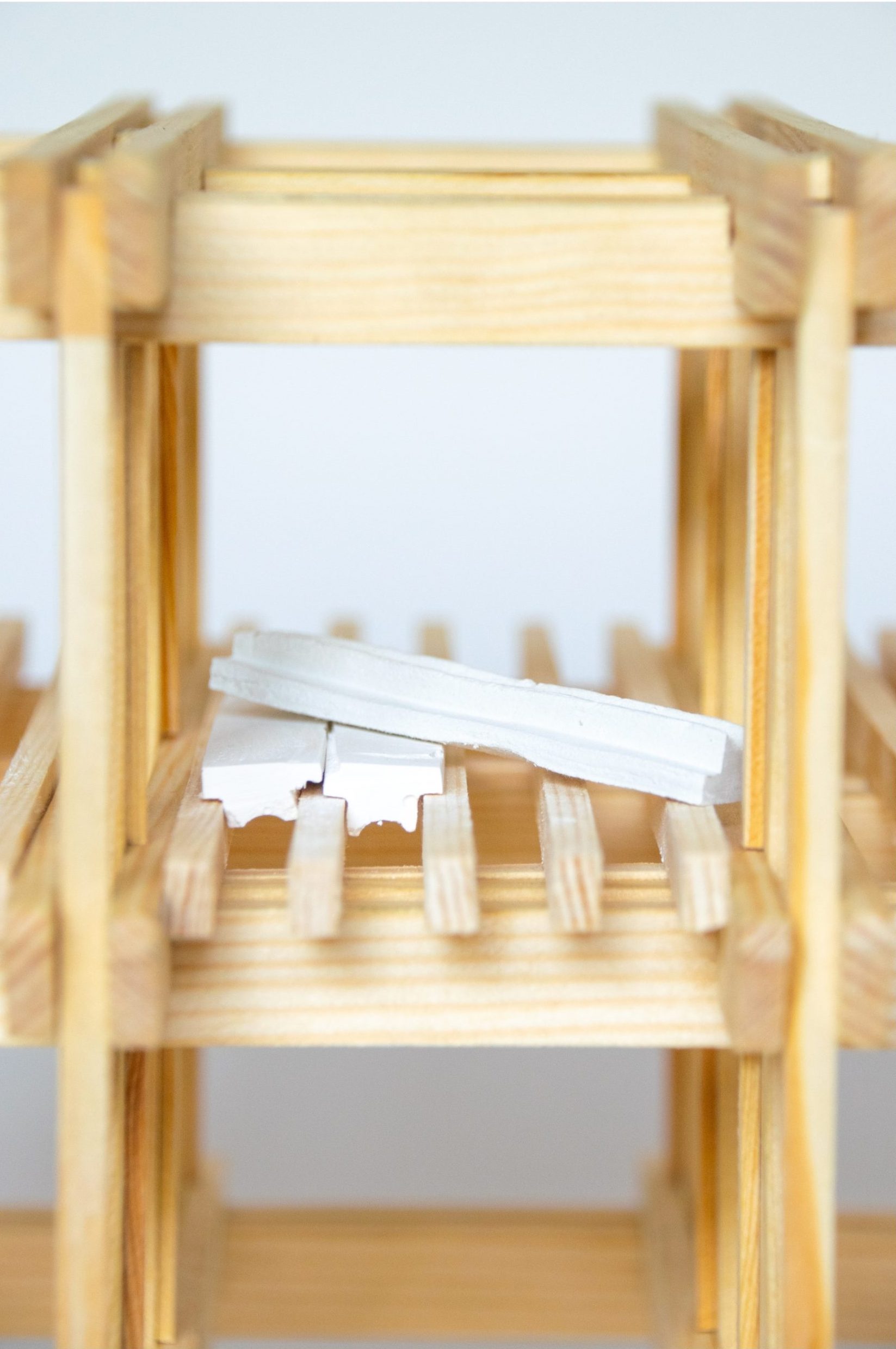
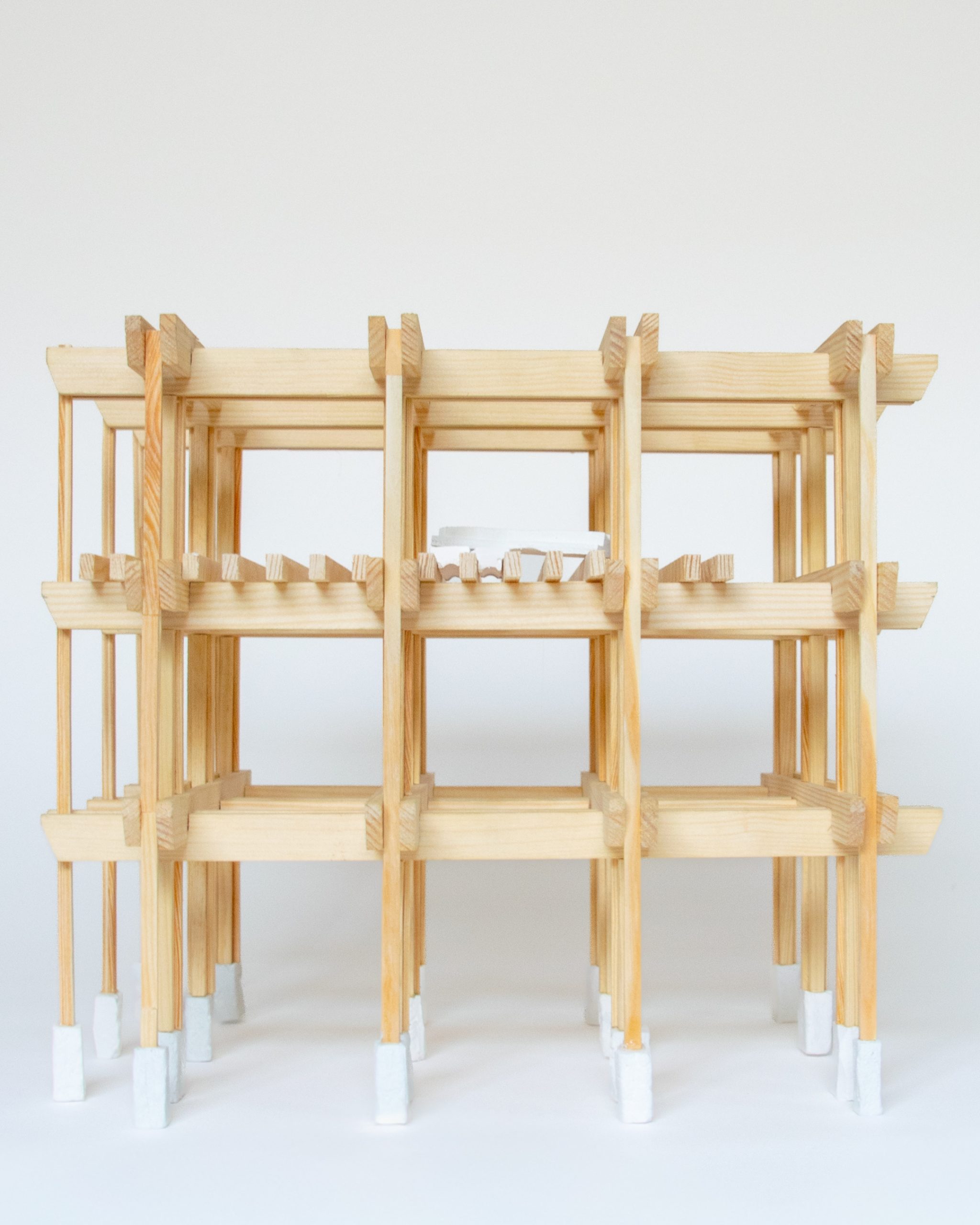
The project proposes a new model of mental health care, designed to move away from current large-scale institutional models toward something more domestic, embedding support within everyday urban life rather than isolating it in clinical settings. At its core, the project attempts to re-align the way in which we understand mental well-being as something that has spatial and architectural aspects.
Drawing on domestic settings and historical medical architecture, the scheme aims to create an environment for therapy, reflection, temporary residence, and care, rooted in nature and creating calm, legible spaces. The architecture has been imagined as a series of pavilions, embedded in a housing estate in Limehouse, carefully fitted around the existing structures, improving the site without displacing a single resident.
Tectonically, the design rests on the idea of repairability; the structure and materials chosen to either accept wear and patina in ways not interpreted as broken or otherwise be maintained easily. Something reflected in the exposed timber structure, designed as a clear, repetitive grid which can be easily adapted, patched and allowed to weather. Creating spaces that allow residents to feel truly connected to the spaces they occupy.
In doing so, the proposal challenges the separation of healthcare from daily life, suggesting that care can be easily embedded within communities, and that architecture itself plays active roles in shaping wellbeing. Calling for a shift in how we design architecture towards environments that actively participate in care.
Rachel Opie
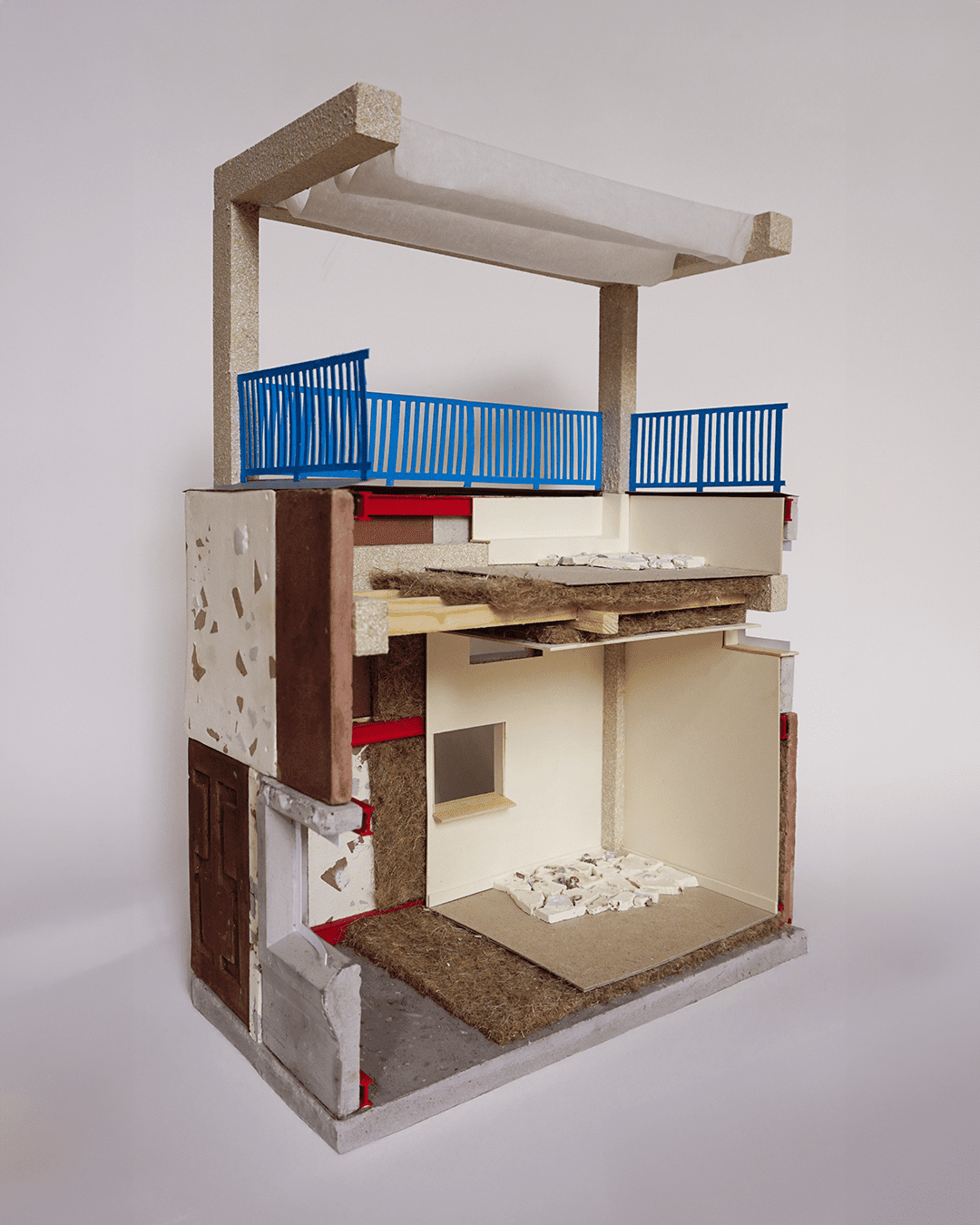
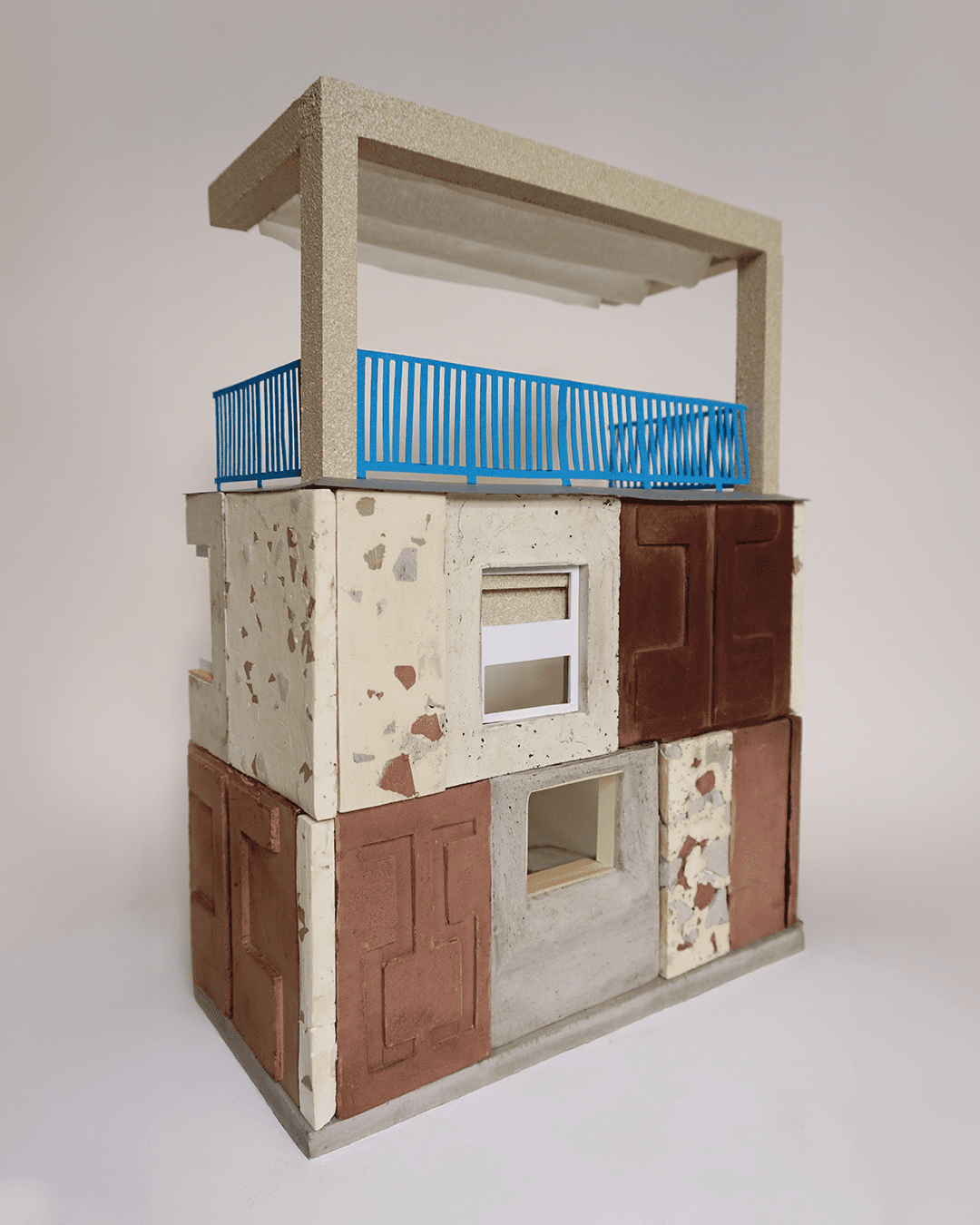
Feeding Kilburn explores how deconstruction can become a method of architectural production. Working with the remains of the empty 1960s South Kilburn Estate, the project investigates how precast concrete panels and architectural fragments can be carefully recovered before demolition and reassembled to form new civic infrastructure. The model illustrates a segment of the Kilburn food hub, where salvaged materials form a patchwork architecture of reuse: part facade, part memory. Rather than treating demolition as waste, the project uses materials to carry forward the material identity of a threatened estate, transforming existing fabric into spaces for cooking and community exchange.
Alexander Law and Tom Groves
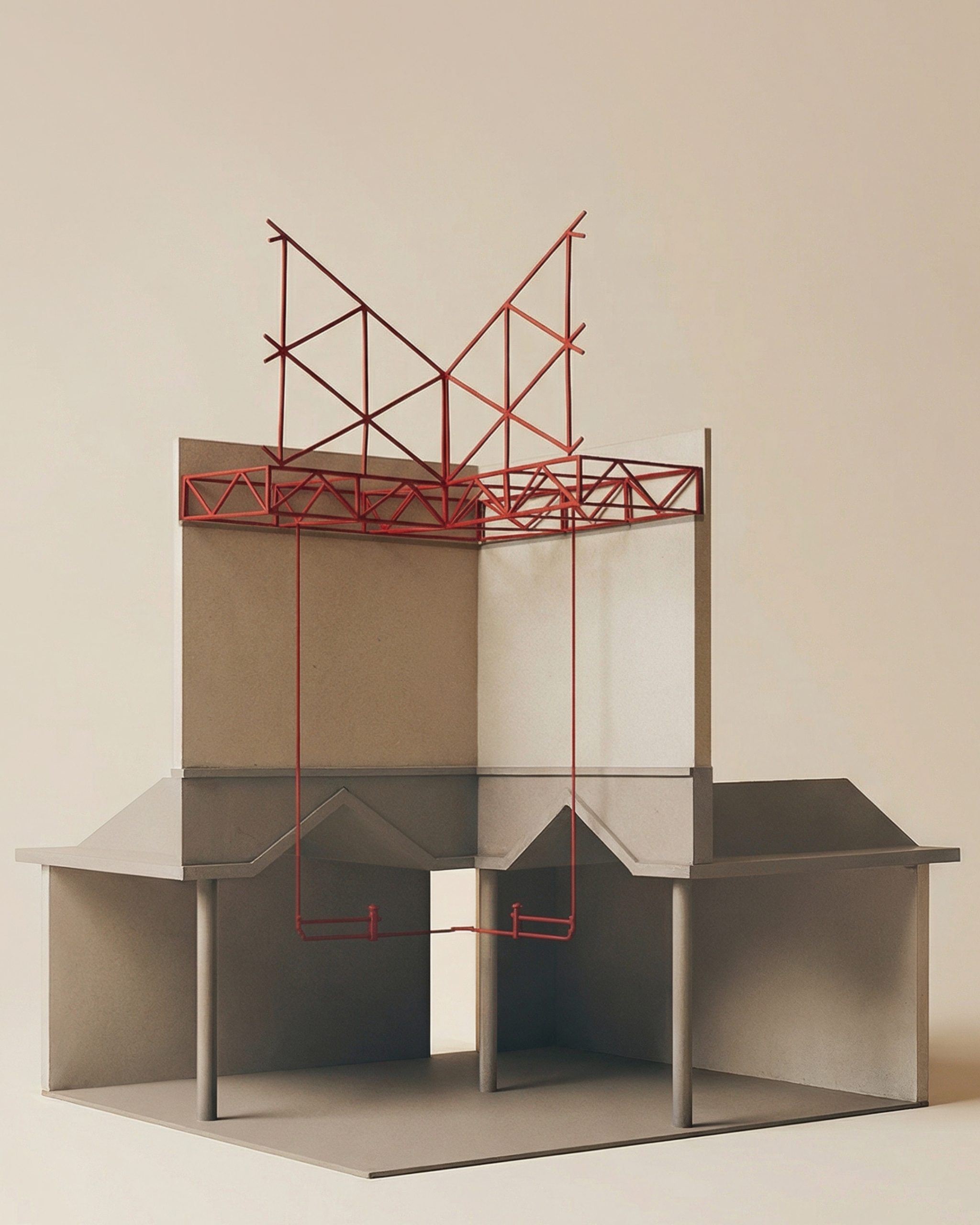
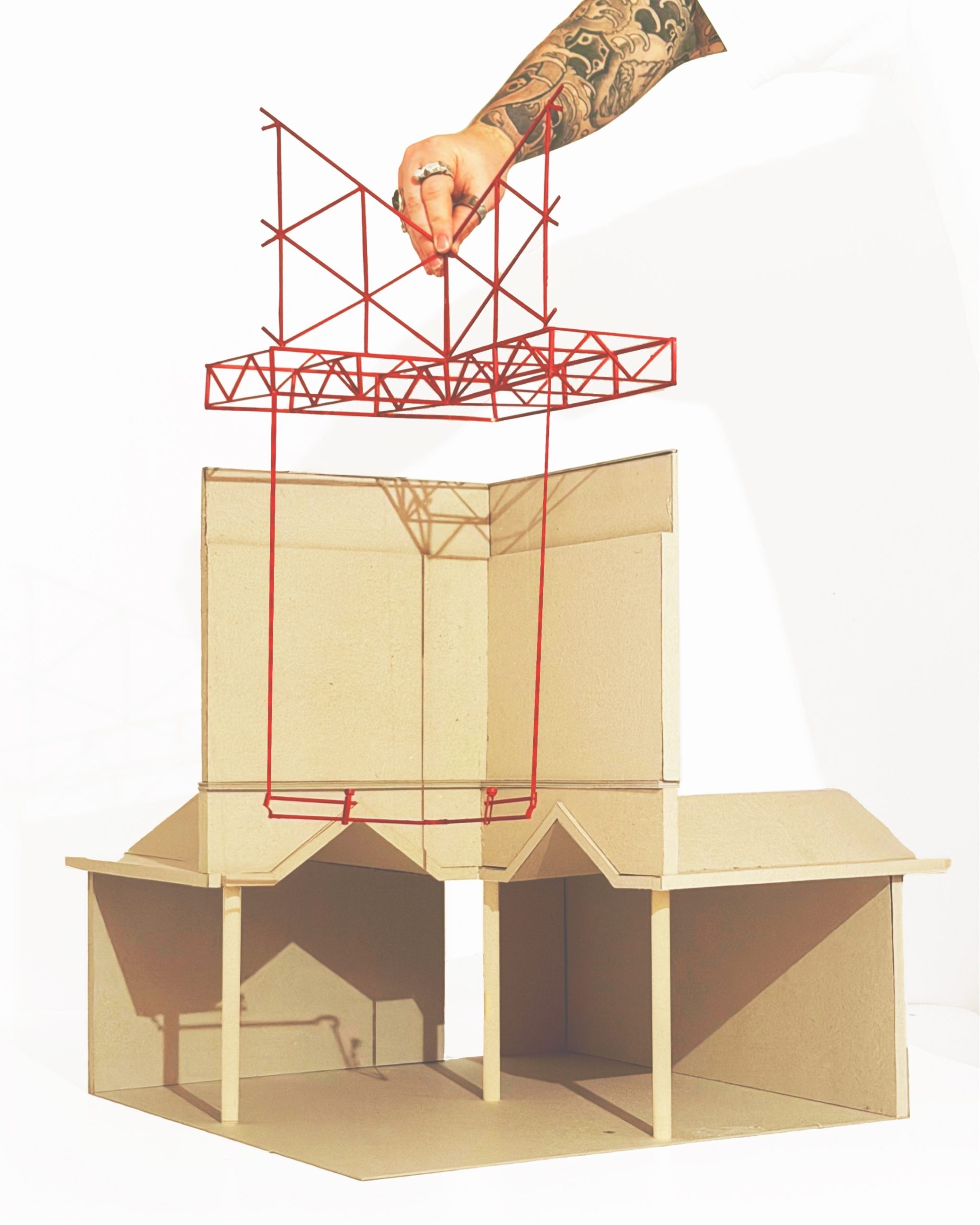
Our year 2 March students Alexander Law and Tom Groves produced a detailed study on St Paul’s Bow Common, a renowned post-war brutalist church. The model focuses on one corner, depicting the concrete and masonry primary structures, supporting a secondary steel structure, in turn supporting a hanging corona. The pair unearthed the use of a warren truss in a currently hidden roof structure through archival readings.
Alexander Law
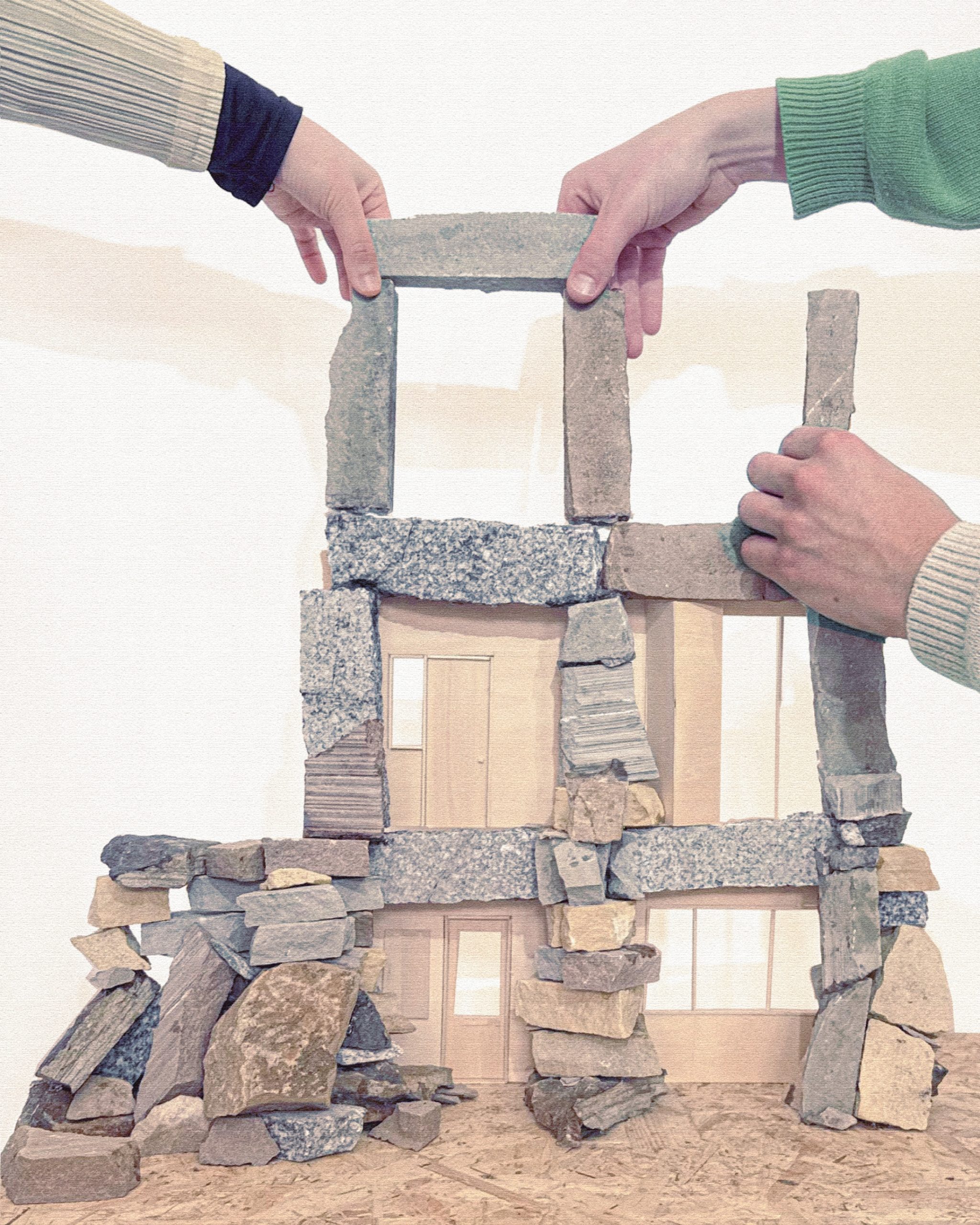
A thesis project, by second year March student Alexander Law, studies how architecture can allow for communities to seize control over housing development in an otherwise monopolised environment. The project uses a post tension stone frame in infilled new-build areas to act as a long-lasting primary structure, within which adaptable fitouts are cradled. This allows for slow growth and reuse of the building, in response to an incremental funding system. Unfinished, low-grade stone is used to maximise affordability, the lower floors aiming to target unused stone currently laid waste in quarries.
Jessica Payne and Rachel Nonhebel


This project explores how the design of Westminster Underground Station responds to a complex brief and site. The constraints of the River Thames, its historic setting, and the need to maintain operational tube lines required a specific construction sequence, which in turn informed the station’s unique design. The station is formed as a deep reinforced concrete box, retained by diaphragm walls that resist earth and water pressure during excavation.
The model, showing a small section of the station, demonstrates how the concrete box, with large columns and slabs, distributes loads from both the station and Portcullis House above. A clear structural grid organises circulation through multiple escalators and platforms across several levels, showing how structure and circulation work together to inform the design.
The model highlights how the structure directly shapes the spatial experience of the station.
Josie Tindale and Ella Marsden


The model depicts the Marine Engine House, nestled within the Walthamstow Wetlands in North-East London.
Built in 1894, it originally functioned as a pumping house for fresh water from the reservoirs along the network to supply London. It was constructed in an Italianate style deemed appropriate for industrial buildings in the mid-19th century.
The building is important as a relic of Victorian civil
engineering, and the robust masonry walls and steel/timber roof have remained widely intact. The pumping function was decommissioned in the 1980s, and the building was disused until its redevelopment as part of the wider ‘Walthamstow Wetlands’ Scheme.
The Marine Engine House was a light touch retrofit by Witherford Watson Mann Architects to serve the function of visitor centre, cafe, shop, exhibition space and event venue.
This 1.20 model depicts the junction between the main engine room and triple engine room. The retained Victorian structure is represented in timber and the new insertions in greyboard.
Emily Bradley and Edmund Alcock
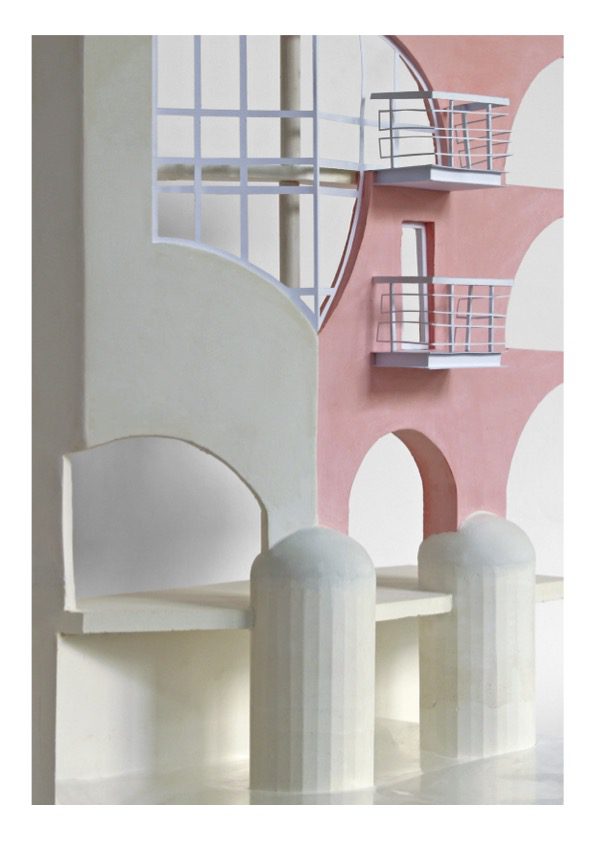
China Wharf, designed by Piers Gough of CZWG Architects in 1982-83, was an early landmark building in the regeneration of London’s Docklands. Developed by Jacobs Island Company alongside contractor Harry Neal, the postmodern residential building honours the surrounding architectural language of Victorian warehouses while injecting a sense of playfulness into the Thames riverfront.
The model aims to highlight the combination of joyful architecture with tectonic design; focusing on the lightweight steel balconies and curtain walling within the red concrete facade, all standing above the River Thames on heavy concrete columns.
Ruby Lovatt and Rachel Howsen

The Brunswick Centre, a brutalist mega structure, was built in 1972 by Patrick Hodgkingson in Bloomsbury. It was built primarily from reinforced concrete. We found the concrete A-frame and its relationship with the stepping apartments the most interesting and explored this further through our 1:50 model. The A-frame is almost solely responsible for supporting the apartments on both sides and the trays for circulation. We chose to cast the model from concrete the represent the grandeur and scale while also allowing us to understand the tectonic relationship as we built our model. We focused our attention on structural components such as floods, columns and beams. In the background the stepped winter gardens can be seen showing the relationship with each winter garden and how it interacts with the levels above and below.