
Part 2 / Part 3: our combined programme
From September 2027, the London School of Architecture is offering a combined route to professional qualification through our MArch Architecture Part 2 (MArch) and Postgraduate Certificate in Architecture and Professional Practice Part 3 (PG Cert).
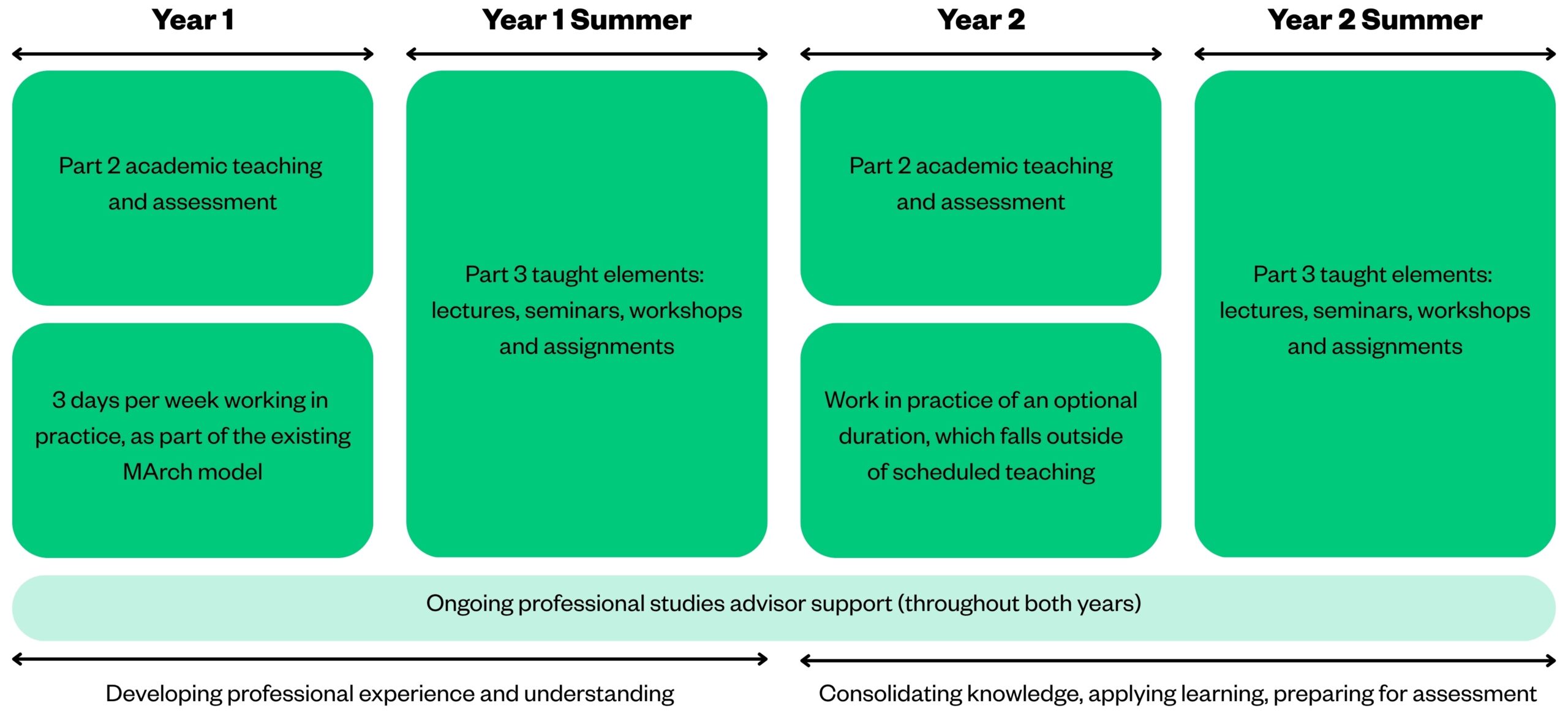
Studied together over two years, the pathway combines academic study, professional practice and workplace learning, offering students an accelerated, more affordable route to becoming an architect in line with the latest Architects Registration Board (ARB) reforms.
For students
Why choose the combined pathway?
Our practice-based approach has always connected architectural education with the realities of professional practice. This pathway connects your academic learning with professional experience, supporting your progression from architectural education to registration as an architect.
Benefits include:
- Direct alignment with ARB’s move towards integrated learning and practice
- Faster, more efficient and more affordable route to registration as an architect
- Better preparation for the demands and challenges of contemporary practice
- 20% discount on the PG Cert Part 3 when applied for simultaneously with the MArch Part 2
You will be supported to document and situate your previous professional experience and experience from your 3-day per week MArch placement as a portfolio of competency, evidencing the practice outcomes required by the ARB.
This reflection of professional practice experience is supplemented by a series of lectures, workshops and seminars, delivered during the summer following each MArch academic year.
The pathway concludes with a Professional Dialogue, where you’ll demonstrate achievement of the ARB practice competencies.
Who can apply?
To apply for the combined pathway, you must:
- Hold an honours degree in architecture, the built environment, or a related design based subject
- Be in suitable employment within the built environment sector
- Have employer support with an ARB-registered architect who can act as a mentor throughout the programme
Suitable employment may include:
- Architectural practices
- Multidisciplinary design practices
- Public sector organisations
- Developer, client or contractor organisations
- Other approved built environment settings
There is no minimum period of professional experience required.
Already have a Part 2 qualification?
If you already hold a recognised Part 2 qualification from the LSA or another institution, you can apply directly to the Postgraduate Certificate in Architecture and Professional Practice as a standalone programme.
For employers
By combining academic study with professional practice, our new pathway enables employers to develop and retain talented staff while supporting their progression towards professional registration. The more flexible entry creates opportunities for you to attract and develop talent from a wider range of educational and professional routes.
Employer support
Students must remain in suitable employment throughout the programme and receive support from an ARB-registered architect within your practice.
The LSA will work closely with you to provide guidance, support and clear expectations for workplace learning and mentoring.
Student FAQs
1. How do I apply for the combined pathway?
If you wish to be considered for this pathway you will need to supplement your application submission for MArch Architecture with additional documents as outlined in the admissions process here.
2. Do I need to be employed by a practice to be eligible for the combined pathway?
When you apply to be considered for this pathway you will be required to submit a letter of support from an employer. Your employer should express a willingness to support you through the successful completion of both programmes. We recognise that employment circumstances might change and should you move to a different employer they must also confirm commitment to your completion of the combined pathway.
3. Will the combined pathway impact upon my workload and how are both programmes delivered concurrently?
We recognise that combining academic and professional qualifications may give you concerns about your workload. Our curriculum has been carefully designed so that the principal academic demands of the MArch and PG Cert are delivered at different times, with professional practice running as a continuous thread between them. To document your professional practice experience you’ll be supported by a professional studies advisor, and then the taught elements of the PG Cert are delivered during the summer following completion of the academic year.
4. What if I am unable to complete the PG Cert within the 2-year period alongside the MArch programme?
If, for any reason, you are unable to complete the PG Cert within the 2-year period of your MArch, we will discuss the best options with you and offer support.
5. Will any potential issues with progress on the PG Cert impact my ability to complete the MArch?
Maintaining the academic and professional qualifications as two distinct awards means any issues with module progression on one will not impact the other. The MArch can still be obtained within two years regardless of progress on the PG Cert.
6. Is it more cost effective to do the combined pathway?
The combined pathway will require you to apply and register separately and simultaneously on the MArch Architecture and on the PG Cert Architecture and Professional Practice. You will pay a fee for each programme, with a 20% fee discount applied to the PG Cert Architecture and Professional Practice programme for taking the combined pathway. 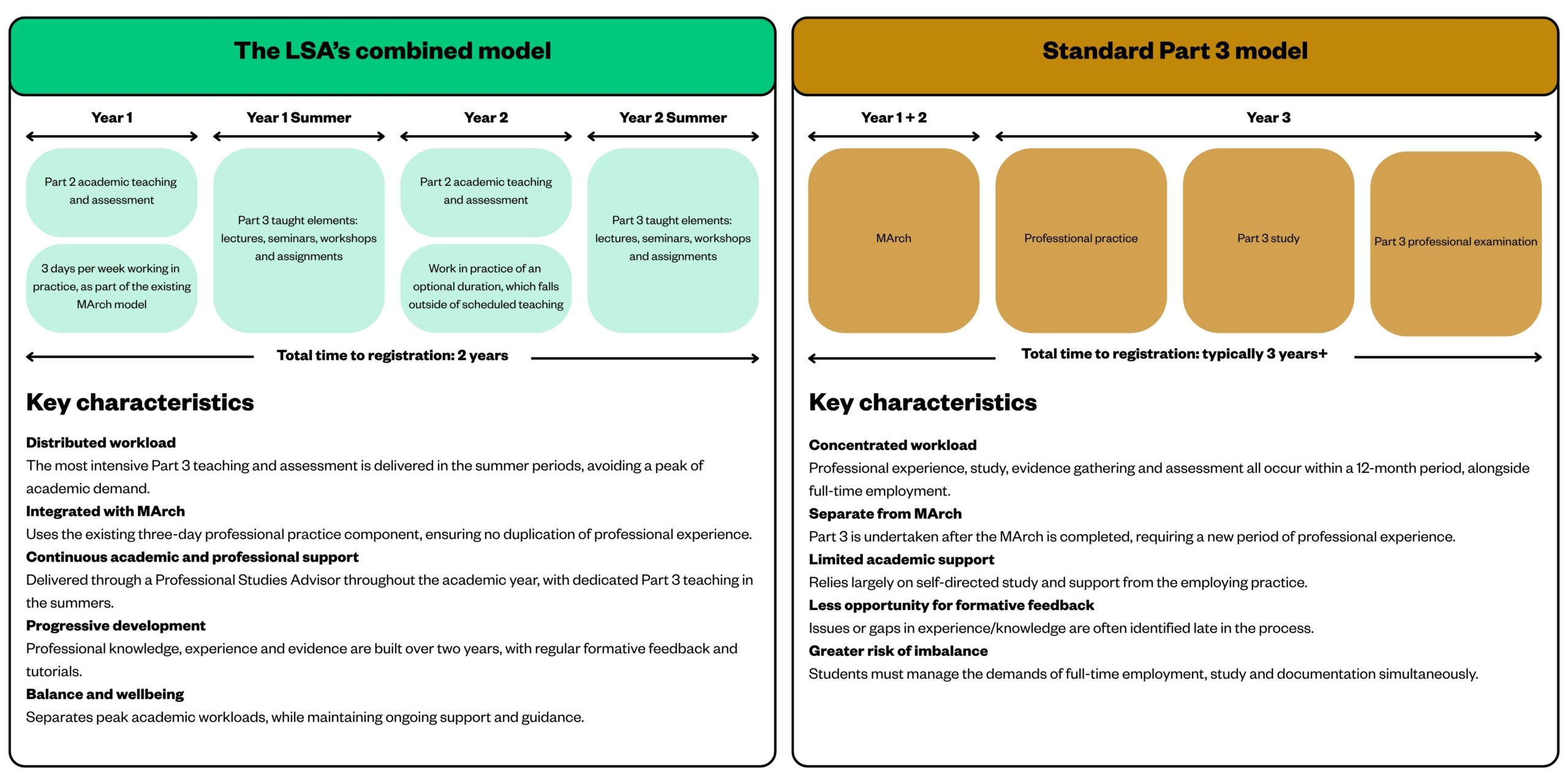
Employer FAQs
1. Does a student need to have worked for our practice for a minimum period before enrolling?
There is no minimum length of employment required before a student begins their studies. However, they must be in suitable employment at the point of enrolment and remain employed throughout the programme.
2. What are the responsibilities of a practice mentor?
Practice mentors are expected to familiarise themselves with the Student Placement Handbook and maintain regular communication with the School to support the student’s professional development and workplace learning.
3. Do the employment requirements differ between programmes?
Some employment requirements, working arrangements and expected time commitments differ between the Part 2/3 Combined Pathway and the Part 3 programme. Further information will be provided to participating employers.
4. Who should I contact if I have questions about participating as an employer?
If you would like to discuss your practice’s involvement or have any questions, please contact lsa@ube.ac.uk.
Contact us
Have questions about the programme or need help with your application? Get in touch with our friendly admissions team using the following details:
UK (Free): 0800 019 9697 (Press 1)
International: +44 (0)118 921 4696 (Press 1)
Email: enquiries@ube.ac.uk